
A Guide to Spotting Deal-Breaking Material Defects


A Guide to Spotting Deal-Breaking Material Defects
What Is a Material Defect in Real Estate?
A material defect is a property problem serious enough to significantly reduce value, create an unreasonable safety risk, or change a reasonable buyer’s decision to buy, negotiate, or walk away. In simple terms, if the issue would matter to an informed buyer or investor, it may be material.
Examples include major foundation movement, recurring water intrusion, unsafe wiring, mold, environmental contamination, unpermitted work, or zoning and easement problems that limit how the property can be used.
Not every flaw qualifies. Cosmetic wear, a scratched floor, or an older system that still works is usually not a material defect by itself. The key questions are: How serious is the problem? Was it known? Could a buyer reasonably see it before closing?
Sellers and real estate professionals may have disclosure duties for known material facts, especially hidden defects. Buyers should still conduct careful due diligence, including inspections, document review, and specialized testing when warning signs appear.
I am Alan L. Frank, and the sections below explain how to identify material defects, understand disclosure duties, and protect your rights when a serious issue surfaces.
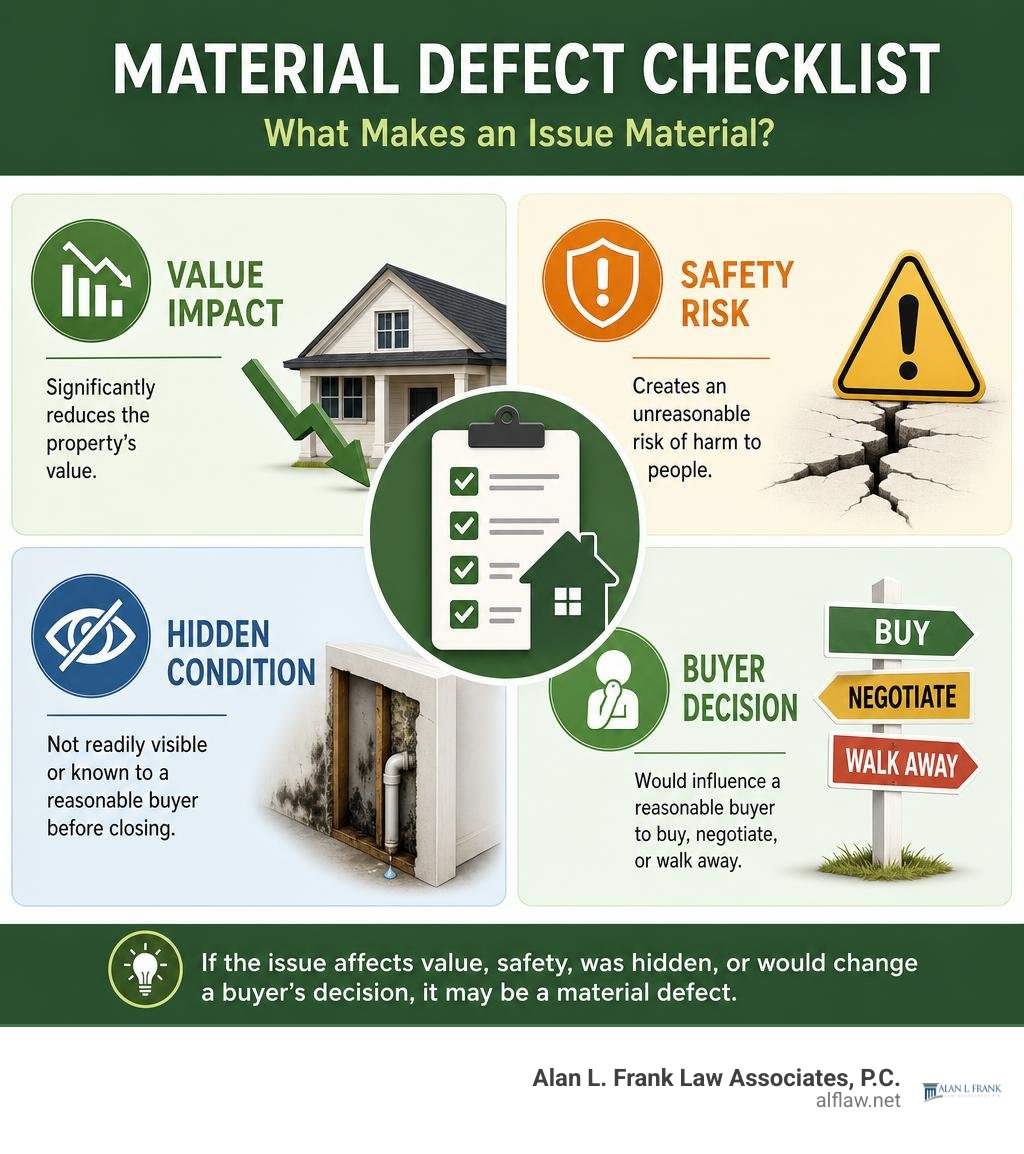
Understanding What Is a Material Defect in Real Estate and Its Legal Standards
When entering into a residential or commercial purchase agreement, buyers expect that the structural elements, essential mechanical systems, and environmental safety conditions of the building perform as intended. Historically, real estate law was grounded in the harsh common law doctrine of caveat emptor (“let the buyer beware”). Under this traditional doctrine, the buyer bore virtually all risks associated with physical defects discovered after the transfer of title, leaving little recourse unless an express warranty was breached or active fraud occurred.
Modern jurisprudence across states like Pennsylvania and New Jersey has largely shifted away from pure caveat emptor toward affirmative statutory disclosure requirements. According to widely accepted professional benchmarks, including the InterNACHI standards for material defects, a material defect is defined as a specific issue with a system or component of a property that may have a significant, adverse impact on the value of the property, or that poses an unreasonable risk to the safety of its occupants.
In real estate litigation, the word “material” functions as an adjective of consequence and relevance rather than a noun referring to physical substances. A flaw is legally material if an ordinary, reasonable person would consider it important when deciding whether to purchase the real estate, how much to pay, or what contractual remedies to demand prior to settlement.
What Is a Material Defect in Real Estate Under Property Disclosure Laws?
State legislatures have enacted comprehensive statutory frameworks designed to protect buyers from purchasing properties with catastrophic hidden flaws. In Pennsylvania, the Real Estate Seller Disclosure Law (RESDL) explicitly requires residential sellers to disclose all known material defects before executing an agreement of sale.
Under these statutory schemes, courts apply an objective “reasonable person” standard. The question is not simply whether a particular buyer had an idiosyncratic preference, but whether an objective buyer would ascribe actual financial or physical significance to the condition.
Adverse material facts can encompass far more than physical issues within the four walls of a house. They can involve boundary disputes, unrecorded easements, zoning violations that prevent intended property use, or proximity to off-site environmental hazards.
| Defect Classification | Visibility & Discovery | Legal Disclosure Requirement | Common Real Estate Examples |
|---|---|---|---|
| Patent Defect | Open, visible, and discoverable through a standard, reasonably diligent visual inspection. | Generally barred by caveat emptor if left uninvestigated; formal seller disclosure still required on statutory disclosure forms. | Water stains on exposed ceiling drywall, extensive roof shingle rot, broken window panes, sagging front porch. |
| Latent Defect | Concealed, hidden, or non-apparent; cannot be uncovered during a standard visual inspection. | Mandatory. Sellers and agents with actual knowledge have an affirmative legal duty to disclose in writing. | Buried oil tank leaks, termite damage inside framing, unpermitted structural alterations concealed by new drywall. |
| Adverse Material Fact | Broad legal and statutory umbrella covering both physical defects and external legal encumbrances. | Mandatory. Brokers and sellers must disclose all known conditions substantially affecting value or use. | Hazardous soil subsidence, undisclosed utility easements, municipal zoning restrictions, lack of operating permits. |
Patent vs. Latent Defects: How Visibility Governs Liability
Understanding the dividing line between patent and latent defects is crucial in real estate disputes.
- Patent Defects: These are flaws discoverable during an ordinary visual inspection conducted with reasonable care. For example, if a concrete front porch is conspicuously pulling away from the facade, or a large water ring is clearly visible on a dining room ceiling, the defect is patent. Because the flaw is open to observation, buyers are expected to exercise due diligence, notice the issue, and negotiate repairs or walk away. Failing to investigate a patent defect often prevents a buyer from claiming fraudulent concealment later.
- Latent Defects: These are hidden conditions that cannot be identified through normal observation by a layperson or standard visual home inspector. Examples include rotting load-bearing floor joists hidden behind finished drywall, broken underground sewer lateral lines, or unstable backfilled soil under the foundation footers.
The legal analysis on adverse material facts confirms that sellers cannot hide behind a buyer’s visual inspection when the seller possesses actual knowledge of hidden, latent defects. When a seller actively takes steps to mask a patent defect—such as applying a fresh coat of waterproof paint over a chronically leaking basement wall right before an open house—they turn a patent condition into an actionable, fraudulent latent defect under common law.
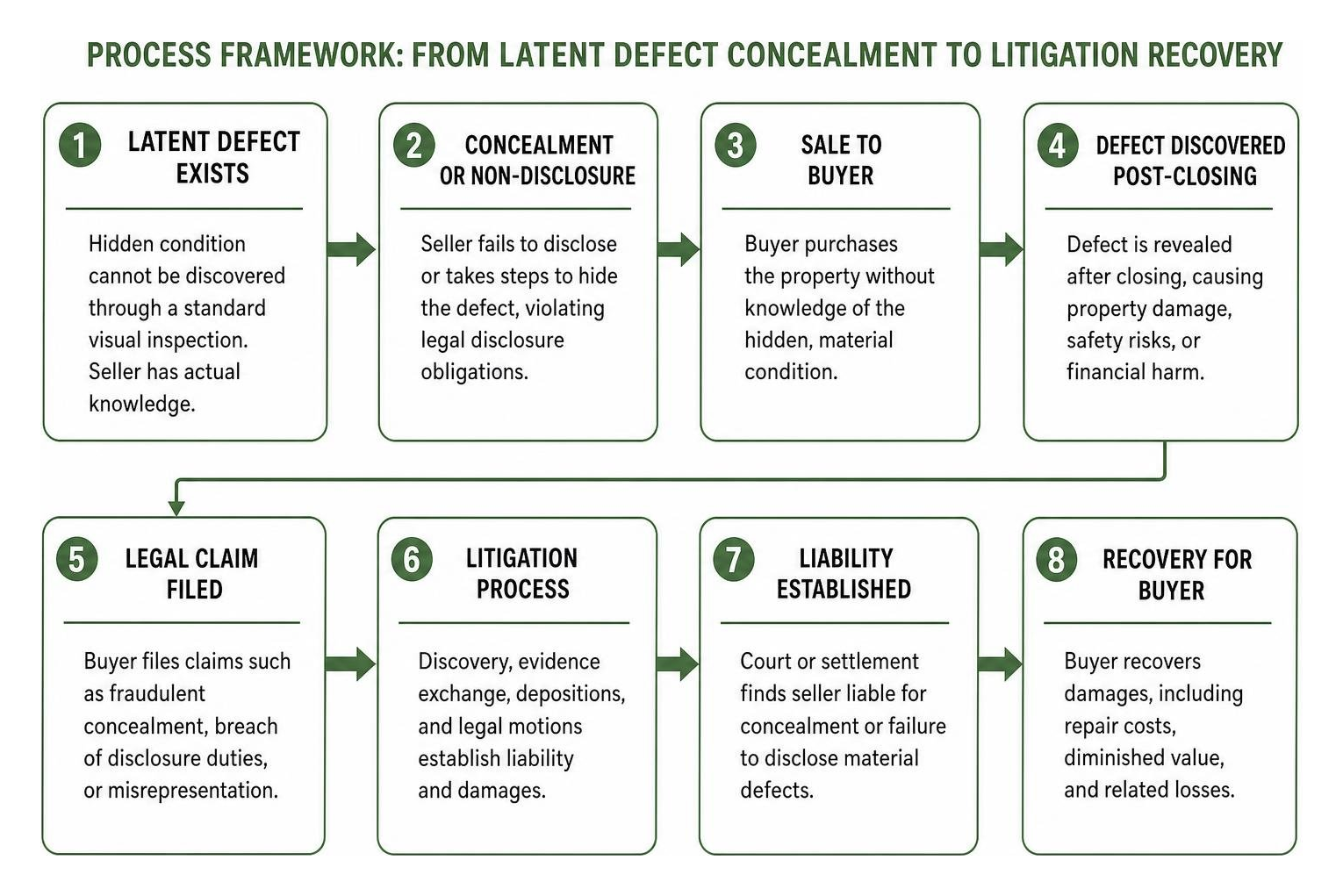
Major Examples of Severe Property and Structural Failures
In our litigation practice handling property damage and real estate disputes throughout Pennsylvania and New Jersey, we routinely encounter severe failures that threaten the structural integrity, safety, and financial viability of properties.
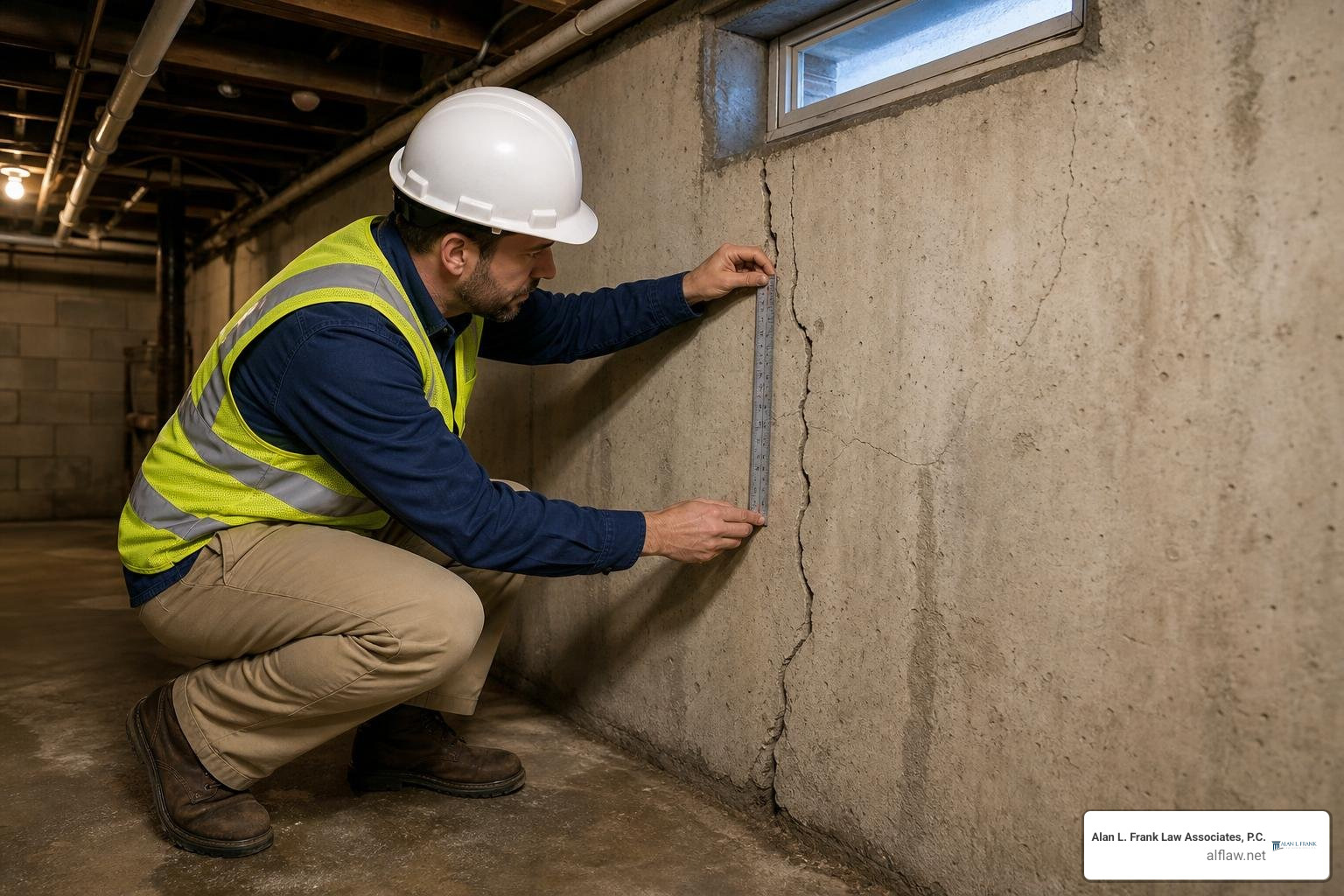
What Is a Material Defect in Real Estate Compared to Normal Wear and Tear?
Not every home flaw constitutes an actionable material defect. Distinguishing between normal deferred maintenance, aging components, and deal-breaking material failures requires evaluating structural function, remaining service life, and immediate safety hazards.
A fifteen-year-old roof reaching the natural end of its service life is not automatically a material defect if it remains watertight and functional; it is simply an aging asset that a buyer should factor into long-term capital reserves. Conversely, a five-year-old roof with structural decking rot, missing underlayment, or active water penetration that threatens the ceiling structure is a material defect.
Similarly, standard home inspection guidelines differentiate between cosmetic insulation gaps and true structural hazards. Missing attic insulation, while an efficiency flaw, is easily and inexpensively remedied and does not jeopardize the building’s physical integrity or resident safety.
Major Categories of Actionable Material Defects Include:
- Foundation and Structural Integrity Failures: Horizontal cracking or inward bowing of load-bearing masonry basement walls, crumbling footers, uneven subflooring resulting from settlement, or unpermitted removal of load-bearing interior partition walls.
- Active Water Ingress and Envelope Decay: Chronic basement flooding, failed stucco and exterior insulation finishing systems (EIFS) lacking proper weep screeds, or improperly flashed roof valleys causing systemic framing rot.
- Severe Plumbing, Drainage, and Sewer Failures: Collapsed terra cotta sewer laterals, defective polybutylene piping, compromised well water systems, or unpermitted, non-compliant septic drain fields.
- Agricultural and Site Deficiencies: Uncapped or abandoned agricultural wells, undocumented buried demolition debris, or compromised livestock waste lagoon retaining walls.
- Legal, Permitting, and Boundary Encumbrances: Unpermitted additions built without municipal building permits that trigger stop-work orders, unrecorded easements granting neighboring access across private land, or zoning violations that prohibit existing residential or commercial uses.
Critical Mechanical, Environmental, and Site Hazards
Certain material defects pose imminent risks to human health and life, elevating them beyond economic losses to severe liabilities involving personal injury and safety claims:
- Electrical Hazards: Outdated knob-and-tube wiring carrying excessive electrical loads, aluminum branch circuit wiring prone to overheating, rusted main service panels showing evidence of water ingress, or open-flame gas shut-off valves placed inside active hearths.
- Toxic Environmental Contaminants: Airborne toxic black mold (Stachybotrys chartarum) resulting from hidden plumbing leaks, elevated indoor radon levels exceeding the EPA action threshold of 4.0 pCi/L, deteriorating friable asbestos on heating pipes, or lead paint hazards in pre-1978 residential construction.
- Underground and Commercial Contamination: Unregistered, leaking underground heating oil storage tanks (USTs) leaching petroleum hydrocarbons into surrounding soil and groundwater, or chemical runoff migrating from neighboring industrial parcels.
Legal Disclosure Obligations for Sellers, Buyers, and Real Estate Agents
Every party to a real estate transaction operates under distinct legal duties dictated by common law, administrative codes, and state disclosure statutes.

Seller Duties and the Limits of “As-Is” Contract Clauses
Sellers possess the greatest knowledge regarding their property’s history. Under state statutory schemes, sellers of residential real estate must complete formal property condition disclosure statements disclosing all known material defects affecting roofing, structural systems, plumbing, electrical, and environmental safety.
A frequent misconception among property sellers and investors is that inserting an “As-Is” clause into a purchase agreement shields them from failure-to-disclose liability. An “As-Is” provision does not grant a seller license to commit fraud or intentionally conceal known latent defects.
In American jurisprudence, courts have established that when a seller knows of facts materially affecting the value or desirability of a property that are not readily observable and are not known to the buyer, the seller is under an affirmative legal duty to disclose them. Under state administrative regulations, including New Jersey administrative regulations on defect definitions, licensed inspectors and real estate participants must adhere to clear standards regarding what conditions pose substantial structural or health risks.
An “As-Is” clause merely allocates the risk of unknown defects and clarifies that the seller will not perform pre-closing repairs or provide repair credits; it provides zero legal immunity for deliberate silence, fraudulent concealment, or active misrepresentation of known latent defects.
Real Estate Broker Obligations and Actual Knowledge Rules
Licensed real estate agents and brokers owe distinct professional and statutory obligations to transaction participants:
- Fiduciary Duty to Clients: Real estate brokers must exercise reasonable care, loyalty, and accounting for their principals, ensuring that material transaction facts are accurately communicated.
- Affirmative Disclosure of Known Adverse Facts: Even when representing the seller, a listing broker has a legal obligation to disclose known adverse material facts and latent defects to prospective buyers. If a prior prospective buyer backed out of a purchase after an engineering inspection revealed severe foundation buckling, the listing agent cannot ignore that written report. Concealing that knowledge from subsequent buyers exposes both the agent and their brokerage to joint civil liability for fraud.
- The “Actual Knowledge” Boundary: Unlike home inspectors or engineers, real estate brokers generally do not have an affirmative legal duty to conduct independent technical inspections of a property or verify public records unless contractually agreed upon. Broker liability typically hinges on proving actual or constructive knowledge rather than a failure to uncover hidden construction defects.
When broker non-disclosure or dual-agency breaches cause substantial commercial losses, our team handles the resulting complex claims through targeted commercial litigation.
Legal Remedies, Lawsuits, and Defending Your Rights After Closing
Discovering a severe, unannounced material defect after moving into a new home or closing on commercial property is financially and emotionally disruptive. Fortunately, the law provides comprehensive legal avenues for aggrieved property buyers across our comprehensive legal practice areas.
Causes of Action: Fraudulent Concealment and Contract Rescission
When a seller, builder, or agent knowingly misleads a buyer regarding a material defect, an injured buyer can assert several distinct causes of action in civil court:
- Fraudulent Concealment and Intentional Misrepresentation: To succeed, the buyer must prove that the defendant made a false representation or concealed a known material fact, that the defendant knew of its falsity or acted with reckless disregard, that they intended to induce the buyer to complete the purchase, and that the buyer suffered substantial financial injury from justifiable reliance on the omission.
- Breach of Contract: Arising directly from the violation of explicit terms in the purchase and sale agreement, express builder warranties, or statutory disclosure addenda incorporated into the conveyance.
- Negligent Misrepresentation: Applicable when a seller or professional carelessly provides false or inaccurate material information without taking reasonable steps to verify its truth, leading the buyer to rely on the error to their economic detriment.
- Contract Rescission: In extreme cases where a home is unlivable or the structural foundation cannot be reasonably repaired, a court of equity may grant contract rescission. This unwinds the entire transaction—returning the property title to the seller and refunding the purchase price, closing fees, and carrying costs to the defrauded buyer.
- Punitive Damages and Legal Fees: When a seller’s or developer’s concealment involves egregious, intentional fraud, courts can award punitive damages to punish the bad actor and deter future misconduct, along with statutory attorney fees where authorized by law.
Statutes of Limitations and Calculating Repair Damages
Time is critical when initiating real estate litigation. Across jurisdictions such as Pennsylvania and New Jersey, statutes of limitations for real estate fraud, breach of contract, and construction defects generally range between two and six years.
Under the Discovery Rule, the statutory clock typically begins ticking not necessarily on the exact day of real estate settlement, but on the date the buyer discovered—or through the exercise of reasonable diligence should have discovered—the existence of the concealed material defect.
Legal Damages Are Calculated Through Two Primary Methodologies:
- Cost of Repair: The actual, reasonable monetary expense required to restore the property to the safe, functional condition promised in the contract, supported by itemized contractor estimates and forensic engineering reports.
- Diminution of Value: The difference between the fair market value the property would have had if the represented condition had been true versus its actual fair market value burdened by the uncorrectable defect.
Frequently Asked Questions About Material Property Defects
Does a Home Inspection Report Guarantee Protection Against Undisclosed Defects?
No. A standard home inspection is a non-invasive, visual examination of accessible property systems on a specific day. Home inspectors cannot see behind finished drywall, inside sewer lines, or under concrete slabs. Standard inspection agreements contain strict liability disclaimers and scope limitations.
While an inspector’s report is essential for uncovering patent defects, it does not guarantee protection against intentionally concealed latent defects. Proving what a seller actually knew remains the primary evidentiary factor in post-closing litigation.
What Evidence Is Required to Prove a Seller Intentionally Hid a Defect?
To hold a seller legally accountable for non-disclosure, you must prove they had actual or constructive knowledge of the flaw prior to closing. Strong evidence includes:
- Contemporaneous contractor repair invoices or discarded estimates found in municipal archives or property basements.
- Evidence of cosmetic masking, such as new wood paneling erected directly over actively collapsing foundation walls.
- Municipal records showing denied building permits or historic township code violation citations issued directly to the prior owner.
- Affidavits or deposition testimony from neighbors or previous prospective buyers who walked away after raising the exact same defect with the seller.
Can Real Estate Agents Face Joint Liability for Undisclosed Flaws?
Yes. If a real estate agent possesses actual knowledge of a material defect—such as receiving an engineering inspection from a prior buyer identifying active toxic mold or structural framing failure—and fails to disclose those findings to subsequent buyers, the agent and their broker can be held jointly liable for civil fraud and professional negligence.
Conclusion
A material defect can transform a valuable real estate investment into a severe structural and financial liability. Whether dealing with bowing foundation masonry, concealed water intrusion, hazardous electrical systems, or major municipal zoning encumbrances, understanding legal definitions and statutory disclosure duties is essential for protecting your investments.
At Alan L. Frank Law Associates, P.C., we provide aggressive, strategic representation in high-stakes property disputes and complex construction litigation throughout Pennsylvania and New Jersey. With our proven record of multi-million dollar recoveries and nationwide courtroom experience, we hold dishonest sellers, negligent developers, and deceptive brokers accountable.
If you have discovered an undisclosed material flaw or are navigating a serious building failure, explore our insights on housing and construction defect litigation to understand your legal rights and demand the compensation you deserve.