
Don’t Let Water Damage Drown Your Wallet


Don’t Let Water Damage Drown Your Wallet
Protect Your Property Before Water Damage Gets Worse
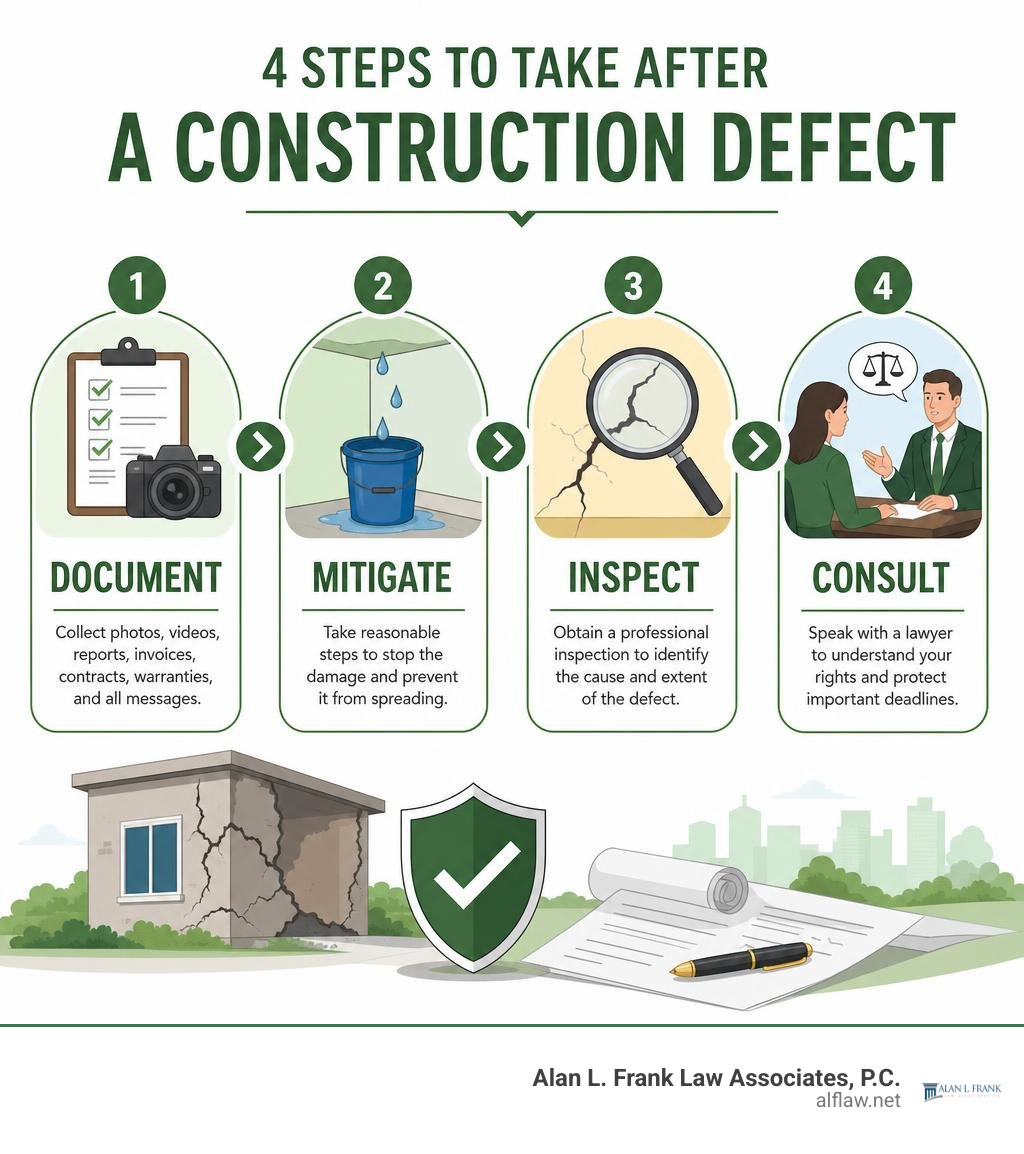
If you suspect a building defect, document the damage, take reasonable steps to stop it from spreading, and speak with a lawyer for construction defects as soon as possible. Keep photos, videos, repair invoices, inspection reports, contracts, warranties, and all messages with the builder or developer. Do not rely on verbal promises or rush into major repairs that could erase evidence without first getting legal and technical guidance.
Water intrusion, failed stucco or EIFS systems, roofing leaks, foundation movement, and HVAC problems can turn a manageable repair into a major financial loss. Moisture-related failures are especially common in multi-family properties, and the visible stain or leak may be only one sign of a larger building-envelope problem.
A construction defect lawyer can help identify responsible parties, preserve key evidence, coordinate independent experts, review insurance and warranty options, and protect important filing deadlines. Minnesota deadlines can be strict, including a six-year statute of repose that may run from substantial completion rather than from the day an owner discovers the problem.
I am Alan L. Frank, managing attorney at Alan L. Frank Law Associates, P.C., with more than 20 years of experience leading complex litigation involving substantial financial losses and property-related disputes. As a lawyer for construction defects and other high-stakes claims, I help clients evaluate the facts, damages, and legal paths available before a property problem grows more costly.
Identifying Common Construction Defects and Property Damage
Construction defects are rarely simple. An estimated 25% of all new homes experience a defect claim within their first decade, showing just how widespread building failures are across residential and commercial developments. A defect typically stems from improper design, poor material quality, inadequate site preparation, or substandard workmanship. Left unchecked, these flaws diminish property values and create severe safety hazards.
Beyond minor cosmetic flaws, severe defects disrupt the structural integrity and functionality of entire buildings. The most frequent issues we see include:
- Water infiltration and stucco failures: Inadequate sealing or flashing that allows rainwater to seep behind exterior cladding.
- Structural movement: Inadequate load path calculations leading to cracked framing, sagging floors, or bowing walls.
- Flat work heaving: Slabs, driveways, and sidewalks lifting or cracking due to uncompacted soils or improper expansion joints.
- Roofing leaks: Missing underlayment, improperly installed valleys, or substandard flashing around penetrations.
- HVAC deficiencies: Incorrect duct sizing, poor ventilation balance, or improper condensation lines leading to interior mold and high utility bills.
Water Intrusion and Moisture-Related Failures
Water intrusion and moisture-related defects account for approximately 70% of all construction defect claims in multi-family residential buildings. The building envelope—comprising exterior walls, windows, roofs, and foundations—serves as the primary barrier against environmental moisture. When contractors fail to install flashing correctly or misuse Exterior Insulation and Finish System (EIFS) cladding, water penetrates into the wall cavity.
This trapped moisture rots structural wood studs, corrodes metal fasteners, compromises thermal insulation, and fosters toxic mold growth. In multi-family communities and condominiums, these water failures spread across party walls, affecting dozens of individual unit owners simultaneously and compounding the scope of repairs.
Structural Integrity and Foundation Issues
A building is only as sound as the foundation supporting it. Foundation settlement occurs when builders fail to conduct proper soil boring tests, neglect soil compaction requirements, or mismanage site drainage. As the underlying soil shifts or washes away, concrete footings crack, basement slabs heave, and framing members twist.
Framing defects—such as missing hurricane ties, incorrectly spaced load-bearing studs, or improper notching of floor joists—violate local building codes and jeopardize occupant safety. The average cost to repair a single-family home construction defect ranges from $10,000 to $100,000, but complex structural failures often exceed $500,000. Identifying these failures early prevents catastrophic collapses and limits structural degradation.
Determining Liability: Who Is Responsible for Your Property Damage?
Unraveling liability in a construction dispute requires a thorough forensic investigation. General contractors often attempt to shift blame to their trade subcontractors, while subcontractors point fingers at defective architectural plans or faulty materials supplied by manufacturers. In truth, multiple entities can share legal and financial responsibility.
Our firm evaluates the contracts, building codes, and industry standards that govern each party’s performance. By deploying comprehensive commercial litigation strategies, we ensure every responsible entity—from the site engineer who miscalculated soil loads to the supplier who distributed sub-par building materials—is brought to the table to make you whole.
Construction Defect Claims vs. Statutory Warranty Claims
It is essential to understand the difference between a direct construction defect claim and a statutory or express warranty claim:
- Express Warranties: These are written promises provided directly by the builder or manufacturer, typically outlining specific repair responsibilities for one, two, or ten years on workmanship, systems, and structural components.
- Implied Warranties: Legal doctrines that require a dwelling to be fit for habitation and constructed in a workmanlike manner, regardless of whether a written warranty was executed.
- Defect Claims (Tort and Contract): Independent claims grounded in common law negligence, breach of contract, or intentional misrepresentation. These claims do not rely strictly on written warranty language, allowing property owners to pursue damages for broader property destruction and consequential financial losses.
Statutes of Limitations and Repose Deadlines
Time is of the essence when handling construction defect claims. Every jurisdiction enforces strict procedural clocks:
- Statute of Limitations: This clock starts running when the property owner discovers (or reasonably should have discovered) the defect or resulting physical damage. It dictates the window within which a lawsuit must be initiated once the problem becomes apparent.
- Statute of Repose: Unlike the limitations period, the statute of repose creates an absolute cutoff based on the date of substantial completion of the building project, regardless of when the defect is discovered.
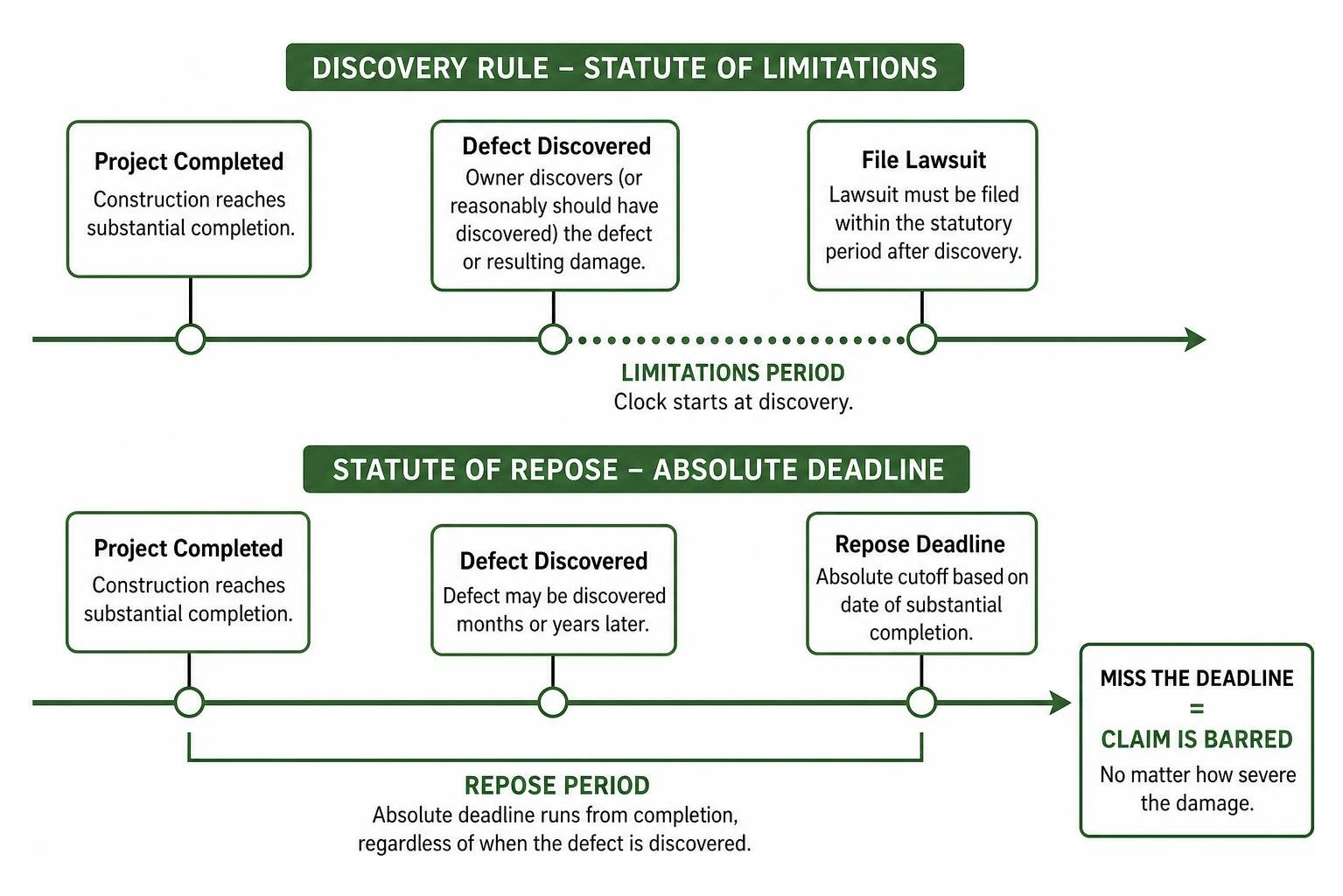
Missing a statutory deadline completely bars your claim, no matter how catastrophic the structural damage. For this reason, waiting for a builder to voluntarily fix issues under warranty can run out your legal clock.
When and Why to Hire a Lawyer for Construction Defects
Navigating a defect claim without legal representation places property owners at a distinct disadvantage. Builders, developers, and their insurance carriers employ seasoned defense attorneys whose primary goal is to minimize payouts and delay resolutions. When you retain an attorney, you level the playing field.
A dedicated legal team manages the technical complexity of the case by engaging independent forensic structural engineers, cost-estimating consultants, and building envelope experts. Furthermore, if your initial case was mishandled or an unfavorable judgment was entered, skilled counsel can step in to manage complex appellate litigation. Property owners researching premier counsel across the region frequently reference listings like the Best Construction Lawyers in Philadelphia, PA to find proven advocates for major property claims.
Key Qualities to Look for in a Lawyer for Construction Defects
Selecting the right legal team is critical to the success of your recovery. When evaluating counsel for a residential, commercial, or community association claim, look for the following qualifications:
- Substantial Trial Experience: A willingness and demonstrated ability to take complex technical cases all the way to a jury verdict rather than accepting lowball settlements.
- Experience with Multi-Party Litigation: Proven success managing claims involving dozens of subcontractors, material manufacturers, and insurers.
- Community Association Knowledge: Insight into the unique statutory and operational hurdles faced by condominium boards and HOAs.
- Regional Recognition: A firm with established roots and a strong reputation in the local legal community, similar to the vetted professionals found on the Best Lawyers in Jenkintown, PA – Justia directory.
Step-by-Step Resolution Process with a Lawyer for Construction Defects
Resolving a defect claim follows a structured path designed to establish liability, prove damages, and secure recovery.
- Forensic Investigation: Independent engineers conduct non-destructive and invasive testing to pinpoint the exact origin, nature, and extent of the structural or water failure.
- Statutory Notice and Right-to-Repair Review: Counsel provides formal notice to the responsible contractors, fulfilling any mandatory statutory pre-suit dispute requirements while protecting evidence.
- Formal Mediation and Settlement Negotiations: Parties present technical findings and repair cost models to an experienced mediator to achieve a fair financial settlement without prolonged court proceedings.
- Discovery, Pre-Trial Motions, and Trial: If settlement talks stall, your counsel executes comprehensive discovery, deposes key trade contractors, and presents the case before a judge and jury.
Our firm leverages our depth across diverse practice areas to guide owners through every stage of this complex legal framework.
Actionable Steps to Take Immediately After Discovering a Defect
The actions you take immediately following the discovery of water intrusion or physical damage can make or break your subsequent legal claim.
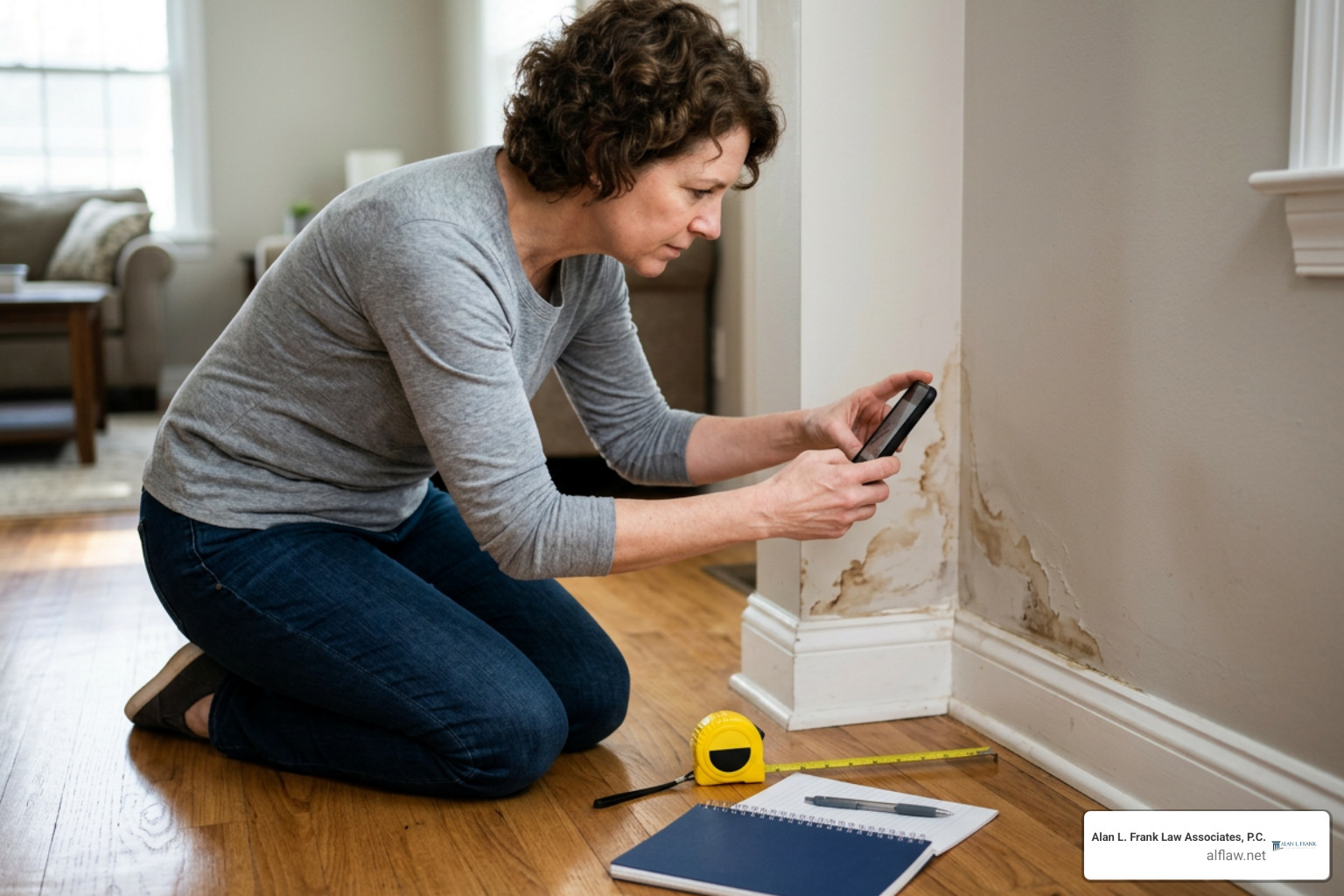
- Document Everything Thoroughly: Take extensive, high-resolution photographs and videos of the damage, noting dates, times, and weather conditions.
- Enact Reasonable Mitigation: Take temporary measures to stop active water flow (such as placing tarps or containers) to comply with your legal duty to mitigate damages. Avoid performing permanent structural repairs before an expert inspection.
- Preserve All Communications: Gather all original contracts, architectural drawings, change orders, warranty books, emails, and text messages with the developer or builder.
- Avoid Signing Releases: Never sign a waiver, liability release, or settlement document offered by a builder’s repair crew without having your attorney review the terms first.
Frequently Asked Questions About Construction Defect Litigation
How quickly must property owners act after discovering a construction defect?
Property owners must act immediately upon noticing physical signs of a defect, such as drywall stains, peeling paint, or foundation cracks. Waiting not only allows water intrusion or settlement to worsen, causing mold and rot, but it also risks expiring the statute of limitations. Furthermore, property owners have a legal obligation to mitigate ongoing damages; failing to act promptly can reduce the compensation recoverable from the at-fault parties.
Who pays for legal fees and structural repair expenses in defect cases?
In construction defect litigation, repair expenses and damages are typically pursued from the developer, general contractor, subcontractors, and their commercial general liability (CGL) insurance carriers. Depending on the underlying purchase contract, state statutes, or warranty documents, fee-shifting provisions may allow prevailing property owners to recover reasonable attorney fees and expert costs from the defendant. During an initial legal assessment, counsel will review whether fee-shifting mechanisms or specific contingency arrangements apply to your dispute.
Where can property owners find free guides and resources for defect claims?
Property owners can access educational materials, statutory building standards, and consumer protection guides through state licensing boards, community association institutes, and regional bar associations. Additionally, our firm provides informative resources and legal overviews to help property owners understand the nuances of contractor liability and damage valuation before embarking on litigation.
Conclusion
Construction failures and unmitigated water intrusion threaten both your physical safety and your financial well-being. Whether you are dealing with failed EIFS cladding, extensive roof leaks, or severe structural movement, taking rapid and decisive legal action is the most effective way to protect your investment.
At Alan L. Frank Law Associates, P.C., we draw upon decades of high-stakes litigation experience to hold negligent developers, contractors, and design professionals accountable. If your residential or commercial property has suffered from building failures, we encourage you to review our FAQs housing and construction defects or reach out to our team to explore your legal remedies and pursue the financial recovery you deserve.