
What Notice Do You Actually Need to Evict a Tenant Legally?


What Notice Do You Actually Need to Evict a Tenant Legally?
How to Evict a Tenant Legally Starts With the Right Notice
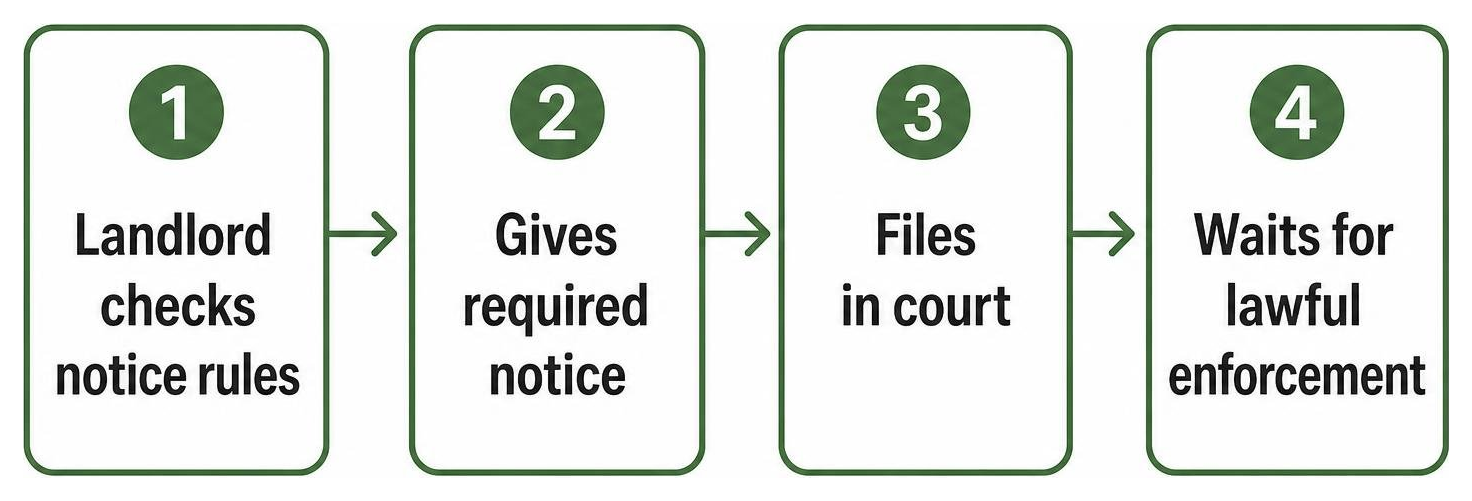
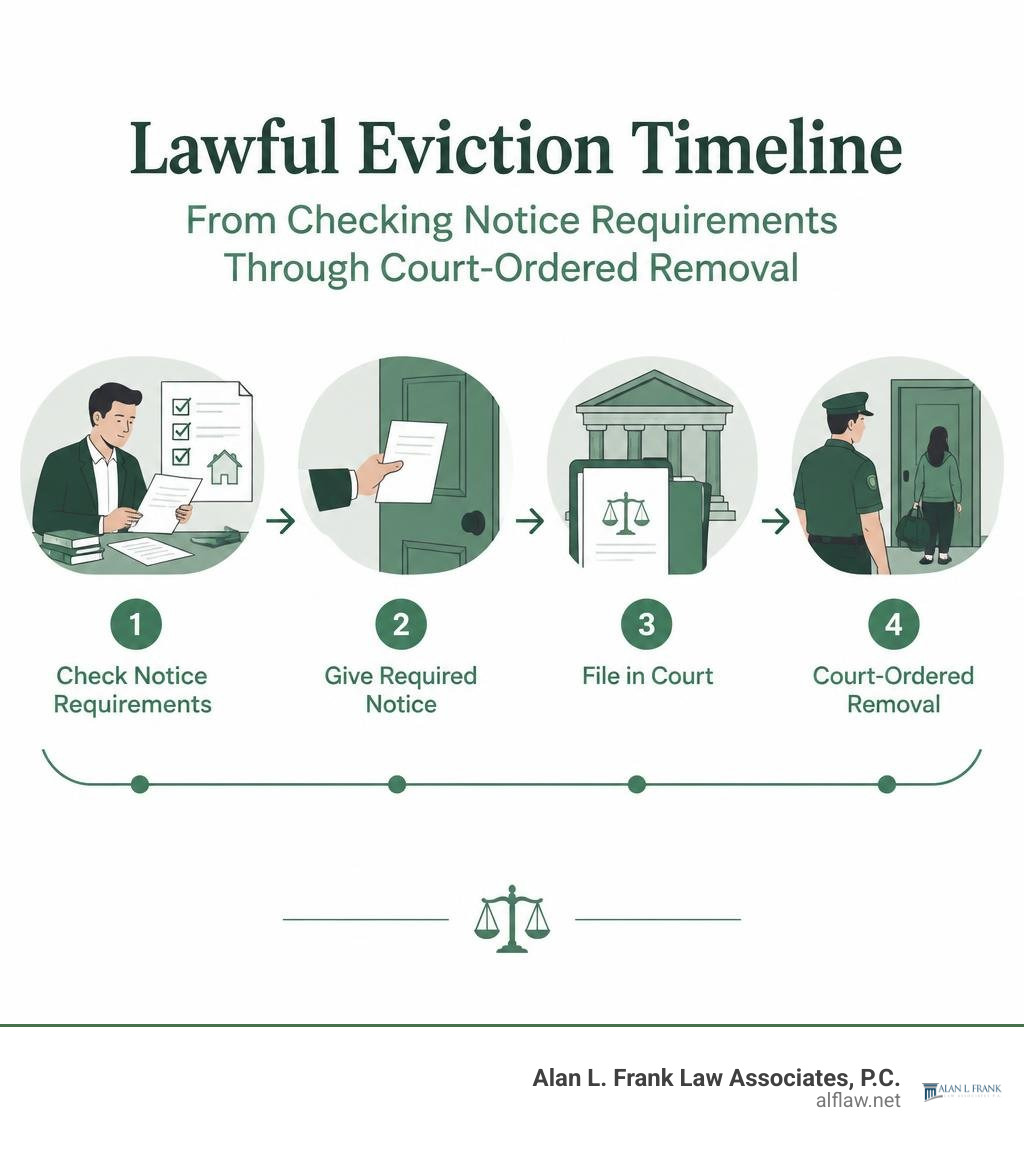
To evict a tenant legally, check the lease and local law for a valid reason and the notice, if any, you must give. Deliver the notice as required, wait until its deadline passes, and file a court case if the tenant remains. Do not change the locks or shut off utilities. Only an authorized officer can carry out a court order for possession.
I’m Alan L. Frank, a litigation attorney with more than 20 years of experience in complex business disputes. That courtroom experience shapes this guide to the question “how to evict tenant legally,” starting with the notice rules that apply in Pennsylvania or New Jersey.
How to evict tenant legally vocab explained:
- what is constructive eviction
- how to evict commercial tenant
- lis pendens explained for buyers sellers and litigants
How to evict a tenant legally: establish grounds and give proper notice
A landlord generally needs a lawful reason, proper notice when required, and a court order to recover possession from a tenant who will not leave. The right notice depends on the reason for eviction, the lease, the property, and the laws that apply. A notice that gives too little time or fails to state the required information can delay a case or cause it to be dismissed.
Before taking action, review the lease, keep records of the issue, and confirm local requirements. Jurisdiction can affect which rules and procedures apply, including what notice must say, how it must be delivered, and when a landlord may file.
Identify an at-fault or no-fault reason
An at-fault eviction is based on something the tenant allegedly did or failed to do. Common reasons include:
- Not paying rent
- Breaking an important lease term
- Causing a serious nuisance or damaging the property
- Staying after a lease ends or after a tenancy is properly terminated
A no-fault eviction is based on a reason not caused by tenant misconduct, such as an owner’s legitimate plan to occupy the property or a substantial renovation that requires the tenant to leave. Whether a no-fault eviction is permitted, and what notice or relocation protections apply, depends on state and local law. Some jurisdictions require “just cause” for certain tenancies, while others do not impose the same rules.
A landlord cannot use a stated reason as a pretext for discrimination or retaliation. For example, an eviction may be unlawful if it is actually punishment for a tenant reporting unsafe conditions or based on a protected characteristic.
Prepare and serve a valid notice
The notice should match the reason for ending the tenancy and meet the applicable legal and lease requirements. Depending on the situation, it may need to include:
- The reason for termination or the lease term allegedly violated
- The amount of rent claimed to be due, if the case involves nonpayment
- Whether the tenant can fix the problem, and how to do so
- The date by which the tenant must pay, correct the issue, or leave
- Instructions or contact details required by law
The deadline can range from a few days to substantially longer, depending on the location and reason. Do not assume the same notice period applies to unpaid rent, a lease violation, and a tenancy ending without cause.
Use a delivery method allowed by the lease and applicable law, and keep proof of when and how the notice was served. A copy of the notice, mailing or delivery records, rent ledger, lease, and relevant communications may become important evidence. California’s rules are not applicable to a Pennsylvania or New Jersey property, but the California Courts’ residential eviction guide illustrates why notice and court procedures are jurisdiction-specific.
Check whether special rules apply before filing
Some rentals have added protections or procedures, including subsidized housing, properties covered by local tenant protections, and certain federally connected housing. Confirm whether special notice requirements, funding rules, or local ordinances apply before filing.
Commercial tenancies also involve lease terms and procedures that may differ from residential cases. For an overview of those issues, see our guide to commercial tenant eviction steps.
What happens after notice: filing, hearing, judgment, and possession
If the notice deadline passes and the tenant has not paid, corrected the issue, or moved out, the next step is generally to start a court case. The name of the case and the forms differ by state. The landlord must follow the court’s filing and service rules; giving notice is not the same as obtaining permission to remove a tenant.
After the case is filed, the tenant must receive the court papers through a legally accepted method. The papers explain the claim and provide information about responding or appearing. If the tenant contests the case, the court may schedule a hearing. Both sides can present relevant documents and testimony. The parties may also resolve the matter through an agreement, if they choose.
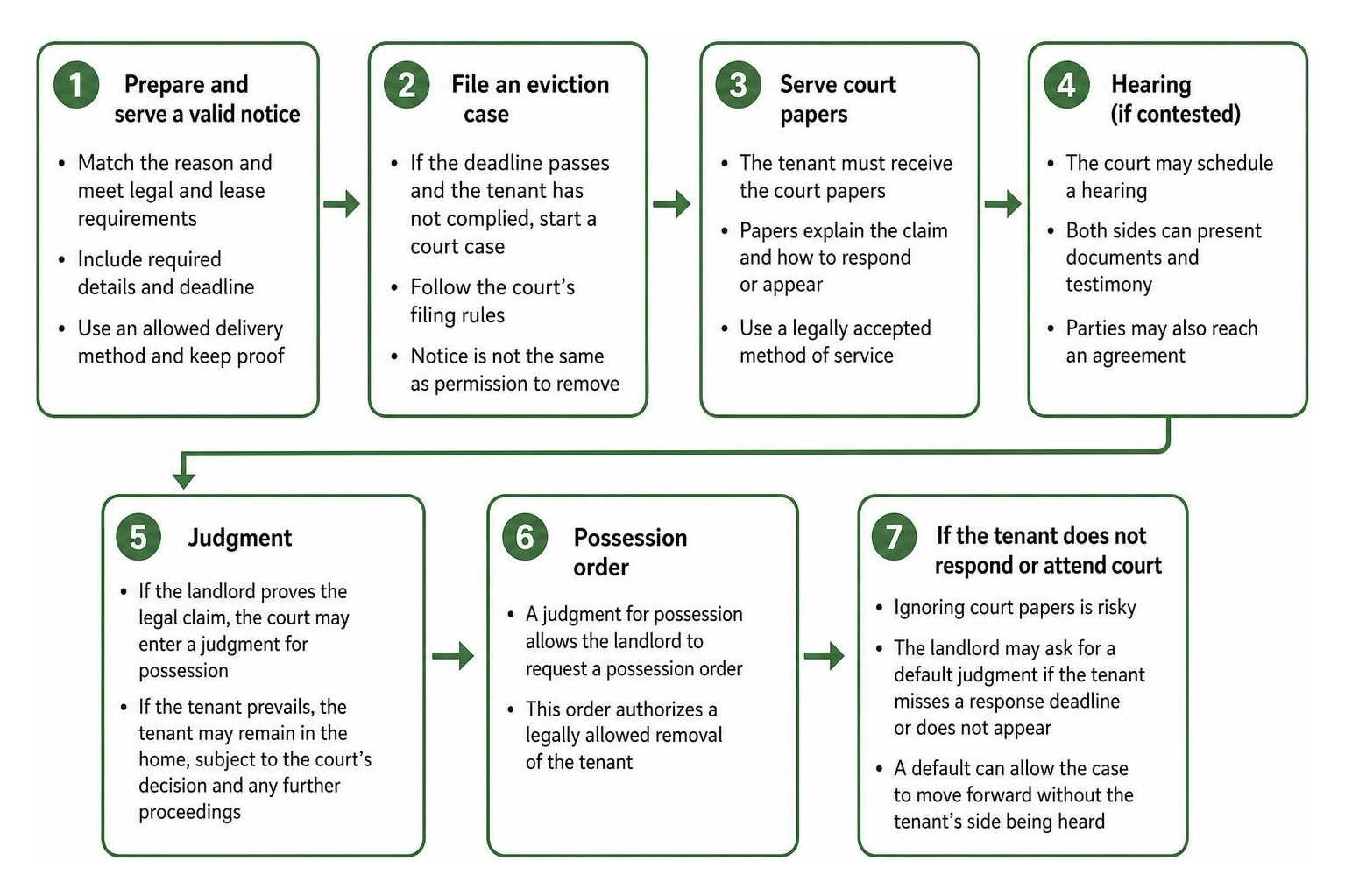
If the landlord proves the legal claim, the court may enter a judgment for possession. If the tenant prevails, the tenant may remain in the home, subject to the court’s decision and any further proceedings. California calls its residential process an unlawful detainer case; its court guide explains that state’s procedure, but it does not replace Pennsylvania or New Jersey rules.
If the tenant does not respond or attend court
Ignoring court papers is risky. Depending on the court and the case, a landlord may ask for a default judgment if the tenant misses a response deadline or does not appear. A default can allow the case to move forward without the tenant’s side being heard.
Tenants who receive court papers should read them promptly, check the response and hearing dates, and contact the court if they need procedural information. Potential defenses depend on the facts and law. They may concern improper notice or service, disputed rent, a serious lease issue, retaliation, discrimination, or other legal protections. A tenant should not assume a defense will be considered automatically; they generally need to raise it in the way the court requires.
What a writ of possession does—and who can enforce it
A writ of possession, or a similarly named court order, authorizes an enforcement officer to return possession of the property to the landlord. It is not permission for the landlord to carry out the removal personally.
After a court issues the order, an authorized sheriff, constable, or other officer follows the applicable procedures. Those procedures may include giving a final notice and allowing a short period to leave before enforcing the order. The rules for timing, appeals, and handling belongings vary by location. A landlord should confirm that required waiting periods and any appeal-related restrictions have been observed before enforcement.
Never use self-help eviction tactics
Even when rent is overdue or a lease has ended, a landlord generally cannot force a tenant out by changing the locks, shutting off essential utilities, removing belongings, or harassing the tenant. These actions can expose the landlord to legal claims and may interfere with the court process.
Use the notice and court procedures required by law, then leave enforcement to the authorized officer. Our explanation of constructive eviction and landlord duties discusses related landlord-tenant issues.
How eviction timelines differ by state
Eviction deadlines are not nationwide. Pennsylvania and New Jersey have different laws, court systems, notice rules, and enforcement procedures. Local requirements and the reason for eviction can also affect the timeline.
| Stage | Pennsylvania | New Jersey |
|---|---|---|
| Notice | The required notice and deadline depend on the reason, lease, and applicable law. Some residential nonpayment cases involve a 10-day notice, but exceptions and lease terms matter. | Notice requirements depend on the legal ground and whether a notice to cease or notice to quit is required. Some cases have additional statutory steps. |
| Court case | After required notice, the landlord files in the appropriate court and follows its service and hearing rules. | The landlord files a landlord-tenant case and must comply with court procedures and service requirements. |
| Hearing and decision | The tenant can contest the claim under applicable court procedures. Dates and deadlines depend on the case and court. | The tenant can contest the claim in court. Timing depends on the case and court schedule. |
| Enforcement | A landlord who obtains possession must use the court-authorized enforcement process. | A landlord must follow the court process for an order for possession and any required warrant or officer enforcement. |
This is a general comparison, not a substitute for checking the current law and court instructions for the property’s location. For Pennsylvania, see the overview of landlord-tenant notice requirements. For New Jersey, consult the state’s eviction timeline.
Pennsylvania: notice and court process
In Pennsylvania, the type and length of notice may depend on whether the landlord alleges unpaid rent, a lease violation, or a tenancy ending for another reason. The lease may affect the notice requirements, but it does not authorize a landlord to bypass the court process. After notice, a landlord generally must file the appropriate case and follow the court’s instructions for service, hearing, and enforcement.
New Jersey: notice and court process
New Jersey has its own statutory grounds and notice requirements, and protections may apply to many residential tenants. Depending on the reason, a landlord may need to take preliminary steps before filing. If the tenant remains, the landlord must use the court process and follow the required steps to enforce an order for possession.
Confirm the rules for the property’s location
Do not rely on a notice form or deadline from another state. Check current state law, local court rules, and the lease before serving notice or filing. The Legal Services Corporation’s eviction laws database shows how eviction rules vary across jurisdictions; its data has a stated effective date, so confirm current requirements separately.
Tenant rights, legal help, and practical next steps
Tenants facing eviction generally have a right to receive notice of the case and an opportunity to respond through the applicable court process. They should review every deadline, attend scheduled hearings, and bring relevant records. Depending on the case, useful documents may include the lease, rent receipts, notices, repair requests, messages, and proof of assistance applications.
Tenants who are behind on rent can ask about rental assistance, payment arrangements, housing counseling, or court mediation where available. A pending application does not automatically stop an eviction, so tenants should ask the court or a qualified legal resource what steps and deadlines still apply.
Legal help may be available through legal aid organizations, bar referral services, or local housing programs. The CFPB’s guidance for renters facing eviction outlines practical actions, including seeking help and responding to court papers. Our discussion of real estate litigation and legal representation explains why legal disputes can require careful attention to procedure and evidence.

Representation can be uneven in eviction cases. Research summarized in the materials for this guide reports that more than 90% of landlords have legal representation, compared with fewer than 10% of tenants. That makes it especially important for tenants to seek help early and for landlords to follow the required process carefully.
Frequently Asked Questions about evicting a tenant legally
How long does an eviction take from court filing to move-out?
Some evictions take 30 to 45 days or more from the time court papers are delivered, but no single timeline applies everywhere. The hearing schedule, service rules, court workload, tenant response, appeal, and enforcement process can all add time. The notice period occurs before the court case and is separate from the court timeline.
What must a notice to vacate include?
The notice should state the reason for ending the tenancy and the deadline to pay, correct the issue, or leave, as required by local law. For nonpayment, it may need to identify the amount due and explain how the tenant can cure the default. The required content, service method, and deadline depend on the state, local rules, and lease.
Can a landlord evict a tenant without a court order?
A landlord generally cannot forcibly remove a tenant without going through court and obtaining the required order. Changing locks, shutting off utilities, or removing belongings is not a lawful substitute for the court process. Any physical eviction must be carried out by an authorized officer under the applicable rules.
Conclusion
The right notice depends on the reason for eviction, the lease, and the law where the property is located. Give required notice, preserve proof of service, and use the court process if the tenant does not leave. Never try to enforce an eviction through a lockout or utility shutoff.
Because Pennsylvania and New Jersey procedures differ, confirm the rules for the property before acting. For disputes involving commercial property or other business matters, learn about our commercial litigation legal support.