
Constructive Eviction Explained for Tenants and Landlords


Constructive Eviction Explained for Tenants and Landlords
What Is Constructive Eviction?
Constructive eviction happens when a landlord’s action or failure to act seriously interferes with a tenant’s use of a property, effectively forcing the tenant to leave. Unlike an actual eviction, the landlord does not physically remove the tenant. A tenant who gives the landlord notice, allows a reasonable chance to fix the problem, and moves out within a reasonable time may be able to end the lease without owing future rent. The rules vary by location.
A major leak can make an apartment or business space impossible to use. But leaving too soon, or waiting too long after the landlord fails to act, can put a claim at risk. This guide explains what tenants must prove and what landlords can do to respond.
I’m Alan L. Frank, managing attorney at Alan L. Frank Law Associates, P.C., with more than 20 years of experience leading a firm that handles complex commercial litigation. I’ll answer what is constructive eviction? and explain how the issue can affect a lease dispute.
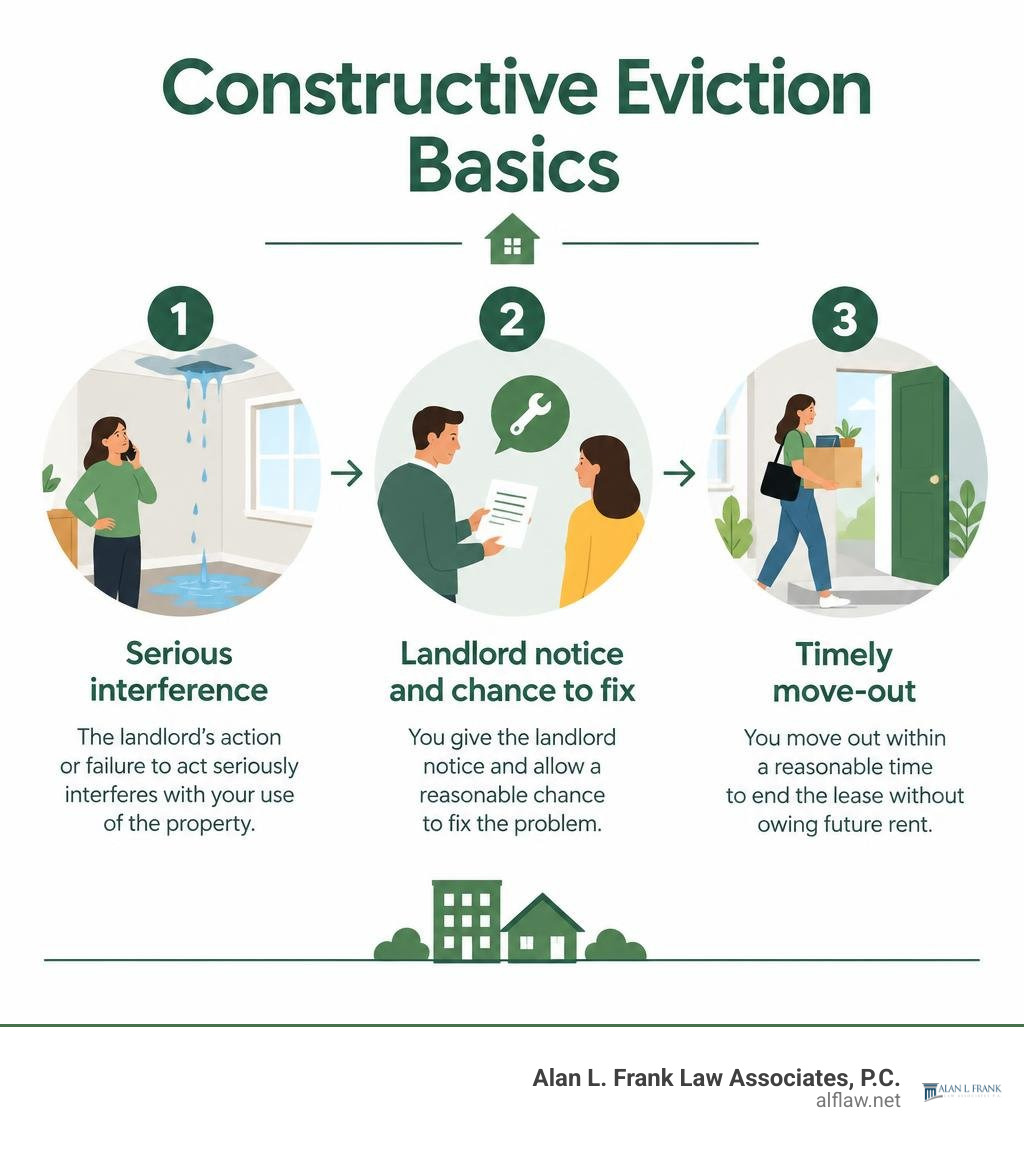
Essential what is constructive eviction terms:
Understanding What Is Constructive Eviction and the Implied Warranty of Habitability
At its core, the doctrine of constructive eviction is anchored in the implied covenant of quiet enjoyment—a foundational leasehold covenant guaranteeing that a tenant will have peaceful, uninterrupted possession of the rented property. When a landlord’s acts or omissions render the premises uninhabitable or unfit for their intended purpose, the law recognizes that the landlord has effectively broken this covenant.
According to the Legal Information Institute on constructive eviction, this doctrine serves as both an affirmative claim for damages and a complete defense against a landlord’s attempt to collect ongoing rent after a tenant walks away. In residential leases, constructive eviction works hand-in-hand with the implied warranty of habitability, a non-waivable legal duty requiring landlords to maintain basic human living standards. Contract provisions that attempt to waive habitability are void as against public policy.
| Feature | Constructive Eviction | Standard Breach of Lease |
|---|---|---|
| Physical Possession | Tenant must completely vacate the unit | Tenant can remain in possession |
| Primary Remedy | Complete lease termination & rent relief | Monetary damages or repair orders |
| Severity Threshold | Severe interference rendering space unusable | Minor to moderate covenant breaches |
| Rent Obligation | Extinguished upon timely vacating | Continues (subject to offset/withholding) |
What Is Constructive Eviction Versus Actual Eviction?
Understanding the distinction between these two concepts is vital in lease litigation:
- Actual Eviction: Occurs when a landlord physically excludes the tenant from the property—either legally through judicial process (filing an unlawful detainer action resulting in a sheriff-enforced lockout) or illegally through self-help (such as padlocking doors, changing locks without giving keys, or removing exterior doors).
- Constructive Eviction: As detailed in the Constructive eviction legal overview on Wikipedia, no physical force or court order is used. Instead, the landlord allows the property’s condition to deteriorate so severely that living or operating there becomes practically impossible, effectively coercing the tenant to leave.
The Three Core Legal Elements Required to Prove a Claim
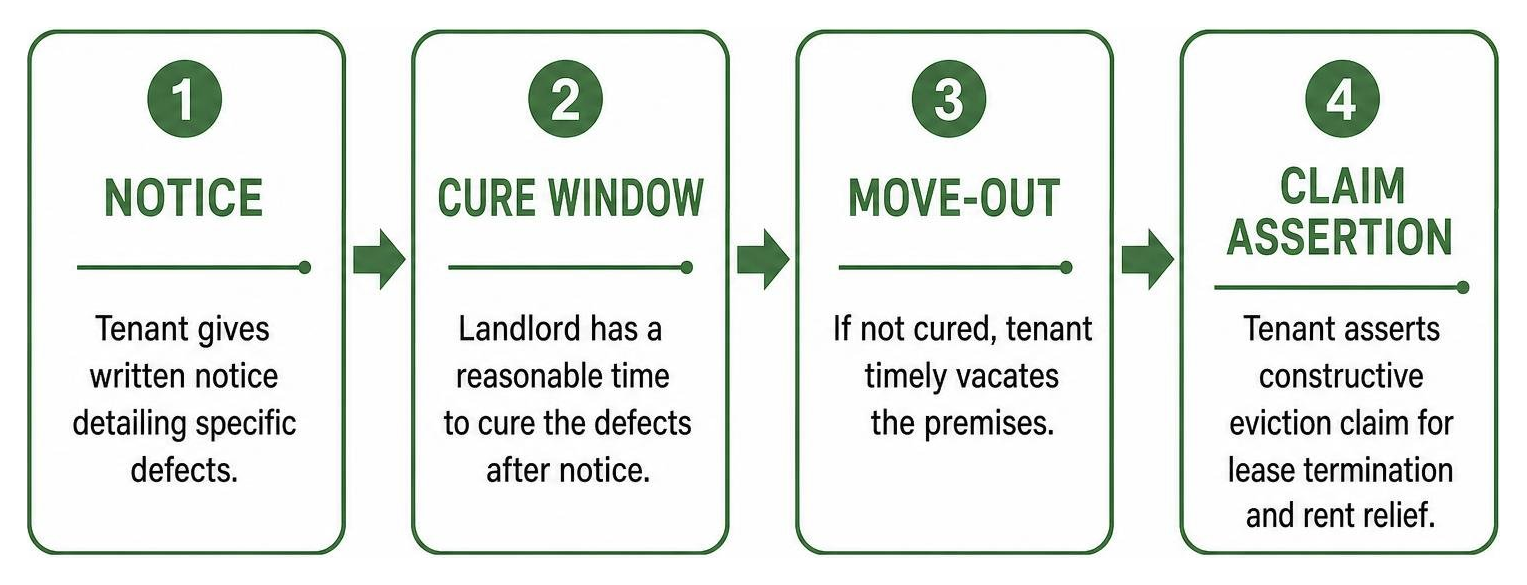
To successfully establish a constructive eviction claim in court, a tenant must prove three essential elements:
- Substantial Interference Due to Wrongful Conduct: The landlord committed an intentional or negligent wrongful act, or failed to perform a statutory duty, that fundamentally impairs the tenant’s beneficial use and quiet enjoyment of the leased premises.
- Written Notice and Failure to Cure: The tenant provided clear, written notice detailing the specific defects and allowed the landlord a reasonable statutory cure period to complete the necessary repairs.
- Timely Vacating of the Property: The tenant surrendered physical possession and moved out within a reasonable timeframe after the landlord failed to remedy the situation.
What Is Constructive Eviction in Commercial Lease Disputes?
Constructive eviction is not limited to residential properties; it is heavily litigated in commercial real estate disputes across Pennsylvania and New Jersey. Commercial tenants, however, operate under different rules. Unlike residential leases, commercial leases do not carry an automatic implied warranty of habitability unless explicitly written into the lease or governed by specific local commercial codes.
In commercial disputes, constructive eviction claims frequently turn on whether a landlord’s failure to maintain common areas, HVAC systems, or structural components destroyed the tenant’s ability to conduct business. In landmark retail litigation such as the commercial constructive eviction precedent in Sears, Roebuck & Co. v. 69th St. Retail Mall, commercial tenants forced to relocate due to severe landlord neglect may recover lost profits, moving costs, and goodwill impairment in addition to lease rescission. Navigating these complex, high-stakes disputes requires experienced real estate litigation services to protect against aggressive landlord enforcement.
Qualifying Uninhabitable Conditions and State Statutory Cure Standards
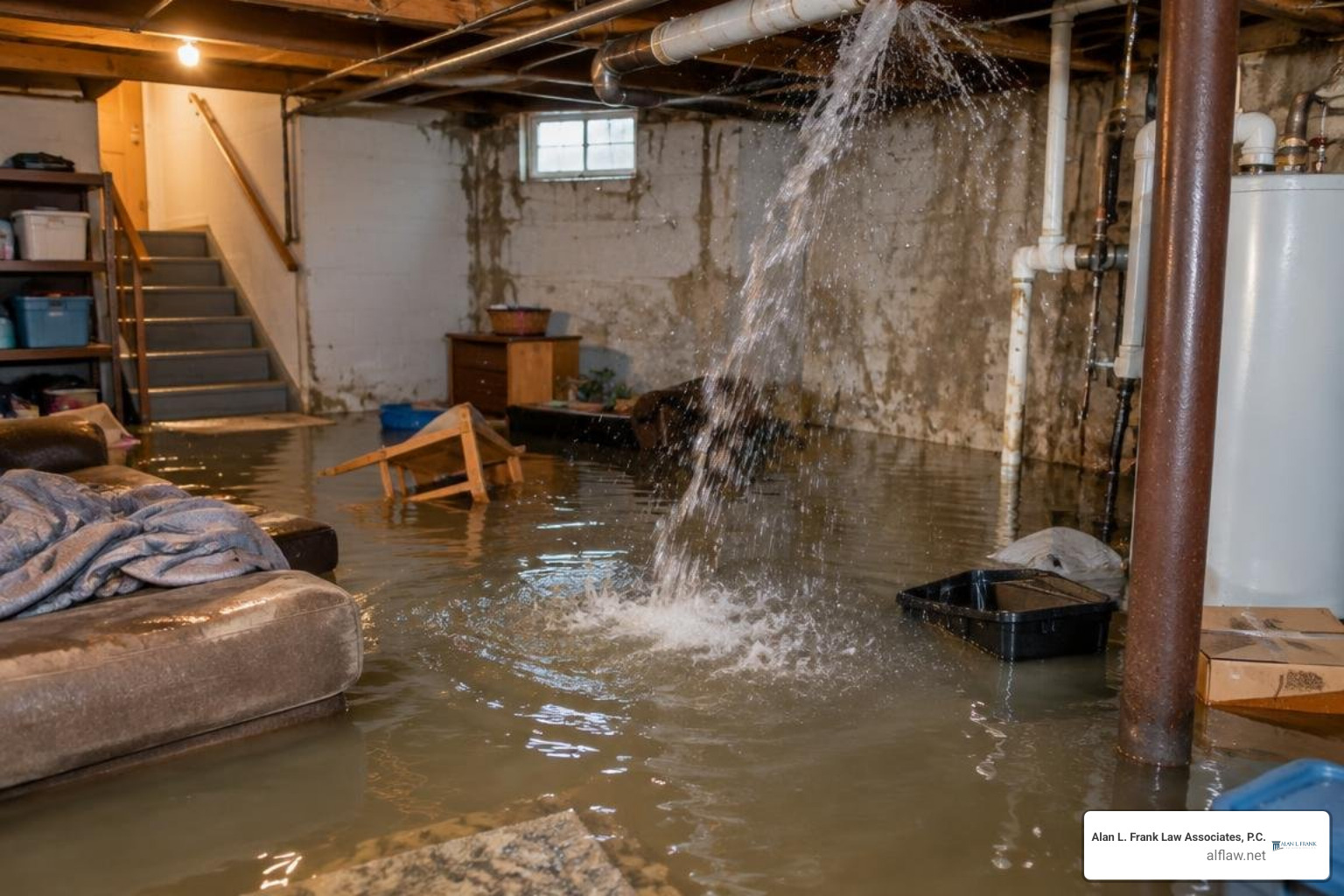
A minor maintenance headache, such as a dripping faucet or chipped paint, does not constitute constructive eviction. The defect must rise to the level of a severe health, safety, or structural crisis. As highlighted in the New Jersey Department of Community Affairs Habitability Bulletin, residential landlords must maintain facilities in compliance with state housing and building safety codes.
Severe Physical Defects: Utility Failures, Mold, and Structural Hazards
Conditions recognized by courts as justifying constructive eviction include:
- Loss of Vital Utilities: Complete lack of running potable water, hot water, electricity, or sanitary sewage disposal.
- Heating System Failures: Failure to maintain required minimum indoor temperatures during cold weather seasons.
- Water Intrusion and Toxic Mold: Unresolved exterior leaks that cause standing water, ceiling collapses, or pervasive toxic black mold growth. Resolving water intrusion and severe plumbing leaks is essential before structural damage becomes irreversible.
- Structural Failures: Compromised foundations, sinking floorboards, and unresolved roof damage. Proactive measures are necessary for preventing structural hazards and roof collapses from compromising building integrity.
- Severe Infestations: Pervasive infestations of rodents, bedbugs, or roaches that persist despite repeated remediation requests.
Partial Constructive Eviction and Multi-Jurisdiction Rules
Can a tenant claim constructive eviction if only part of the property is unusable? The answer depends heavily on the jurisdiction:
- Partial Constructive Eviction: Some jurisdictions recognize claims where a tenant is forced to abandon a portion of their space (for example, two flooded bedrooms in a four-bedroom home, or an unheated warehouse wing in a commercial facility). In these states, the tenant can remain in the usable section while securing a proportional rent reduction.
- Total Abandonment Rule: In contrast, other states adhere strictly to the total abandonment doctrine, holding that a tenant cannot claim constructive eviction while retaining possession of any part of the premises.
Step-by-Step Protocol to Establish a Claim and Recover Damages
Constructive eviction is an affirmative legal position that carries financial exposure if mismanaged. If a tenant moves out and the court later decides the condition was not severe enough, the tenant can be held liable for all remaining rent on the lease term.
To preserve your legal rights before walking away, follow this mandatory step-by-step checklist:
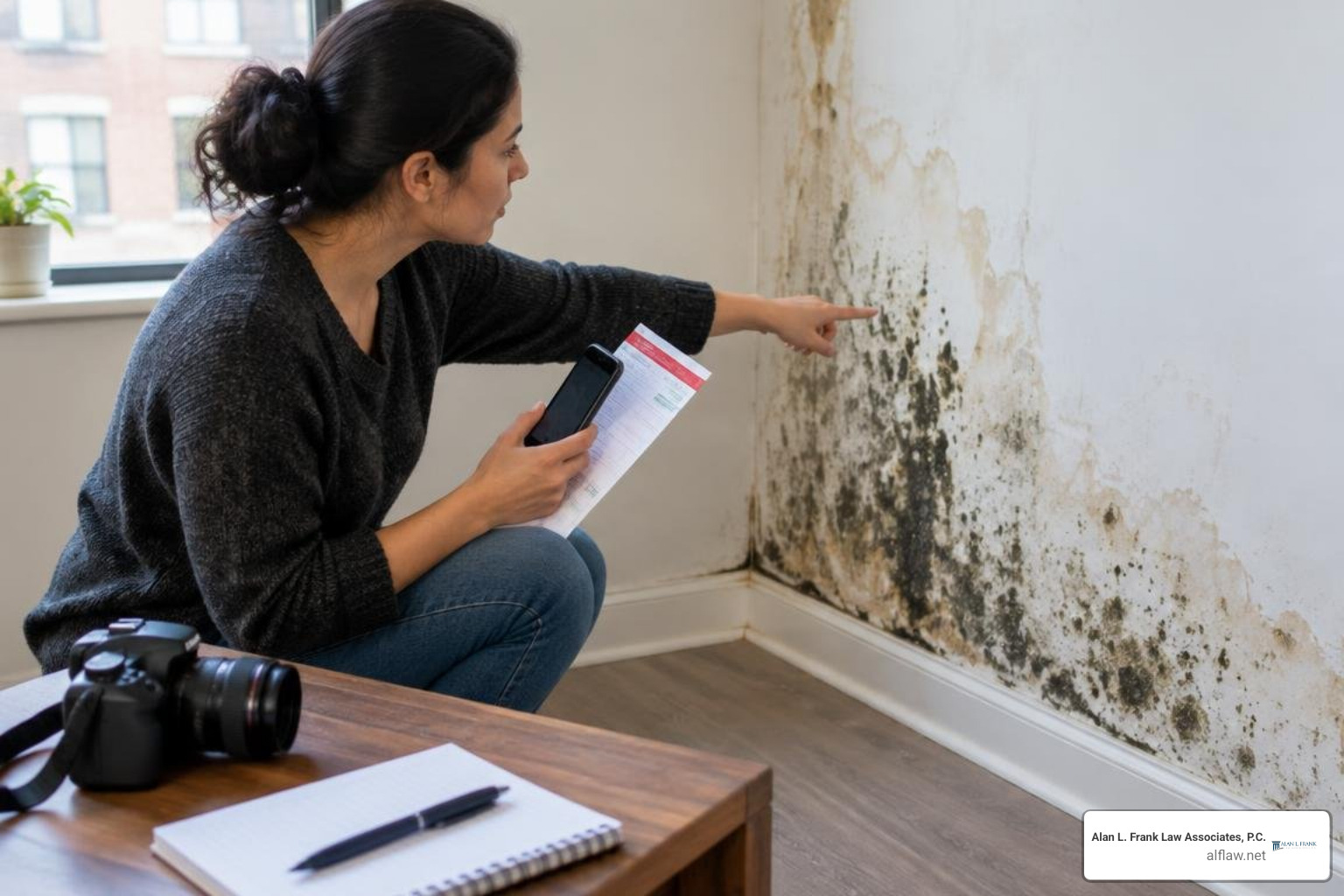
- Build a Comprehensive Evidence Trail: Take dated, high-resolution photographs and videos showing the defects, backed up securely to cloud storage. Keep receipts for all out-of-pocket costs, such as space heaters or temporary lodging.
- Send Formal Written Notice: Send a formal repair notice via certified mail with return receipt requested. Clearly state the defects, reference the landlord’s statutory duties, and set a specific, reasonable cure deadline.
- Request an Official Municipal Inspection: Contact local municipal code enforcement or the department of health. An official citation creates an unassailable public record of habitability violations.
- Allow the Reasonable Cure Window to Lapse: Give the landlord access to the property and a fair opportunity to fix the issue.
- Vacate Promptly and Surrender Keys: If the landlord fails to cure the condition, physically move out, surrender keys in writing, and confirm the surrender date to formalize lease termination.
Crucial Pre-Vacate Requirements: Notice, Cure Windows, and Documentation
The quality of your evidentiary record makes or breaks a constructive eviction lawsuit. When taking over a space or managing an ongoing tenancy, identifying undisclosed material defects early allows you to hold the landlord or property seller accountable before substantial structural deterioration occurs. Always keep copies of all text messages, emails, and inspector logs.
Financial Remedies, Rent Abatement, and Statutory Penalties
When constructive eviction is proven, tenants can seek substantial financial recovery:
- Lease Termination & Rent Discharge: Complete cancellation of all future lease obligations from the date of move-out.
- Rent Abatement and Restitution: Recovery of rent paid during periods when the premises were uninhabitable.
- Relocation Expenses & Rent Differential: Reimbursement for moving costs and the price difference if the tenant must lease a comparable unit at a higher market rate.
- Return of Security Deposits: Full refund of security deposits, free from unlawful landlord deductions.
- Tort and Statutory Penalties: Where landlord conduct is willful or fraudulent, tenants may recover damages for emotional distress, property destruction, and legal fee reimbursements under state consumer protection statutes, similar to enforcing warranty claims in breach of contract litigation.
Common Pitfalls and Landlord Defenses in Eviction Litigation
Fatal Mistakes That Invalidate a Tenant’s Defense
Tenants often undermine their own claims by making simple procedural errors:
- Waiting Too Long to Vacate: If a tenant complains about a lack of heat but stays in the property for an entire year, courts will conclude the condition was not severe enough to force an exit.
- Failing to Provide Written Notice: Verbal complaints or informal phone calls rarely hold up in court if the lease specifies written notice requirements.
- Denying Repair Access: If the landlord attempts to send a licensed contractor to make repairs and the tenant refuses entry, the constructive eviction claim is immediately compromised.
- Mixing Rent Withholding With Abandonment: Withholding rent while continuing to live in the unit without using an approved court escrow process can lead to an eviction judgment for non-payment before a constructive eviction defense can be heard.
Defenses Landlords Can Raise Against Habitability Claims
Landlords facing constructive eviction claims can defend themselves by asserting:
- Tenant-Caused Damage: Proving the uninhabitable condition was caused by tenant abuse, negligence, or unauthorized modifications.
- Lack of Notice or Reasonable Cure Opportunity: Demonstrating that the tenant never gave adequate written notice or vacated before a reasonable repair window closed.
- External Delays Beyond Control: Establishing that prompt repair efforts were delayed by third-party municipal permit backlogs or sudden utility grid failures rather than landlord neglect.
- Trivial Defects: Proving the issues complained of were minor cosmetic annoyances rather than substantial interference with quiet enjoyment.
Frequently Asked Questions About Constructive Eviction
How long does a tenant have to vacate after a landlord fails to cure defects?
The law requires the tenant to vacate within a “reasonable time.” There is no single universal deadline; courts evaluate the totality of the circumstances. If a home is completely flooded or lacks heat in freezing weather, a tenant is expected to leave within days. If the issue is progressive toxic mold requiring environmental testing and alternative housing searches, courts have recognized move-out periods spanning several weeks as reasonable.
Can a tenant withhold rent while claiming constructive eviction?
No. Rent withholding is a remedy for tenants who intend to remain in possession of the unit while forcing repairs (often requiring rent to be deposited into an escrow account). Constructive eviction, by definition, requires the tenant to surrender possession and vacate the property completely to extinguish future rent liability.
What constitutes illegal landlord harassment under modern property law?
Illegal landlord harassment includes deliberate utility shutoffs, changing locks without notice, removing doors, making threats, or engaging in frequent unauthorized entries. These actions violate the covenant of quiet enjoyment and expose landlords to statutory civil penalties, actual damages, and attorney fee awards.
Conclusion
Constructive eviction is a crucial legal doctrine that protects tenants from being trapped in uninhabitable properties, while establishing clear standards for landlord maintenance obligations. Because asserting this defense requires strictly following statutory notice requirements and physically vacating the premises, mistakes can lead to severe financial and legal liabilities.
At Alan L. Frank Law Associates, P.C., our litigation attorneys represent residential and commercial property owners and tenants throughout Pennsylvania and New Jersey. If you are facing a severe leasehold dispute, contact our experienced commercial litigation attorneys to evaluate your rights and protect your financial interests.