
How Homeowners Can Successfully Challenge Disputed Boundary Lines


How Homeowners Can Successfully Challenge Disputed Boundary Lines
How to Dispute a Property Line Before the Problem Gets Worse
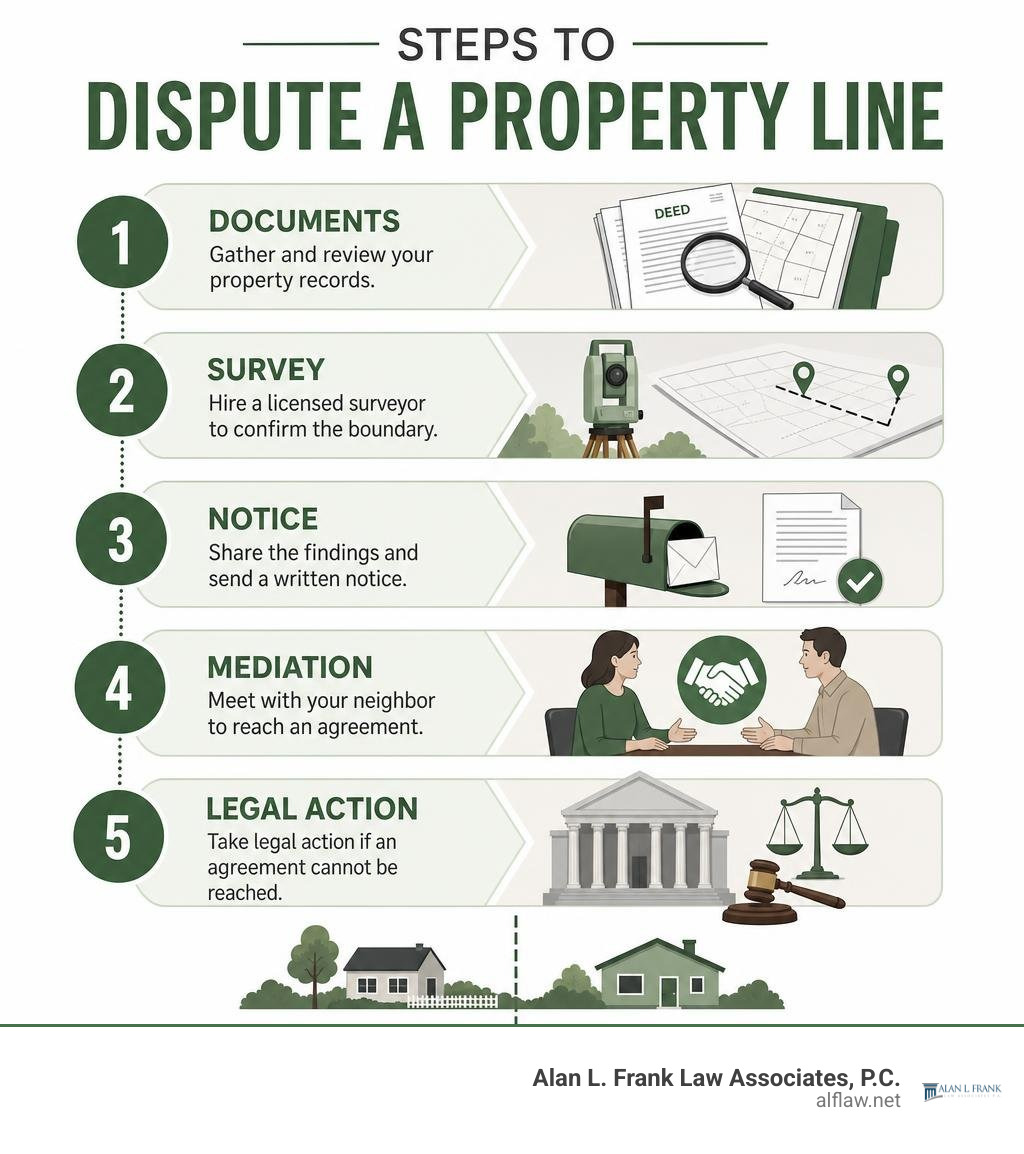
To dispute a property line, first confirm the boundary with reliable records and a licensed surveyor. Then document the issue, speak with your neighbor calmly, and put any request or agreement in writing. If the neighbor will not cooperate, a formal demand letter, mediation, or legal action may be needed to protect your rights.
- Review your deed, plat map, prior surveys, and title documents.
- Photograph fences, driveways, sheds, markers, or other possible encroachments.
- Order a current boundary survey before accusing anyone of crossing the line.
- Share the findings with your neighbor and seek a written resolution.
- Consult a real estate attorney promptly if construction continues, ownership is unclear, or long-term use may create legal rights.
Property boundaries are legal lines, not the fence lines, map-app overlays, or informal assumptions that neighbors may have followed for years. A small encroachment can delay a sale, reduce usable land, create title problems, or grow into a larger dispute involving adverse possession or easement claims.
I am Alan L. Frank, Managing Attorney at Alan L. Frank Law Associates, P.C., with more than 20 years of experience leading complex litigation involving substantial financial and property-related disputes. This guide explains how to dispute property line claims with clear evidence, practical negotiation, and legal options when an informal solution is not enough.
How to dispute property line helpful reading:
Understanding Boundary Conflicts: Encroachments, Easements, and Adverse Possession
Nothing can disrupt neighborhood harmony quite like an argument over invisible lines in the dirt. When you purchase real estate in Pennsylvania or New Jersey, you receive legal title to a specific parcel defined by recorded legal descriptions. When adjacent landowners place physical structures or use land past those parameters, significant conflicts arise.
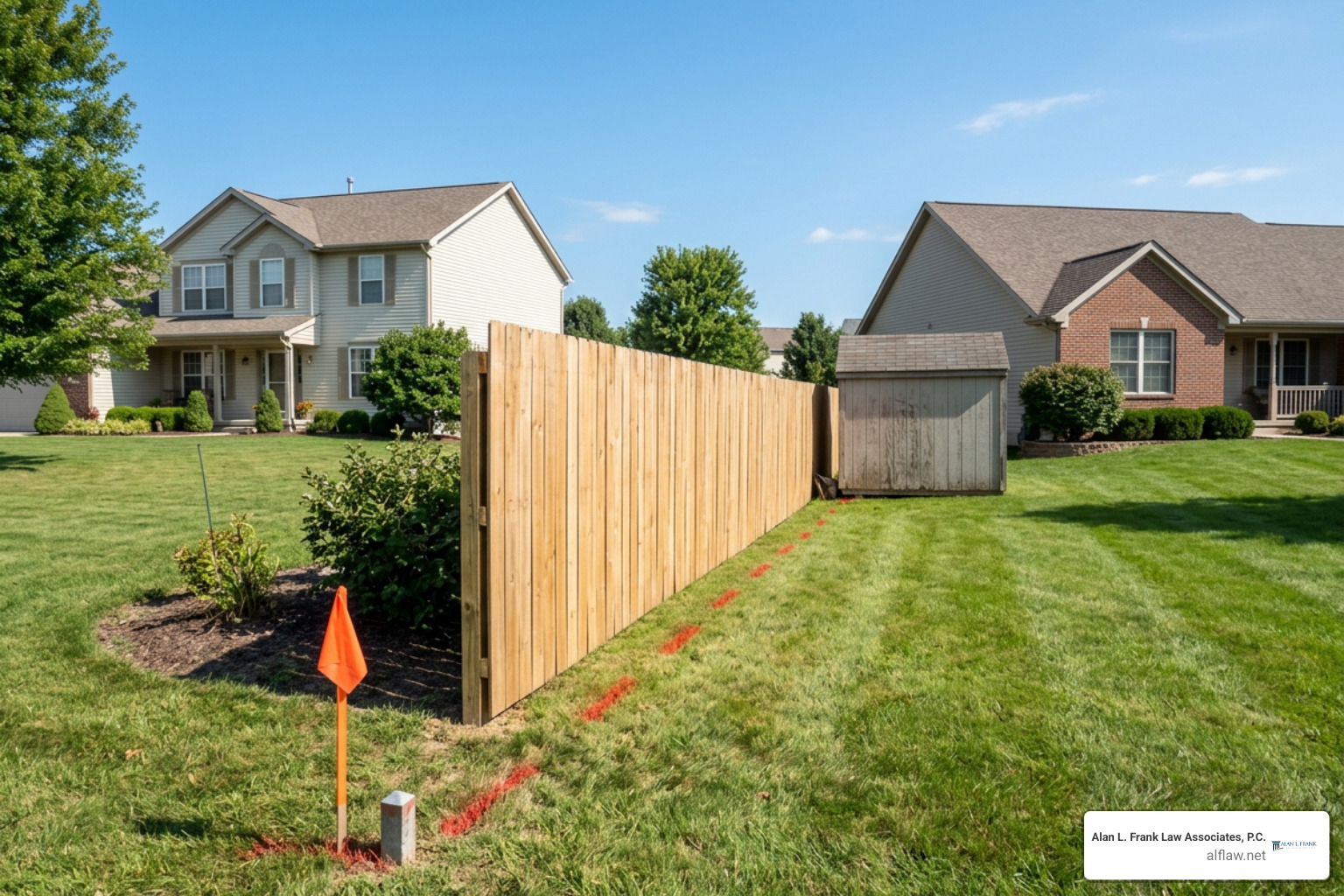
To navigate these disagreements, you must understand the distinction between unauthorized physical intrusions, granted land rights, and temporary violations as detailed in this Guide to Property Line Disputes and Encroachments.
| Legal Concept | Definition | Key Characteristics | Legal Remedy |
|---|---|---|---|
| Encroachment | Physical intrusion of an unauthorized structure over a boundary line. | Permanent or semi-permanent; unauthorized; physical fixture (e.g., fence, shed). | Demand for removal, ejectment, property damages, quiet title. |
| Trespassing | Temporary physical entry onto another person’s property without permission. | Non-permanent; unauthorized; transient entry (e.g., walking, temporary dumping). | Police report, civil citation, small claims damages, injunction. |
| Easement | A formal, legally granted right for someone to use land for a defined purpose. | Authorized by deed, prescription, or necessity; recorded in public land records. | Contractual enforcement, quiet title action, boundary modification. |
Identifying Structural vs. Vegetation Encroachments
Boundary violations generally fall into physical structural items or living natural overgrowths.
- Structural Encroachments: These include detached garages, sheds, patios, poured concrete driveways, and fences built several inches or feet into your parcel. When structural foundations are poured across legal lines, the encroachment can interfere with municipal setbacks, create unmarketable title defects, and cause major construction liability. As we often advise clients in real estate matters, don’t let your case crumble like your foundation—you must address concrete and physical construction errors early before permanent rights attach.
- Vegetation Encroachments: Overhanging tree limbs, overgrown invasive hedges, and root systems crossing beneath lawns present different challenges. Under common law principles, homeowners retain self-help rights allowing them to trim encroaching branches or roots up to the boundary line, provided the trimming does not cross the boundary onto the adjacent property or cause irreversible harm to the tree’s health.
Legal Doctrines That Alter Boundaries Over Time
When landowners fail to challenge property violations, long-term possession can permanently rewrite real estate boundaries through established common law doctrines:
- Adverse Possession: If an individual occupies a portion of land openly, notoriously, exclusively, continuously, and hostilely for a statutory period (which historically spans 21 years in Pennsylvania, or statutory periods ranging from 20 to 30 years depending on parcel type in New Jersey), they may acquire legal title to that property through court decree.
- Prescriptive Easements: Similar to adverse possession, if a neighbor uses a path, driveway, or strip of land openly and without permission for the statutory period, they can gain a permanent, irrevocable legal right of use across your property.
- Boundary by Acquiescence: When adjoining landowners mutually treat a particular marker—such as an old fence line or hedgerow—as the true dividing boundary for decades without formal dispute, the legal boundary may shift to match that physical reality, even if historical deeds state otherwise.
Step-by-Step Guide on How to Dispute Property Line Encroachments
When you discover an encroachment or a conflicting claim, taking calculated, systematic action is essential.

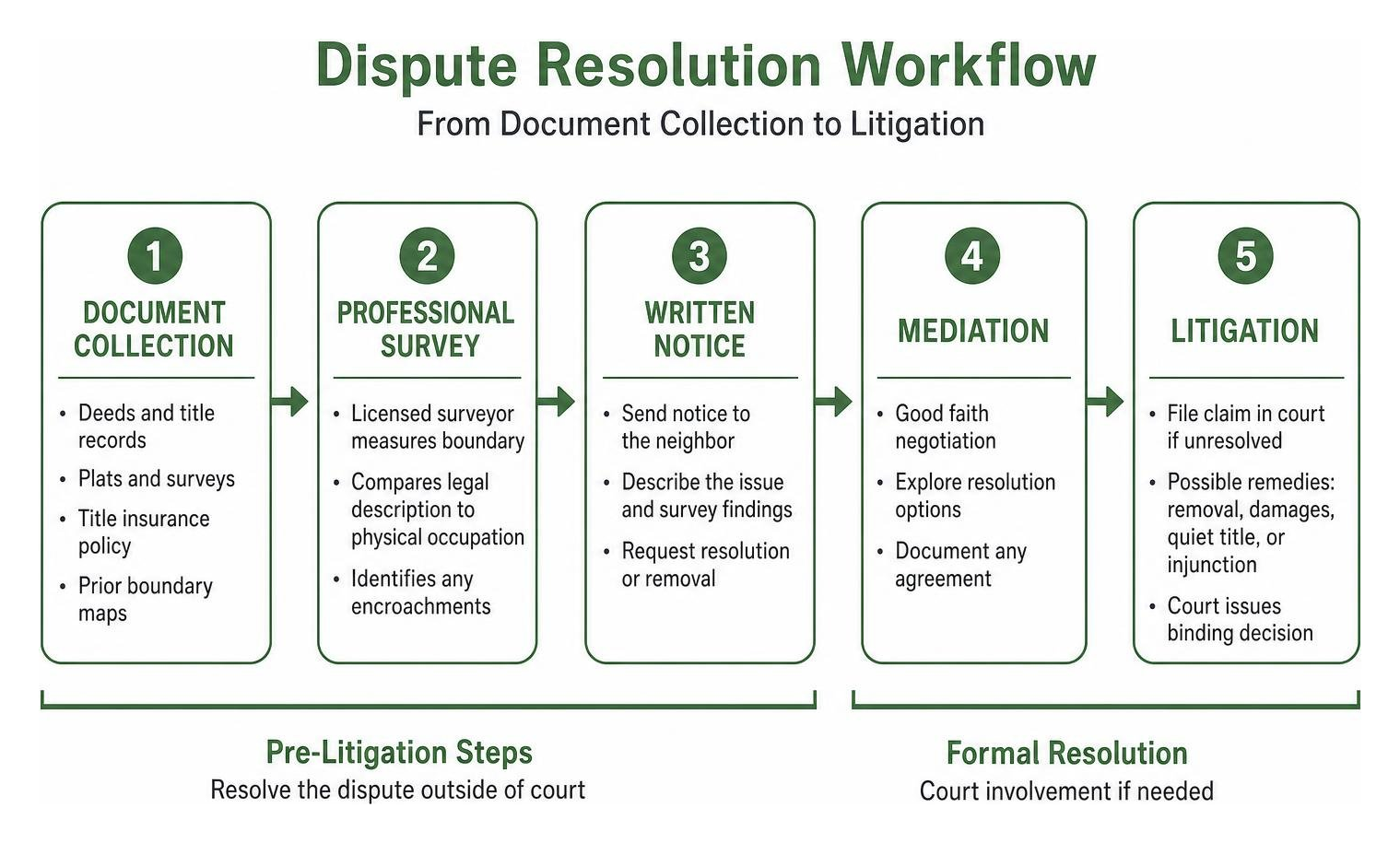
To successfully protect your rights as outlined in this guide on How to Resolve Property Line Disputes With Neighbors, follow these concrete steps:
Step 1: Document Evidence and Review Official Title Records
Begin by gathering your complete chain of ownership records. Collect your original closing binder, deed descriptions, metes-and-bounds records, prior boundary maps, title insurance policies, and recorded subdivision plats from the county recorder of deeds.
Take comprehensive, high-resolution photographs of the disputed area from multiple angles. Capture visible stakes, existing fences, trees, driveways, structures, and grading changes. Create a written timeline noting when any new construction began, when structures were placed, and any past conversations you had regarding the boundary.
Step 2: Commission an Official Land Boundary Survey
Digital mapping applications, parcel overlays on county tax websites, and GPS phone apps like Google Maps are not legally binding boundary evidence. To establish the precise location of your perimeter, you must hire a professional, licensed land surveyor.
A licensed surveyor conducts deed research, reviews historical corner monuments, uses precision optical or GPS equipment, and locates physical iron pins or survey monuments driven into the ground. Once the field measurement is complete, the surveyor produces an official sealed boundary plat and drives visible boundary stakes or pins along the true legal perimeter.
Step 3: Initiate Open Communication and Written Demand Notices
With an official survey in hand, approach your neighbor for a calm, levelheaded conversation. Many boundary violations stem from honest misunderstandings or outdated property lines rather than intentional trespass. Present a copy of the official survey and discuss how to correct the placement.
If the neighbor refuses to cooperate, continues construction, or rejects the survey findings, escalate the matter formally:
- Draft a Formal Demand / Cease and Desist Letter: Clearly outline the legal boundary, identify the encroachment, attach the certified survey map, and demand that they cease work or remove the structure within a reasonable window (e.g., 14 to 30 days).
- Send via Certified Mail: Deliver the letter with certified tracking and return receipt requested to establish undeniable proof of legal notice in court.
- Propose Mediation: If direct negotiations fail, consider non-binding mediation through a neutral mediator before spending tens of thousands of dollars in open litigation.
Legal Procedures and Court Remedies for Resolving Line Disputes
When diplomatic measures and written demands fail to resolve a boundary conflict, you must turn to the court system for binding relief.
State courts provide specific civil remedies to clear title and protect real estate rights as detailed in legal guides on What Can You Do About a Boundary Dispute With a Neighbor?.
How to Dispute Property Line Errors Using Deeds and Plat Maps
In some instances, the dispute is not caused by neighbor misconduct, but by conflicting title records, historical deed drafting errors, overlapping metes-and-bounds descriptions, or flawed tax parcel maps.
Municipal tax assessments and parcel boundaries often rely on approximate GIS data. If you are experiencing tax discrepancies caused by incorrect acreage records, you should review the critical deadlines and triggers for disputing your property tax bill to align county records with certified survey data and prevent ongoing tax overpayments.
When to Hire an Attorney and How to Dispute Property Line Claims in Court
If an adjacent property owner actively disputes your survey, builds over your objections, or asserts a hostile claim to your acreage, retaining an experienced real estate litigation attorney is vital.
When property boundaries involve shared ownership structures or multiple heirs, co-owners may also face property division challenges. Understanding everything co-owners must know about partitioning real property can help navigate concurrent title disputes alongside perimeter boundary claims.
When formal litigation becomes necessary, we utilize several key legal actions:
- Quiet Title Action: A lawsuit filed in the Court of Common Pleas (in Pennsylvania) or the Superior Court (in New Jersey) that asks a judge to definitively declare the valid legal boundary line and extinguish any competing claims from the adjacent owner.
- Action in Ejectment: A legal proceeding designed to physically remove an encroaching neighbor or their unauthorized structures from your legal parcel.
- Injunctions and Temporary Restraining Orders (TRO): Emergency court orders that immediately halt ongoing unauthorized construction while the underlying property rights are adjudicated.
- Monetary Damages: Compensation awarded to cover the physical repair costs of torn-up turf, damaged trees, or demolished fences, as well as loss of land use.
Real Estate Transactions: Title Insurance, Disclosures, and Prevention
Property line disputes create significant hurdles when you buy, finance, or sell real estate.
Handling Boundary Conflicts During a Property Sale
When selling a property, state seller disclosure laws require homeowners to disclose all known material defects, encroachments, easements, unrecorded boundary agreements, and active property line disputes.
Failing to disclose a known dispute can expose the seller to severe post-closing lawsuits for fraud, breach of contract, and negligent misrepresentation. Unresolved boundary problems can render title unmarketable, causing lenders to pull loan approvals and buyers to walk away from deposits.
Best Practices Before Constructing Fences, Sheds, or Additions
Preventing boundary disputes before they start is always more cost-effective than resolving them in a courtroom. Follow these preventive guidelines before starting any construction or finalizing a property purchase:
- Order a Pre-Purchase Boundary Survey: Never rely on mortgage inspection surveys, which only estimate structure locations. Obtain an official boundary survey before closing.
- Verify Setback Requirements: Consult local municipal zoning codes for required distances between accessory structures (sheds, pools, fences) and property perimeters.
- Obtain Proper Municipal Building Permits: Ensure all improvements comply with local building regulations and submit survey-verified site plans.
- Execute Recorded Boundary Line Agreements: If you and a neighbor agree to adjust a line or allow a minor encroachment, formalize it in writing, sign a deed of boundary agreement, and record it with the county recorder of deeds.
Frequently Asked Questions About Property Boundary Disputes
Does standard title insurance cover property line disputes?
Standard owner title insurance policies typically include a standard “survey exception,” which excludes coverage for any boundary issues, shortages in area, or encroachments that an accurate physical survey would have revealed. However, if you purchased an enhanced policy or added a survey endorsement at closing based on a certified survey, your policy may provide coverage and legal defense costs.
What should I do if a neighbor continues building over the boundary line?
If a neighbor continues building despite oral warnings, immediately issue a written cease-and-desist letter via certified mail. Contact local municipal code enforcement to report construction without adequate setbacks or permits. If work persists, contact an attorney immediately to file a complaint for an emergency preliminary injunction or temporary restraining order (TRO) to halt construction.
Can a neighbor claim my land through adverse possession?
Yes, but only under strict legal standards. The claimant must prove continuous, exclusive, hostile, open, and notorious possession for the entire statutory period required by state law. If you gave the neighbor express permission to use the land, the use is not “hostile,” which defeats an adverse possession claim.
Conclusion
Protecting your property boundaries requires prompt action, verifiable documentation, and strategic legal guidance. Whether you are dealing with a neighbor’s misplaced fence, a disputed driveway expansion, or an unrecorded easement claim, taking a structured approach protects your real estate value and resolves uncertainty.
When informal discussions stall and neighborly solutions are exhausted, the legal team at Alan L. Frank Law Associates, P.C. stands ready to protect your land rights. Learn more about our legal strategies and representation by exploring our commercial litigation and boundary representation services.