
How to Sue Your Neighbor Without Starting a Full-Blown Neighborhood War


How to Sue Your Neighbor Without Starting a Full-Blown Neighborhood War
How to Sue a Neighbor While Protecting Your Property Rights
To sue a neighbor without making the conflict worse, start with proof and a clear written request, not a court filing. Document each incident, save repair estimates and messages, check local ordinances or HOA rules, and send a formal demand letter that explains what you want and when you expect a response. If that fails, mediation or small claims court may be the next practical step for a limited-dollar claim.
You may have a legal claim when a neighbor causes property damage, repeatedly interferes with your use of your home, trespasses or builds over a boundary line, creates harmful runoff, or is responsible for animal-related damage. A court can award money for proven losses, and in the right court, may order ongoing harmful conduct to stop.
The goal is not to turn every irritating neighbor problem into a lawsuit. It is to create a calm, documented record that shows you acted reasonably before escalating.
I am Alan L. Frank, Managing Attorney at Alan L. Frank Law Associates, P.C., with more than 20 years of experience handling complex litigation and substantial financial-loss disputes. Understanding how to sue neighbor begins with identifying the right claim, preserving evidence, and choosing the legal process that best protects your interests.
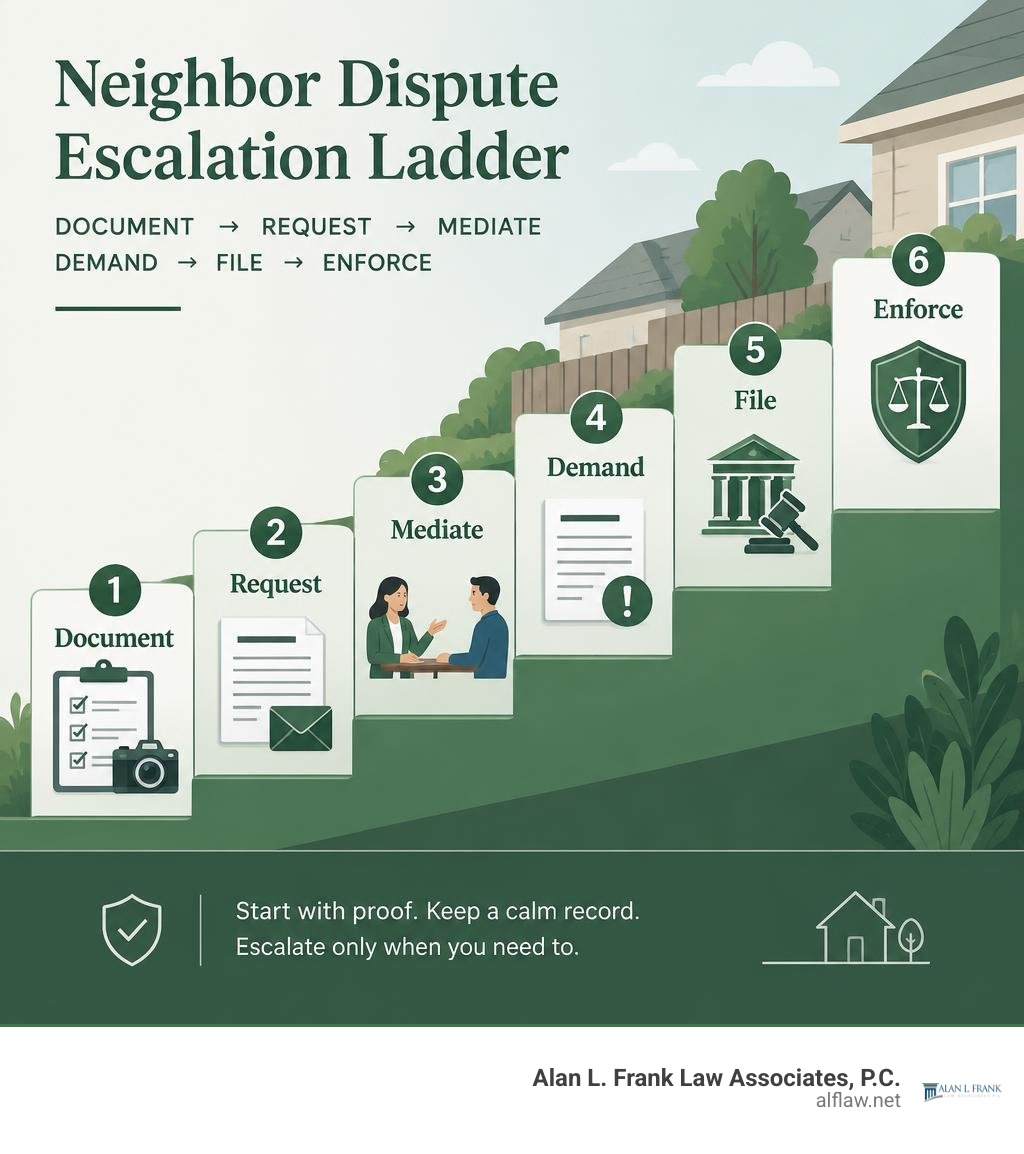
Simple how to sue neighbor glossary:
Legal Grounds: When Can You Sue a Neighbor?
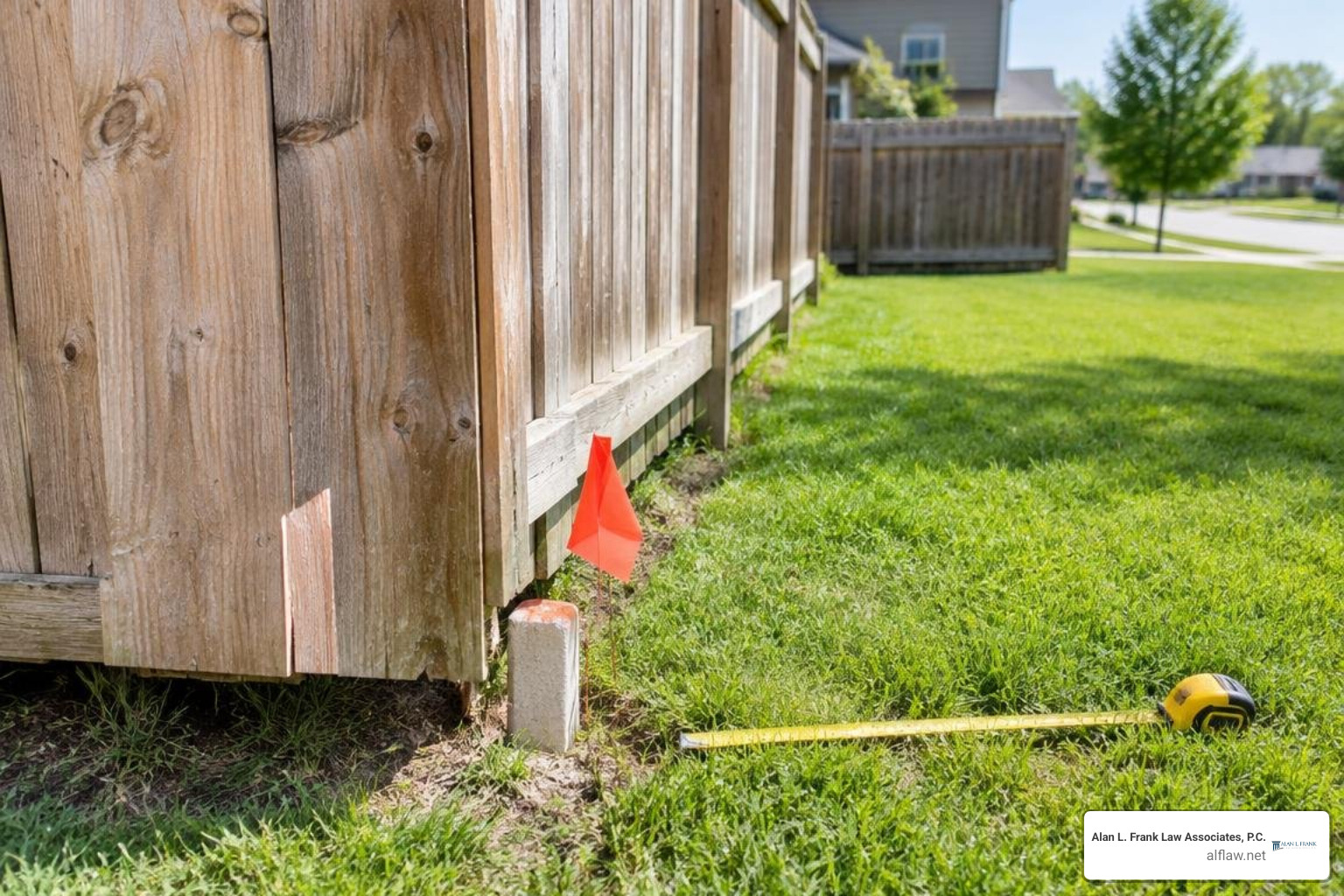
When neighborhood friction turns into serious disruption or financial damage, the law provides specific legal theories to make you whole. As attorneys serving Pennsylvania and New Jersey from our offices in Philadelphia and Jenkintown, we often see homeowners try to file lawsuits based on general unfairness or hurt feelings. However, the legal system requires you to tie your grievance to an established cause of action under tort or property law.
To determine whether your dispute warrants a lawsuit, we first examine the legal nature of the harm.
Private Nuisance vs. Public Nuisance Claims
A private nuisance occurs when someone’s conduct substantially and unreasonably interferes with your use and quiet enjoyment of your private property. It is not designed to punish minor, everyday annoyances. If your neighbor hosts a single birthday party on a Saturday afternoon, that is an annoyance; if they run a commercial auto repair shop in their driveway using loud air compressors from midnight until sunrise, you likely have an actionable claim.
Key examples of private nuisance include:
- Chronic, excessive noise violating local decibel limits or quiet hours.
- Extreme light pollution, such as high-powered commercial spotlights directed into your bedroom.
- Toxic odors, persistent chemical fumes, or unmanaged waste accumulation.
- Vibrations caused by heavy machinery that rattle your walls.
A public nuisance, by contrast, affects the community, general public, or an entire neighborhood at large—such as blocking a public roadway or operating an unlicensed toxic dumping site. While public authorities typically pursue public nuisances, a private individual can sue for a public nuisance only if they suffer a specific harm distinct from the general public.
Boundary Line Disputes, Spite Fences, and Encroachments
Property lines can spark intense battles between otherwise quiet homeowners. Common boundary issues include:
- Encroachments: When a neighbor erects a permanent structure—such as a shed, paved driveway, or retaining wall—that crosses onto your deeded land.
- Spite Fences: In many jurisdictions, building an excessively tall or visually obstructive structure with no useful purpose other than to annoy or block a neighbor’s light or view can be treated as an actionable private nuisance.
- Adverse Possession Risks: If you allow an encroachment to stand for years without objection, the neighbor may eventually claim legal title to that portion of your property under state adverse possession laws.
When handling property line disagreements, an informal agreement is rarely sufficient. Resolving these matters requires examining historical deeds and hiring a licensed surveyor to perform an official boundary survey before taking legal action or seeking an injunction.
Tree Damage, Water Runoff, and Pet Liability
Natural elements and animals frequently cause expensive damage that crosses property lines:
- Tree Damage: Generally, you have the legal right of self-help to trim overhanging branches or intrusive roots up to the boundary line, provided you do not kill the tree or cross onto the neighbor’s property. If a neighbor’s tree is visibly dead, decaying, or dangerous, and you have put them on written notice of the hazard, their failure to remove it constitutes negligence. If it subsequently collapses on your home, garage, or fence, they can be held liable for the repair costs.
- Water Runoff and Drainage: While natural water runoff is governed by common law rules, a neighbor who intentionally alters their property grading, diverts downspouts directly onto your land, or installs non-permeable surfaces that flood your yard is liable for the resulting property damage.
- Pet Liability: In Pennsylvania and New Jersey, pet owners must maintain control over their animals. Under dog bite laws, owners may face strict liability or negligence claims when their pets cause bodily injury or destroy personal property. When facing ongoing conflicts, consulting official municipal resources for resolving a conflict with a neighbor or community guidance from local legal services can help establish early records of code violations.
The Pre-Litigation Process: Building Leverage Before Filing

Courts look favorably upon plaintiffs who demonstrate calm, reasonable behavior before filing a lawsuit. Jumping straight into litigation without building a factual record often leads to delays, increased legal fees, or outright dismissals.
Step 1: Gathering Evidence and Documenting Incidents
To win any legal claim, your subjective word must be backed by objective evidence. Start building a comprehensive case file immediately:
- Contemporaneous Incident Log: Keep a running, dated journal detailing every occurrence. Note the date, exact start and end times, a factual description of the event, and the specific impact on your life (e.g., lost sleep, cancelled work meetings, structural damage).
- Photographs and Video: Take clear, high-resolution photographs and videos featuring visible date and time stamps. If dealing with water drainage, take video while the rain is actively falling and pooling.
- Technical Measurements: For noise disputes, record sound levels using a calibrated decibel meter or dedicated tracking applications to prove violations of local noise ordinances.
- Third-Party Reports and Estimates: Gather copies of police incident reports, animal control notices, municipal code enforcement violations, and at least two written repair estimates from licensed, independent contractors.
Step 2: Drafting and Sending a Formal Demand Letter
A demand letter is a formal, written communication sent directly to the offending neighbor. It outlines the factual history of the dispute, cites the applicable municipal codes or state laws, details the exact dollar amount of damages or the specific corrective actions demanded, and provides a strict deadline (typically 14 calendar days) to comply before formal court proceedings begin.
Sending this document via USPS Certified Mail with a Return Receipt Requested serves two vital purposes:
- Settlement Leverage: Statistically, 85% of demand letters are resolved before court action because they show the recipient you are organized, serious, and prepared to use the court system.
- Judicial Credibility: If you must proceed to court, presenting the letter and the signed green delivery card proves to the judge that you made a good-faith attempt to settle the issue amicably.
Step 3: Considering Informal Resolution Before Filing
Before filing your lawsuit, consider community-based alternative dispute resolution. Local mediation programs provide a neutral third-party mediator to help neighbors reach a written, non-adversarial agreement.
Mediation is voluntary, inexpensive, and confidential. Even if the mediation fails to achieve a complete compromise, the process sharpens the disputed issues and proves to a future judge that you exhausted every reasonable avenue prior to taking up court time.
How to Sue Neighbor: Small Claims Limits and Civil Court Procedures
When informal resolutions and demand letters fail, formal court action becomes necessary. Depending on the financial damages involved and the remedies you seek, you will choose between small claims court and the regular civil court docket.
Small Claims Limits and Statutes of Limitations
| Jurisdiction / State | Small Claims Monetary Limit | Typical Filing Fee | Limitations Period (Property Damage / Nuisance) |
|---|---|---|---|
| Pennsylvania | $12,000 (Magisterial District) | $50 – $150 | 2 Years |
| New Jersey | $5,000 (Small Claims) / $20,000 (Special Civil) | $35 – $75 | 6 Years (Property) / 2 Years (Injury) |
| Delaware | $25,000 | $50 – $90 | 3 Years |
| Maryland | $5,000 | $35 – $45 | 3 Years |
| New York | $5,000 – $10,000 (by court type) | $15 – $25 | 3 Years |
Filing fees for small claims court typically range between $10 and $75 in most baseline municipal jurisdictions, and most small claims hearings are scheduled within 30 to 70 days after filing.
How to Sue Neighbor for Property Damage or Chronic Noise
For economic recovery up to state statutory caps, small claims court is the most accessible avenue. It allows individuals to represent themselves without incurring substantial attorney fees.
To file a small claims action:
- Obtain and fill out the statement of claim form at your local municipal court or Magisterial District Court.
- State the clear legal basis: negligence, intentional property damage, trespass, or private nuisance.
- Attach your itemized receipts, paid contractor invoices, and photos.
- Pay the modest filing fee and arrange for official service of process via certified mail or a court constable.
At the hearing, you will present your evidence directly to the judge. Small claims courts can only award money damages. If you need a court order forcing the neighbor to stop blasting music, cut down a dangerous tree, or remove a fence, you must file a lawsuit seeking an injunction in a court of equity or general civil jurisdiction (such as the Pennsylvania Court of Common Pleas or the New Jersey Superior Court Chancery Division).
How to Sue Neighbor for Emotional Distress and Harassment
Homeowners frequently ask if they can sue an abrasive neighbor for emotional distress. Under the law, recovering damages for emotional distress alone is difficult and requires meeting strict evidentiary bars under two legal doctrines:
- Intentional Infliction of Emotional Distress (IIED): You must prove that the neighbor engaged in extreme and outrageous conduct that goes beyond all possible bounds of decency, with the intent to cause severe distress.
- Negligent Infliction of Emotional Distress (NIED): Requires a duty of care, a breach, direct causation, and typically some accompanying physical manifestation or immediate zone-of-danger impact.
To succeed on an emotional distress claim, a judge will require documented evidence, such as medical treatment records, psychological evaluations, prescriptions for anxiety or sleep disorders, and corroborating witness testimony. Because these claims exceed the monetary and jurisdictional limits of small claims courts, they must be brought in higher civil courts where standard legal representation is essential.
Statutes of Limitations and Post-Judgment Enforcement
A statute of limitations sets the hard legal deadline by which you must file your claim. In Pennsylvania, actions for trespass and property damage must generally be brought within two years, whereas New Jersey allows up to six years for standard property damage claims. If an unlawful act is continuous—such as an ongoing, daily drainage nuisance—the limitations period may reset with each new occurrence under the continuing violation doctrine.
Winning your court hearing is only half the battle; obtaining a judgment is not the same as receiving payment. If the neighbor refuses to pay the court-ordered amount:
- Abstract of Judgment / Liens: You can record the judgment with the county clerk to place a formal judicial lien on their real estate. They will not be able to sell or refinance their home without paying your judgment with statutory interest.
- Bank Account Levies: You can file for a writ of execution to freeze and seize funds directly from their personal bank accounts.
- Wage Garnishment: In jurisdictions that permit judgment garnishments for civil matters, you can legally divert a portion of their regular paycheck until the debt is satisfied.
Frequently Asked Questions About Neighbor Lawsuits
Can I sue my neighbor for excessive noise if the police won’t help?
Yes. Police officers enforce criminal codes and municipal noise ordinances, which require subjective police observation or direct measurement at the moment they arrive.
If law enforcement takes no action, you can still file a civil private nuisance lawsuit in small claims court. Your contemporaneous noise logs, timestamped audio recordings, and testimony from other affected neighbors serve as independent civil evidence proving the unreasonable interference with your home.
What happens if I win a lawsuit against my neighbor?
When you win, the court enters an official civil judgment against the defendant. If you filed for monetary relief, the neighbor is legally obligated to pay the awarded damages plus allowable court costs.
If they do not comply voluntarily, you can initiate post-judgment enforcement procedures, including property liens, bank levies, and writs of execution. If your lawsuit was filed in a higher court for injunctive relief, the judge issues an enforceable court order requiring the neighbor to stop the offending conduct; violating that order places the neighbor in contempt of court, which carries heavy fines and potential jail time.
How do I legally handle a neighbor’s tree that hangs over my property?
Under common law rules in most states, you are permitted to use self-help to trim back encroaching tree limbs and roots up to the precise boundary line of your property. However, you must observe critical legal boundaries:
- You cannot cross onto the neighbor’s land without permission.
- You cannot cut down the tree trunk.
- You cannot trim the tree in a negligent manner that compromises its structural stability or kills it.
If a tree is visibly diseased or dead and threatens to fall on your property, send the neighbor a formal written notice by certified mail. This establishes constructive notice of the hazard, eliminating their ability to claim that a subsequent collapse during a storm was an unavoidable “Act of God.”
Conclusion
Living next to an unreasonable neighbor tests anyone’s patience, but escalating into emotional confrontations rarely ends well. Protecting your peace of mind and your financial investment requires an approach based on documentation, statutory leverage, and proportional legal action. By keeping precise logs, obtaining professional surveys, issuing formal demand letters, and utilizing the court system strategically, you can hold disruptive neighbors accountable under the law.
When property encroachments, severe drainage alterations, or high-value damage claims exceed the scope of small claims court, retaining seasoned legal counsel is essential to protect your property rights. At Alan L. Frank Law Associates, P.C., we represent property owners across Pennsylvania and New Jersey in complex real estate disputes, easement conflicts, and high-stakes civil litigation.
If you are facing an unresolved, costly dispute with a neighboring property owner, contact our commercial litigation and property dispute attorneys today to schedule a confidential consultation and enforce your legal rights.