
Punitive Damages and Property Damage: What Every Homeowner Should Know


Punitive Damages and Property Damage: What Every Homeowner Should Know
Construction Defect Lawyers Near Me: Protecting Your Property and Your Claim
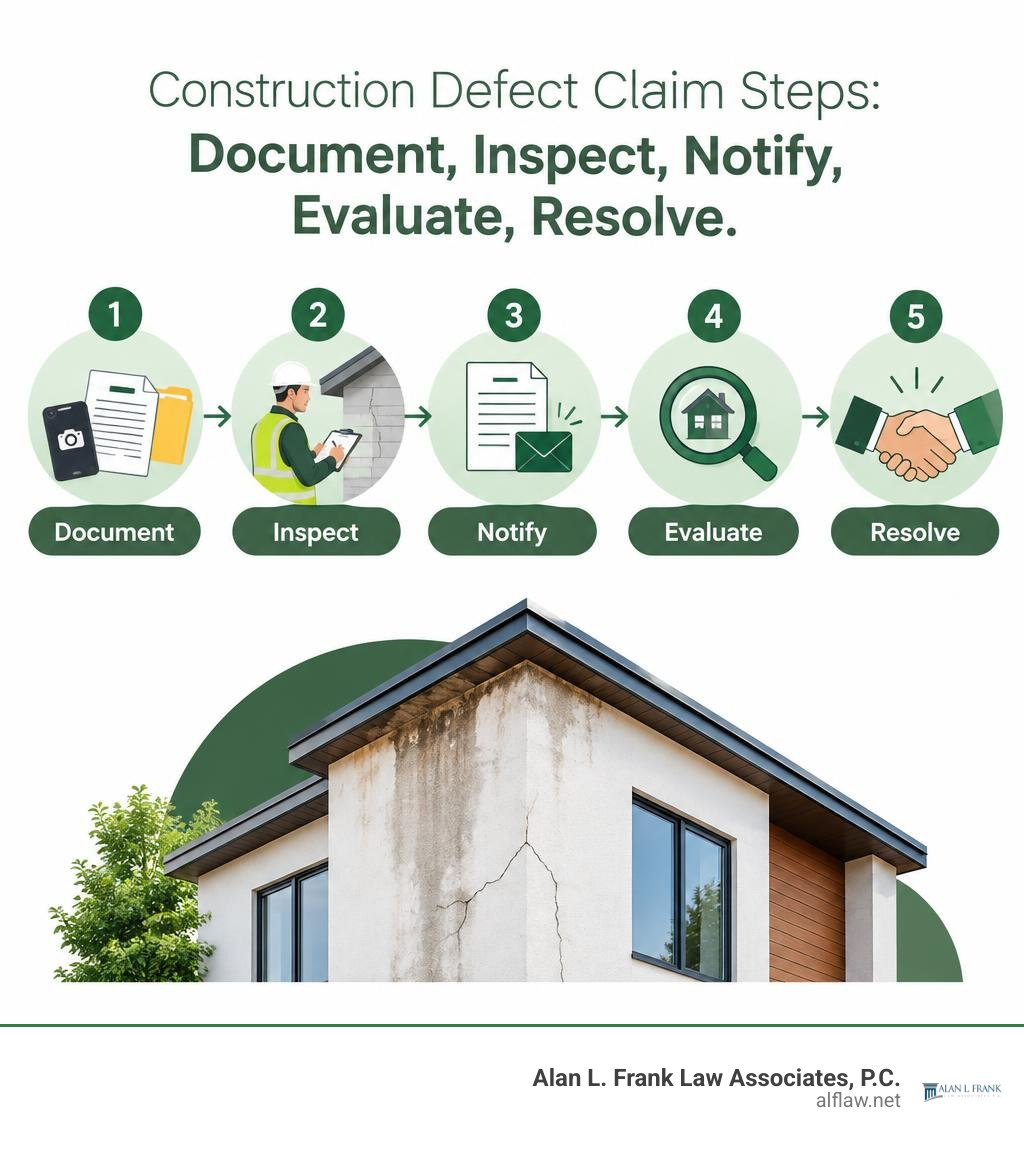
If you are searching for construction defect lawyers near me, act before repairs erase key evidence or a filing deadline expires. Take photos and video, save contracts, warranties, invoices, and inspection reports, give written notice to the responsible parties, and arrange an independent inspection. A construction defect lawyer can then assess who may be liable, the cost to repair the damage, and whether litigation, mediation, or arbitration makes sense.
Construction defects can include roof and window leaks, drainage failures, foundation cracks, plumbing problems, faulty HVAC systems, poor workmanship, and defective materials. Some are obvious right away. Others stay hidden behind walls, under slabs, or inside building systems until water intrusion, mold, or structural damage appears.
Deadlines vary by state and by the type of defect. For example, California generally has different time limits for visible and hidden defects, and many states also impose a longer outside deadline known as a statute of repose. Do not assume a builder’s warranty is the only deadline that matters.
I am Alan L. Frank, Managing Attorney at Alan L. Frank Law Associates, P.C., with more than 20 years of experience leading complex commercial litigation and pursuing significant financial recoveries. For owners looking for construction defect lawyers near me, my background in high-stakes disputes can help frame the property loss, responsible parties, and recovery options before moving into the claims process.
Common Types of Construction Defects and Property Damage
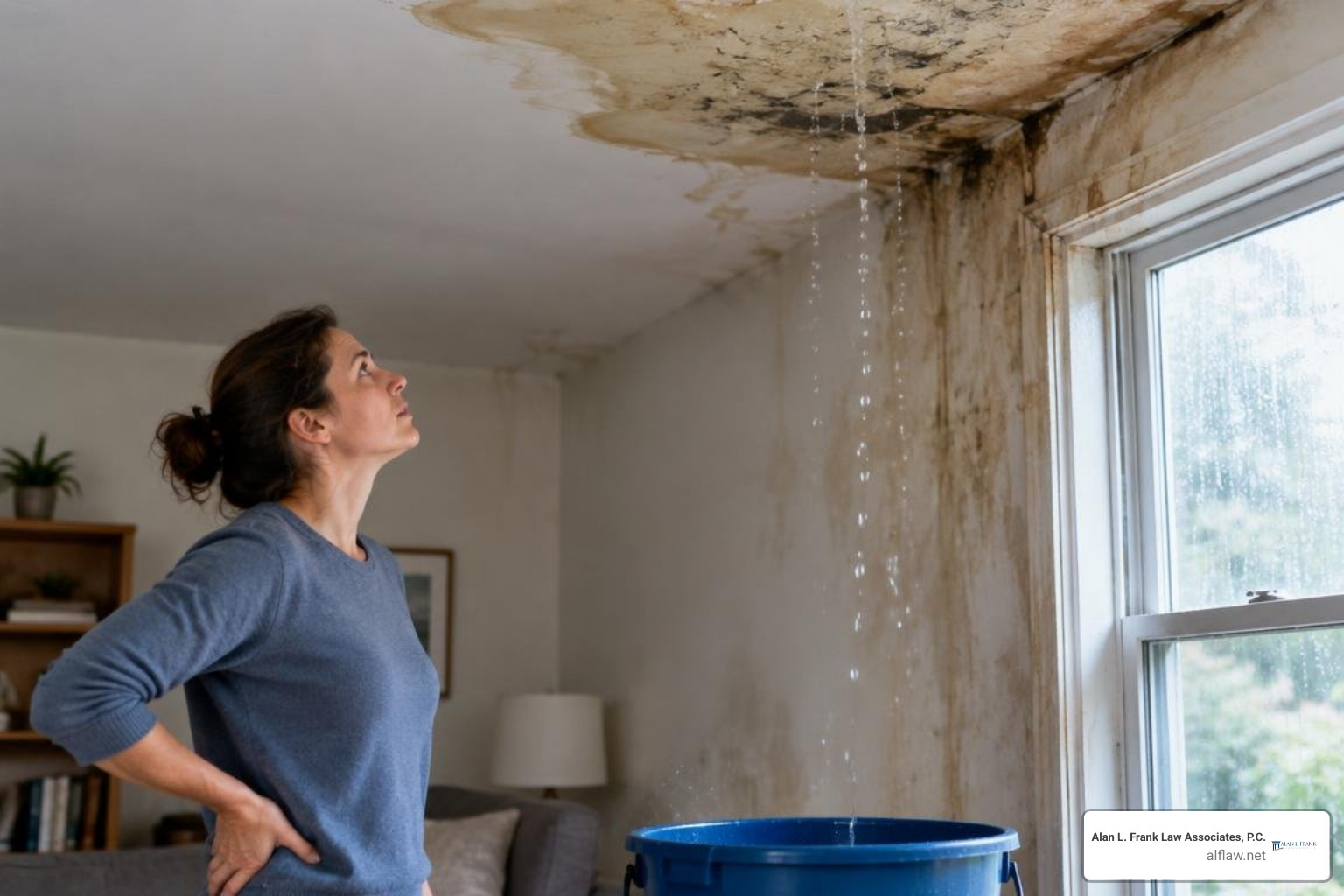
When buying a new home or completing a major renovation, property owners expect quality craftsmanship, compliance with building codes, and structural integrity. Unfortunately, structural and cosmetic failures happen far more often than developers admit. When they do, don’t let your case crumble like your foundation.
Construction defects typically fall into four distinct categories:
- Design Errors: Architectural or civil engineering oversights, such as improper drainage grading, inadequate load-bearing support, or poor roof slope design.
- Material Defects: Substandard or defective products, including prematurely degrading roofing shingles, corrosive plumbing pipes, inferior concrete mixes, or failing stucco/EIFS systems.
- Workmanship Failures: Incompetent labor, skipped steps, or outright negligence by contractors, such as missing window flashing, poorly fastened structural framing, or improperly connected plumbing fixtures.
- Subsurface & Soil Issues: Failure to properly compact soil, inadequate geotechnical testing, or poor drainage systems leading to soil subsidence, sinkholes, or shifting foundations.
Left unaddressed, these flaws quickly trigger extensive secondary property damage—such as electrical fires, structural rot, toxic fungal blooms, and catastrophic foundation movement.
Visible Defects vs. Hidden Latent Defects
In construction law, the distinction between visible (patent) and hidden (latent) defects is fundamental to determining legal deadlines and litigation strategy.
- Patent Defects (Visible): Flaws that are obvious upon a standard, non-destructive visual inspection. Examples include cracked exterior stucco, uneven floorboards, misaligned doorways, poor paint finish, or visibly disconnected gutters.
- Latent Defects (Hidden): Flaws concealed within the property’s building envelope, foundation, or mechanical systems that are not discoverable through reasonable inspection at the time of construction. Examples include slow pipe corrosion, water pooling inside finished walls, improperly tied rebar inside concrete footings, or hidden structural decay.
Because latent defects may take several years to manifest as visible damage, legal frameworks provide extended timeframes under the “discovery rule” to protect unsuspecting property owners.
Defects in Residential vs. Public-Sector Properties
Defects affect every tier of real estate, though the scope, safety risks, and legal requirements differ between property classes:
- Residential Single-Family Homes & Condominiums: Homeowners and Homeowners Associations (HOAs) frequently battle moisture intrusion from improperly flashed windows, roof leaks, and foundation shifting that damages common elements and private units alike.
- Public-Sector Properties (Schools, Hospitals, Jails): Public buildings experience intense daily usage and strict regulatory oversight. In public schools and hospitals, defective HVAC systems can lead to mold proliferation, poor indoor air quality, and astronomical utility bills. In correctional facilities, contractor shortcuts often compromise life-safety assets—such as smoke evacuation systems, fire doors, and specialized drainage networks.
For building owners, consulting experienced construction defect counsel in Pennsylvania or New Jersey ensures that specific municipal, commercial, and residential statutes are properly applied to the claim.
Liability and Pursuing Punitive Damages in Construction Defect Cases

One of the most complex aspects of construction defect litigation is establishing which parties along the design-and-build chain are responsible. Often, general contractors point fingers at subcontractors, who in turn blame the architect or building material suppliers.
A seasoned litigator investigates every party involved, including:
- General Contractors & Developers: For negligent supervision, failing to adhere to architectural plans, or breaching builder warranties. But remember: before assuming a warranty claim is your only option, ask yourself, is your warranty worth the paper it’s printed on?
- Architects and Structural Engineers: For design errors, structural miscalculations, and failure to design according to local building codes.
- Subcontractors (Framers, Roofers, Plumbers, Electricians): For substandard workmanship and direct installation failures.
- Material Manufacturers: For manufacturing and distributing defective building components under strict product liability doctrines.
Proving Substandard Workmanship and Faulty Materials
Holding a builder accountable requires concrete, objective evidence. Showing that a roof leaks is not enough; you must prove why it leaks and who is responsible.
Proving liability involves:
- Retaining independent forensic engineers and certified building inspectors to perform moisture mapping, thermal imaging, and core sampling.
- Demonstrating deviations from local building codes and original engineering specifications.
- Evaluating site boundary conditions and grading plans—often starting with knowing where to find existing property surveys without ordering a new one.
- Comparing the actual materials installed against the approved architectural submittals and product manufacturer installation guidelines.
When Do Construction Defects Justify Punitive Damages?
In ordinary defect disputes, plaintiffs are awarded compensatory damages—funds designed to cover the actual cost of repairs, temporary relocation, loss of property value, and forensic expert fees.
However, when a developer’s or contractor’s conduct goes far beyond simple negligence, our team at Alan L. Frank Law Associates, P.C. evaluates claims for punitive damages. Punitive damages are not meant to compensate for the repair itself; they are awarded to punish egregious wrongdoing and deter similar conduct in the future.
To secure punitive damages, we must establish that the defendant acted with gross negligence, willful misconduct, intentional concealment, or conscious disregard for human safety. Examples include:
- Fraudulent Concealment: A builder notices severe water intrusion or foundation cracking during construction, covers it up with drywall or cosmetic stucco without fixing the root cause, and sells the home to an unsuspecting buyer.
- Intentional Building Code Bypasses: Deliberately omitting required structural fire-blocking or hurricane ties to cut costs and pad profit margins.
- Ignoring Known Life-Safety Hazards: Overriding engineering warnings regarding toxic mold, structural instability, or faulty electrical setups that expose occupants to hazards resulting in significant personal injury & wrongful death claims.
- Deceptive Trade Practices: Misrepresenting inferior, non-rated materials as commercial-grade, premium components in violation of state consumer protection statutes and broader commercial litigation standards.
Statutes of Limitations and Repose: Key Deadlines for Filing a Claim
Construction defect claims are strictly governed by statutory clocks. Missing a deadline can forever extinguish your right to recover damages, no matter how severe the structural damage or how clear the contractor’s fault.
You must navigate two separate deadlines:
- Statute of Limitations: The timeframe in which you must file a lawsuit after discovering (or when you reasonably should have discovered) the defect and resulting property damage.
- Statute of Repose: A strict outer deadline that bars any lawsuit after a set number of years from the date of substantial completion of construction, regardless of when the defect was discovered.
| Legal Claim Window | Typical Timeframe | Description / Application |
|---|---|---|
| Visible (Patent) Defects | 2 to 4 Years | Begins when the defect is easily seen or upon project completion. |
| Hidden (Latent) Defects | 2 to 6 Years (Discovery Rule) | Begins when the hidden defect causes observable damage or is uncovered. |
| Statute of Repose | Up to 10 to 12 Years | Absolute legal cutoff calculated from the date of substantial completion. |
| Public Entity Window | Up to 10 Years | Many public entities (e.g., public universities, school districts) have a 10-year window to file a claim; private entities may have as few as 4 years. |
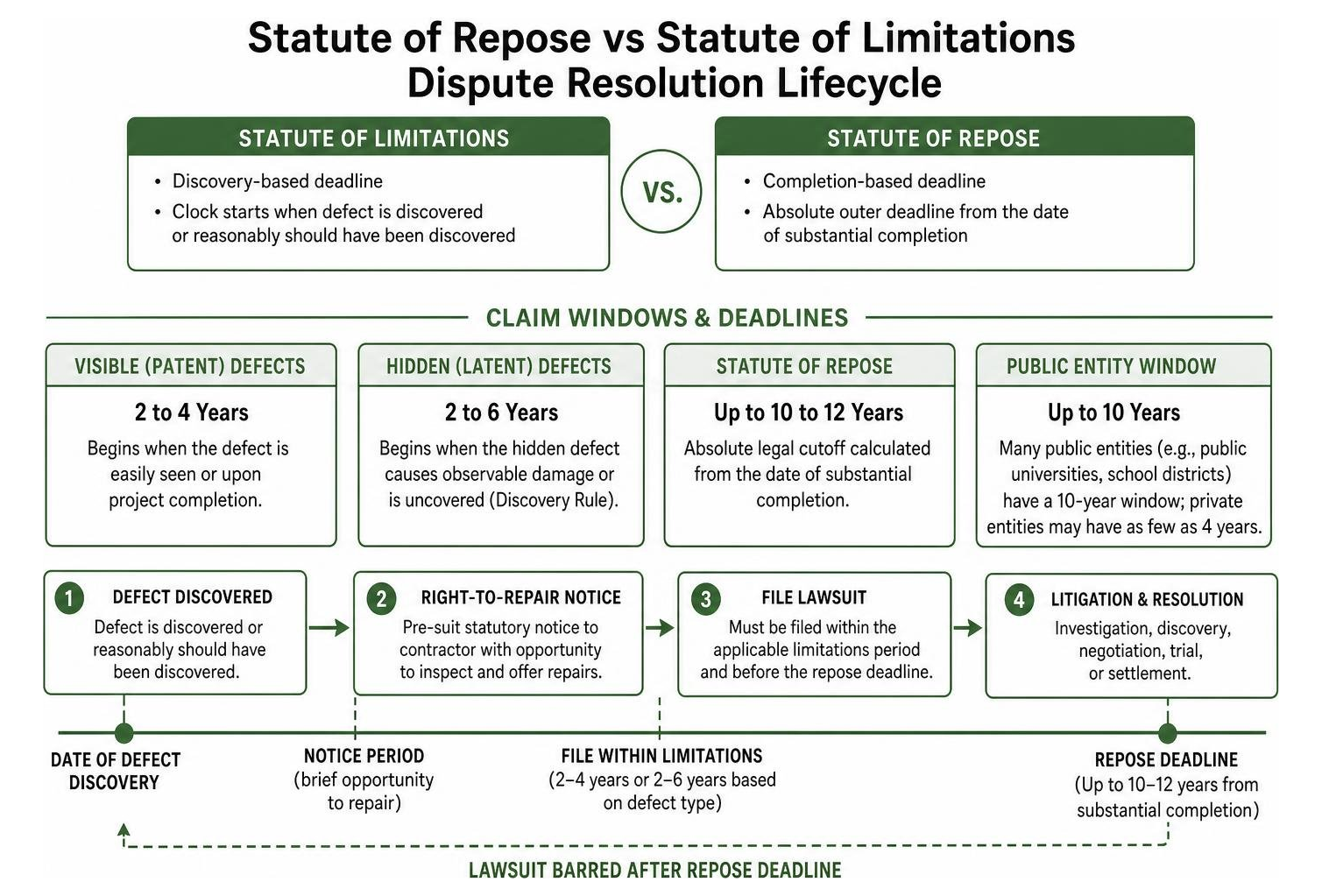
Many jurisdictions also mandate pre-lawsuit statutory “right-to-repair” notices, giving the contractor a brief opportunity to inspect and offer repairs before formal court proceedings can begin. Navigating these requirements demands experienced construction defect litigation counsel in Pennsylvania and New Jersey.
When and How to Hire Construction Defect Lawyers Near Me
Handling a complex construction defect case requires technical forensic knowledge, access to top-tier engineering experts, and formidable courtroom advocacy. If you notice persistent property failures or structural anomalies, securing qualified representation immediately preserves your legal rights.
At Alan L. Frank Law Associates, P.C., our litigators handle construction disputes at every phase:
- Pre-Litigation Resolution: Reviewing your construction contracts, warranty agreements, and change orders to demand developer remediation.
- Mediation & Arbitration: Representing your interests in binding or non-binding dispute resolution forums to secure rapid financial settlements.
- Trial Litigation: Vigorously prosecuting claims in state and federal courts against stubborn developers, contractors, and their insurance carriers, backed by our proven track record of case results.
How Construction Defect Lawyers Near Me Evaluate Claims
When evaluating your property damage claim, a dedicated construction defect lawyer conducts a multi-phase assessment:
- Document Review: Thoroughly analyzing project contracts, architectural blueprints, inspection punch lists, change orders, and municipal permits.
- Independent Forensic Inspection: Deploying certified structural engineers, building envelope specialists, and roofing consultants to uncover the root cause of the damage.
- Cost-of-Repair Valuation: Calculating all past, current, and future repair costs, including temporary living arrangements, design re-engineering, and diminished market value.
- Insurance Coverage Analysis: Identifying the commercial general liability (CGL) policies and wrap-up insurance programs of all responsible contractors and subcontractors.
Contingency Fees and What Construction Defect Lawyers Near Me Charge
Navigating costly structural repairs while funding complex litigation out of pocket can be overwhelming. To ease this burden, construction defect firms often handle large property damage claims on a contingency fee basis.
Under a contingency fee arrangement:
- You pay zero upfront legal fees.
- The law firm advances the substantial costs required for expert engineering reports, soil sampling, and depositions.
- The legal fee is collected as an agreed-upon percentage of the final financial recovery or settlement.
- If no recovery is made, you do not owe attorney fees for the work performed.
This arrangement aligns your attorney’s incentives directly with yours, enabling you to take on well-funded developers and insurance carriers without financial distress.
Frequently Asked Questions About Construction Defect Claims
What immediate steps should I take if I discover a construction defect?
First, document everything immediately by taking high-resolution photos and video of the defect and any secondary damage. Maintain a detailed log of dates, weather conditions, and visible changes. Avoid making unauthorized, permanent alterations before a forensic expert can inspect the site, as this could lead to claims of evidence spoliation. Send a formal, written notice of defect to your builder via certified mail, and retain a construction defect attorney to coordinate an independent evaluation.
Can I sue a builder if the express warranty has already expired?
Yes. An expired builder’s express warranty does not necessarily leave you without options. Builders and developers are subject to implied warranties—such as the implied warranty of habitability and workmanlike construction—which are implied by law regardless of contract fine print. Additionally, property owners can pursue claims under common law breach of contract, negligence, fraudulent misrepresentation, and statutory consumer protection laws, provided the claim is brought within the applicable statute of limitations and statute of repose.
How long does a typical construction defect lawsuit take to resolve?
Because construction defect disputes involve multiple parties (such as general contractors, architects, engineers, subcontractors, and various insurance carriers) and require extensive forensic discovery, they generally take between 12 to 24 months to resolve. However, many cases reach favorable settlements earlier during court-mandated mediation or settlement conferences once expert forensic reports clearly establish liability.
Conclusion
A home or commercial building is one of the largest financial investments you will ever make. When developers, architects, or contractors cut corners, install defective materials, or willfully conceal dangerous structural flaws, you should not be forced to bear the financial burden.
Holding negligent construction parties accountable requires seasoned legal advocacy that can navigate both compensatory repair claims and high-stakes punitive damage recoveries. If your property is suffering from structural cracks, water intrusion, or building envelope failures, take action before statutory deadlines expire.
To explore your legal rights, visit our housing and construction defects FAQs or reach out to our team at Alan L. Frank Law Associates, P.C. for a comprehensive case evaluation.