
Finding the Right Housing and Construction Defects Attorney Near You


Finding the Right Housing and Construction Defects Attorney Near You
Find a Housing and Construction Defects Attorney Who Can Protect Your Claim
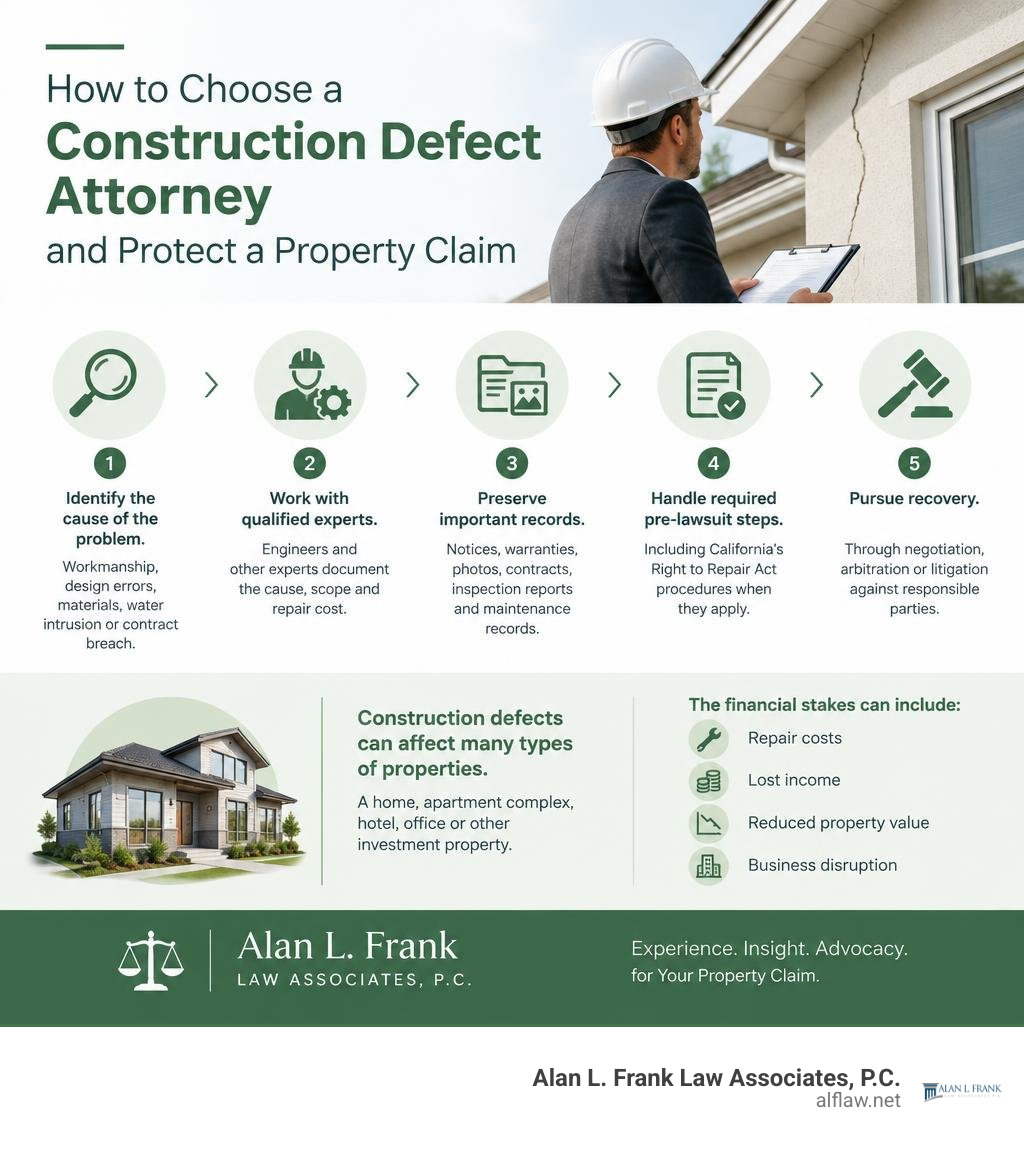
The right housing and construction defects attorney can help you act before evidence disappears or a legal deadline passes. Look for a lawyer who can:
- Identify whether the problem involves poor workmanship, design errors, defective materials, water intrusion, or a contract breach.
- Work with qualified engineers and other experts to document the cause, scope, and repair cost.
- Preserve notices, warranties, photos, contracts, inspection reports, and maintenance records.
- Handle required pre-lawsuit steps, including California’s Right to Repair Act procedures when they apply.
- Pursue recovery through negotiation, arbitration, or litigation against responsible builders, designers, contractors, or insurers.
Construction defects can affect a home, apartment complex, hotel, office, or other investment property. A roof leak or foundation crack may be visible, but the deeper issue can be hidden water damage, mold, structural movement, or a failed building envelope. For property owners, the financial stakes can include repair costs, lost income, reduced property value, and business disruption.
I am Alan L. Frank, Managing Attorney at Alan L. Frank Law Associates, P.C., with more than 20 years of experience leading complex commercial litigation and pursuing significant financial recoveries. As a housing and construction defects attorney resource, I bring a litigation-focused approach to evaluating property-related losses and pursuing accountable parties.
Housing and construction defects attorney terms to remember:
1. Identifying Common Types of Residential and Commercial Defects
When you invest in a building—whether it is a personal residence, a residential apartment community, or a multi-unit commercial asset—you expect sound craftsmanship, durable materials, and adherence to established engineering standards. Unfortunately, defects are an all-too-frequent reality in both modern developments and renovated properties.
Defects generally fall into four primary categories:
- Design Flaws: Errors by architects, structural engineers, or landscape specialists, such as inadequate drainage grading, poor roof slope calculations, or improper load calculations.
- Workmanship Deficiencies: Deviations by general contractors or subcontractors from architectural plans, industry standards, or local building codes.
- Material Failures: The use of sub-par, defective, or inappropriate materials, such as deteriorating waterproofing membranes, sub-standard pipes, or unstable concrete mixtures.
- Subsurface/Geotechnical Issues: Inadequate soil compaction, poor drainage preparation, or building on shifting soils without proper underpinning, leading to structural destabilization.
Understanding whether a defect is patent (apparent upon casual inspection) or latent (hidden behind walls, beneath slabs, or requiring years to manifest) is fundamental. Property buyers often benefit from understanding deal-breaking material defects before issues cascade into catastrophic property failures.
Evaluating Complex Structural and Water Intrusion Issues with a Housing and Construction Defects Attorney
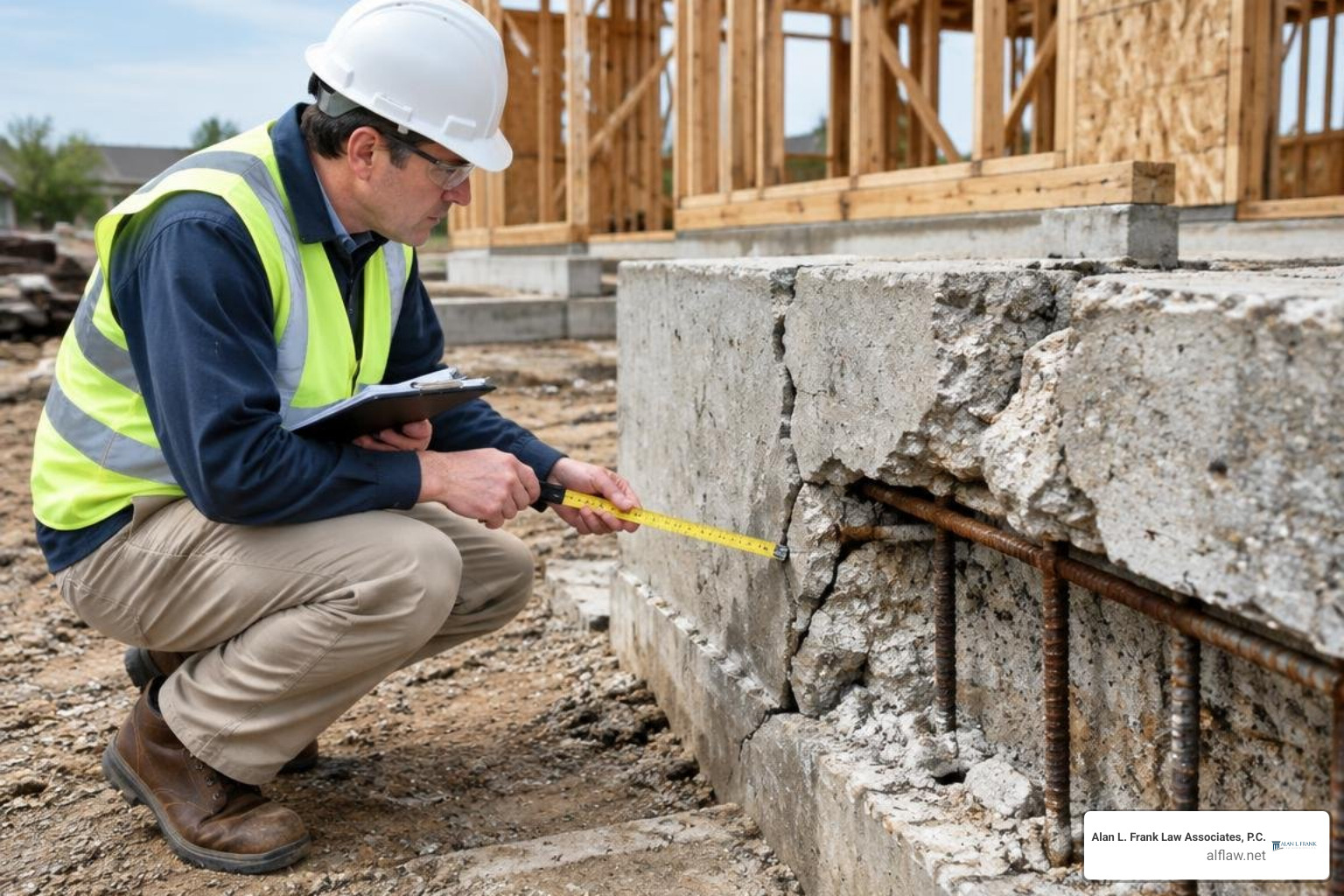
Among all construction failures, structural instability and moisture penetration pose the most immediate risks to a building’s integrity and habitability. Structural settlement can quickly escalate from minor aesthetic drywall fissures to unlevel flooring, jammed doorways, and compromised load-bearing walls. Addressing severe foundation problems requires early forensic testing to evaluate soil conditions, footing depths, and settlement rates.
Water intrusion is equally destructive. When the exterior envelope—including roofs, flashing, weather barriers, windows, and stucco—is poorly designed or installed, water seeps into building cavities. This leads to hidden wood rot, structural framing decay, and toxic mold blooms. Mitigating costly water intrusion damage is not just an insurance matter; it requires establishing liability among the envelope subcontractors, roofing installers, and material manufacturers.
Mechanical, Electrical, and Latent Building Envelope Failures
Beyond structural and water envelope failures, major systems within a property can harbor serious defects:
- Plumbing Failures: Defective pipe materials, improper soldering, or insufficient pressure regulation that result in pinhole leaks, burst supply lines, or sewer line back-ups.
- Electrical Hazards: Substandard wiring, ungrounded circuits, or undersized panels that violate fire safety standards and create immediate life-safety hazards.
- HVAC and Ventilation Defects: Inadequate duct sizing, improper ventilation, or faulty condensation drain lines that degrade indoor air quality and accelerate moisture build-up.
- Subfloor and Decking Decay: Improper flashing and lack of waterproofing on exterior balconies and walkways that cause hidden dry rot beneath walking surfaces.
2. Navigating Statutory Deadlines and Pre-Litigation Rules
Construction defect litigation operates under strict statutory timing constraints and structured pre-litigation mandates. Failing to comply with statutory notice rules or missing a filing deadline can permanently bar an otherwise valid claim.
| Legal Concept | Primary Timeline | Application / Key Impact |
|---|---|---|
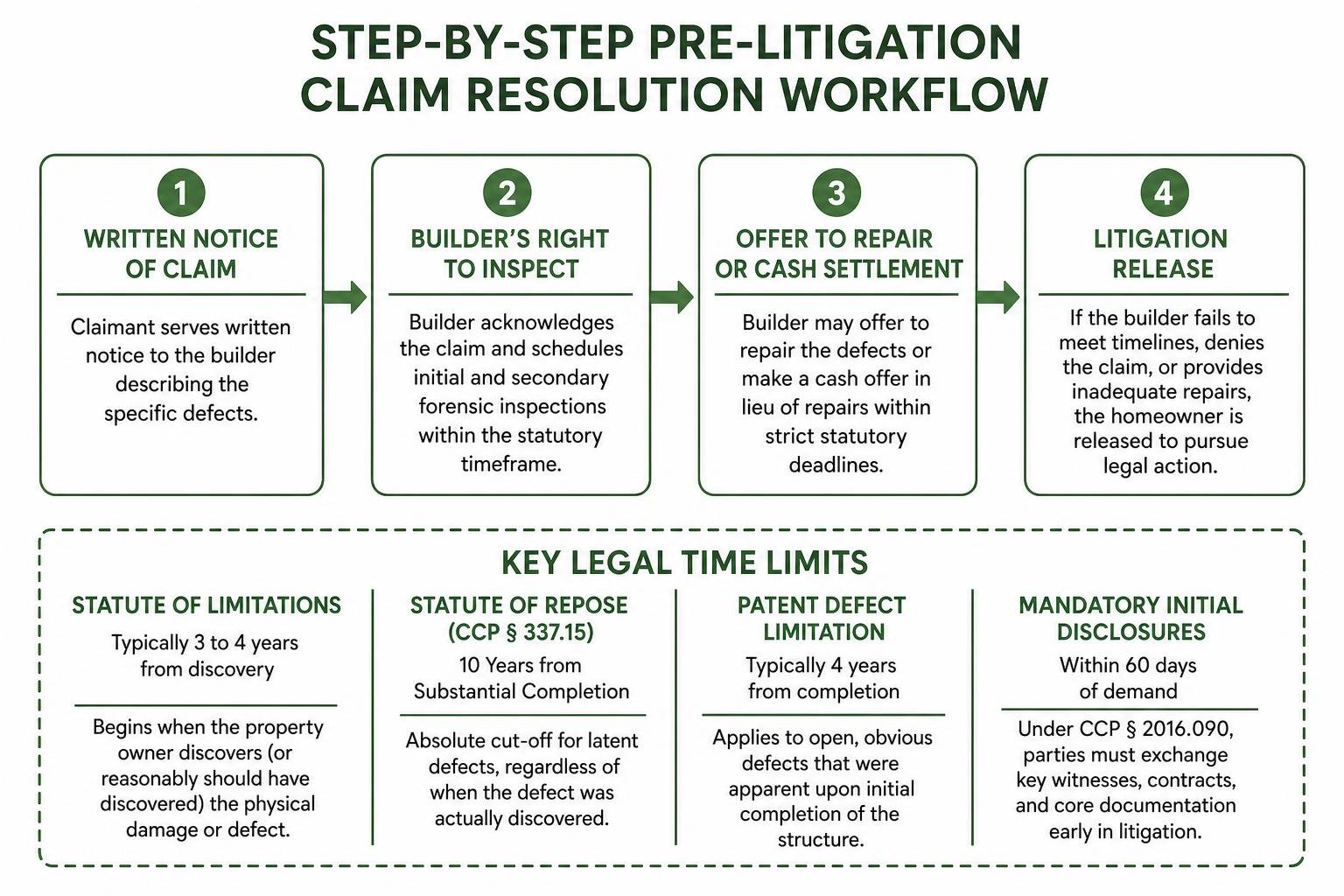
| Statute of Limitations | Typically 3 to 4 years from discovery | Begins running when the property owner discovers (or reasonably should have discovered) the physical damage or defect. |
| Statute of Repose (CCP § 337.15) | 10 Years from Substantial Completion | An absolute cut-off for latent defects, regardless of when the property owner actually discovered the defect. |
| Patent Defect Limitation | Typically 4 years from completion | Applies to open, obvious defects that were apparent upon initial completion of the structure. |
| Mandatory Initial Disclosures | Within 60 days of demand | Under CCP § 2016.090, parties must exchange key witnesses, contracts, and core documentation early in litigation. |
Property owners must also carefully review any builder-issued warranties to determine whether arbitration clauses, claim notice timelines, or specific repair terms apply, keeping in mind that enforcing builder warranty coverage often runs alongside statutory rights rather than replacing them.
California Right to Repair Act (SB 800) and Builder Notice Protocols
For residential properties built after January 1, 2003, California’s Right to Repair Act (Senate Bill 800, codified in Civil Code § 895 et seq.) establishes clear building performance standards. SB 800 outlines detailed pre-litigation protocols:
- Written Notice of Claim: The claimant must serve written notice to the builder describing the specific defects.
- Builder’s Right to Inspect: The builder has a defined timeframe to acknowledge the claim and schedule initial and secondary forensic inspections.
- Offer to Repair: The builder may offer to repair the defects or make a cash offer in lieu of repairs within strict statutory deadlines.
- Litigation Release: If the builder fails to adhere to the statutory timelines, denies the claim, or delivers inadequate repairs, the homeowner is released to pursue formal legal action.
Statute of Limitations vs. 10-Year Statute of Repose
A crucial distinction in defect litigation is the difference between the statute of limitations and the statute of repose:
- Statute of Limitations: Runs from the date the defect is discovered or should have been discovered through reasonable diligence.
- 10-Year Statute of Repose (CCP § 337.15): Serves as an absolute deadline running from substantial completion, recording of valid notices of completion, or final inspection. Once ten years pass, latent defect claims against developers, contractors, and designers are generally barred, absent specific tolling agreements or active fraud. Property records and published legal notices and case records often provide vital baseline dates to calculate when the substantial completion clock officially began.
Why You Need an Experienced Housing and Construction Defects Attorney
Litigating construction defect claims requires managing multiple parties, complex insurance structures, and sophisticated engineering testimony. Developers rarely accept sole responsibility; instead, they routinely cross-complain against dozens of framing, plumbing, stucco, and roofing subcontractors, as well as design professionals.

At Alan L. Frank Law Associates, P.C., we bring our firm’s track record of multi-million dollar recoveries and extensive commercial litigation capabilities to hold accountable the parties responsible for substandard construction. We manage the discovery process, challenge contractor insurance denials, coordinate forensic teams, and negotiate settlement terms that cover true repair costs.
Expert Forensic Analysis and Mandatory Initial Disclosures
Proving a defect claim requires clear technical evidence. Our legal team collaborates with licensed structural engineers, geotechnical experts, building envelope specialists, and cost estimators to build comprehensive claim documentation:
- Destructive and Non-Destructive Testing: Moisture mapping, infrared thermography, core sampling, and structural load analysis.
- Code Compliance Reviews: Evaluating construction against the relevant editions of the building standards code at the time of construction.
- Initial Disclosures Compliance: Under procedural rules such as California Code of Civil Procedure § 2016.090, parties are required to provide verified initial disclosures—including key witnesses, insurance agreements, and relevant contracts—within 60 days of a demand, streamlining early discovery and narrowing disputed issues.
Residential Protections vs. Commercial Defect Litigation Strategies
Residential and commercial claims follow different legal pathways:
- Residential Claims: Often governed by statutory frameworks like SB 800, statutory warranties, and consumer protection statutes designed to safeguard individuals and homeowners associations.
- Commercial Properties: Governed primarily by the express terms of the construction contract, commercial lease allocations, and common law theories of negligence, breach of contract, and indemnity. In complex commercial litigation disputes, resolving claims requires analyzing risk allocation clauses, standard-of-care warranties, delay damages, and business interruption losses.
3. Immediate Action Steps to Protect Your Property and Claim
If you suspect construction defects in your building, taking prompt, structured action is critical to preserve your legal remedies:
- Document the Damage Thoroughly: Take detailed, dated photographs and high-definition video of all visible damage, water entry, cracking, or material decay.
- Maintain a Defect Log: Record the dates, weather conditions, and visible manifestations when leaks or issues occur.
- Preserve All Records: Gather original purchase agreements, architectural plans, builder communications, inspection reports, warranty documents, and maintenance receipts.
- Avoid Spoliation of Evidence: While emergency repairs are necessary to mitigate ongoing damage (such as stopping active flooding), avoid permanent cosmetic cover-ups or destructive alterations until an expert has documented the underlying defect.
- Do Not Sign Broad Releases: Never accept quick repair promises or nominal settlements from a builder’s insurance adjuster without having counsel review the release terms.
Fee Structures and What to Expect When Hiring a Housing and Construction Defects Attorney
Understanding legal fee arrangements allows property owners and business managers to pursue justice with confidence:
- Contingency Fee Structures: In many property defect cases, legal representation is provided on a contingency basis, where attorney fees are paid as a percentage of the financial recovery obtained through settlement or trial. If there is no recovery, you do not pay attorney fees.
- Hourly and Hybrid Retainers: Standard for commercial defect disputes involving multi-party contract actions, risk allocation claims, or complex indemnity defenses.
- Litigation Expenses: Costs for filing fees, depositions, and expert witness forensic evaluations are tracked transparently and typically recovered as part of the overarching settlement or verdict.
Frequently Asked Questions About Construction Defect Claims
How long do property owners have to file a construction defect lawsuit?
Under California Code of Civil Procedure § 337.15, property owners have up to 10 years from substantial completion to pursue claims for latent (hidden) defects. Once a defect causes observable physical damage or is discovered, the property owner must generally file suit within the applicable statute of limitations (typically 3 to 4 years, depending on the legal theory). Patent (obvious) defects typically must be filed within 4 years of project completion.
What pre-litigation steps must an HOA take before suing a developer?
Homeowners Associations (HOAs) managing common interest developments must comply with specific statutory pre-litigation dispute resolution procedures. Under California Civil Code § 6000 (often called the Calderon Act), the HOA board must serve a Notice of Commencement of Legal Proceedings on the developer before filing a defect lawsuit for common areas. This initiates a mandatory dispute resolution and mediation process that can last up to 180 days, allowing the parties to inspect, test, exchange documentation, and attempt settlement before formal litigation.
How do the 2025 California Building Standards Code updates affect defect liability?
The 2025 California Building Standards Code (Title 24), which took effect on January 1, 2026, introduced updated structural, energy efficiency, fire-alarm, and wildland-urban interface (WUI) standards. In construction defect litigation, builder performance and professional standards of care are evaluated against the specific building codes in force when permits were issued and construction occurred. However, these newer codes establish updated modern engineering benchmarks and inform repair protocols required to bring damaged structures up to current municipal safety standards.
Conclusion
Construction defects threaten both the financial value and structural safety of your real estate investment. Whether you are dealing with persistent water intrusion, severe foundation settlement, or systemic mechanical failures, navigating technical engineering reports, statutory deadlines, and builder resistance requires decisive action.
Alan L. Frank Law Associates, P.C. brings over two decades of trial-tested litigation experience, multi-million dollar recoveries, and focused advocacy to property owners facing serious building deficiencies. For answers tailored to your specific property dispute, consult our comprehensive housing and construction defect legal guidance to evaluate your claim and protect your investment.