
Easement by Necessity Basics Every Landowner Must Know


Easement by Necessity Basics Every Landowner Must Know
What Is an Easement by Necessity, and Why Does It Matter?
An easement by necessity is a legal right to cross another parcel when a land division leaves property without needed access to a road. It can arise even if no easement appears in the deed. To claim one, an owner generally must show that the parcels had a common owner, were divided, and lacked the required access when they were divided.
Being landlocked today is not enough on its own. The deed history, available routes, and state law all matter.
I’m Alan L. Frank, managing attorney of Alan L. Frank Law Associates, P.C., and I’ve led the firm for more than 20 years. For readers asking “what is easement by necessity,” I’ll explain the access and title facts that can shape a property dispute.
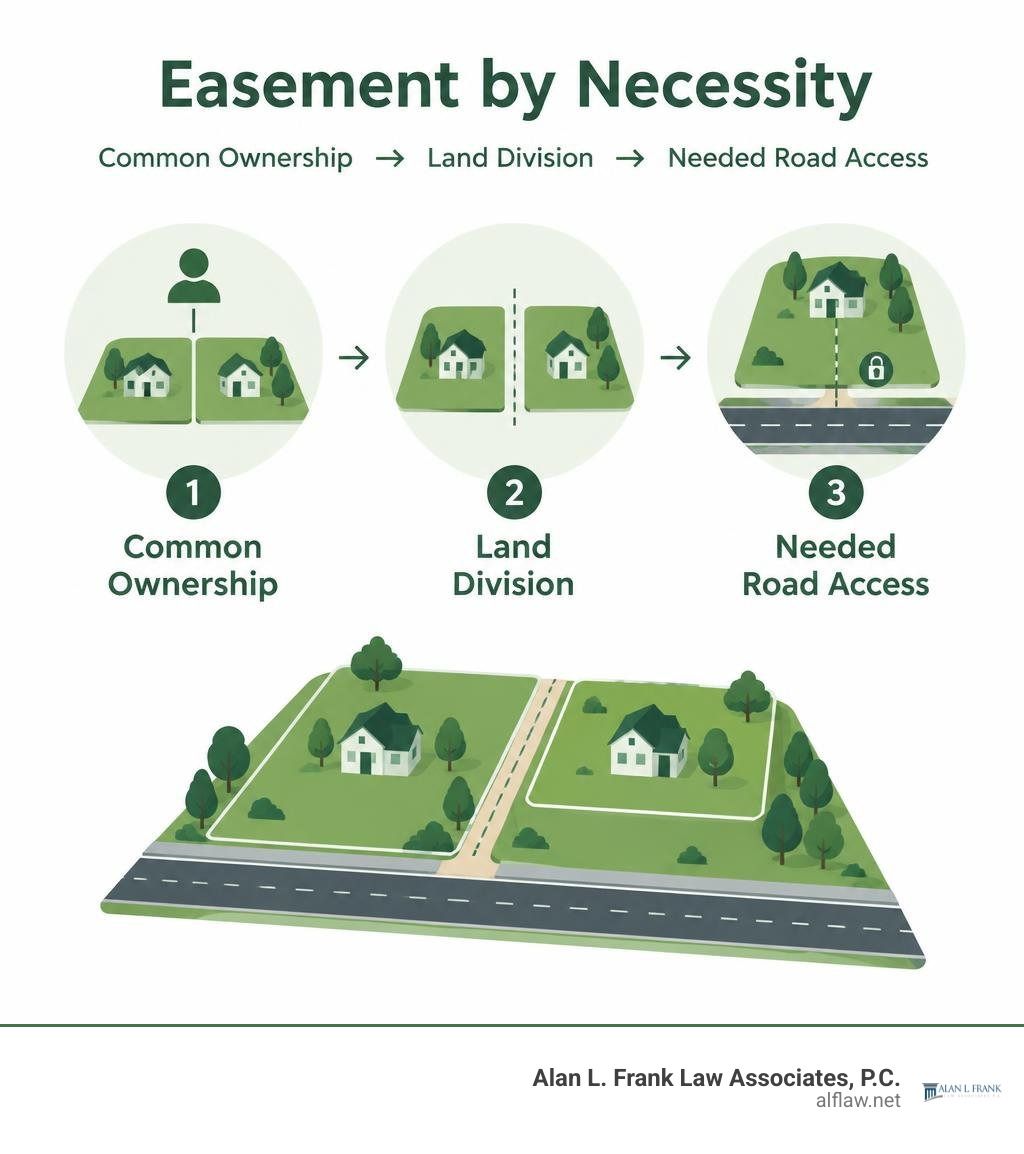
Basic what is easement by necessity terms:
What Is Easement by Necessity in Property Law?
In real property jurisprudence, an implied easement by necessity is an unrecorded servitude created by operation of law. Unlike an express grant, which is set down in a deed, this legal right arises because the law presumes that when a grantor conveys a parcel, they intend to convey the means to use and enjoy it.
The doctrine prevents real estate from becoming permanently landlocked and economically useless. Property access disputes often trigger related issues, such as disputed boundary line investigations, especially when historical rights-of-way were never formally recorded.
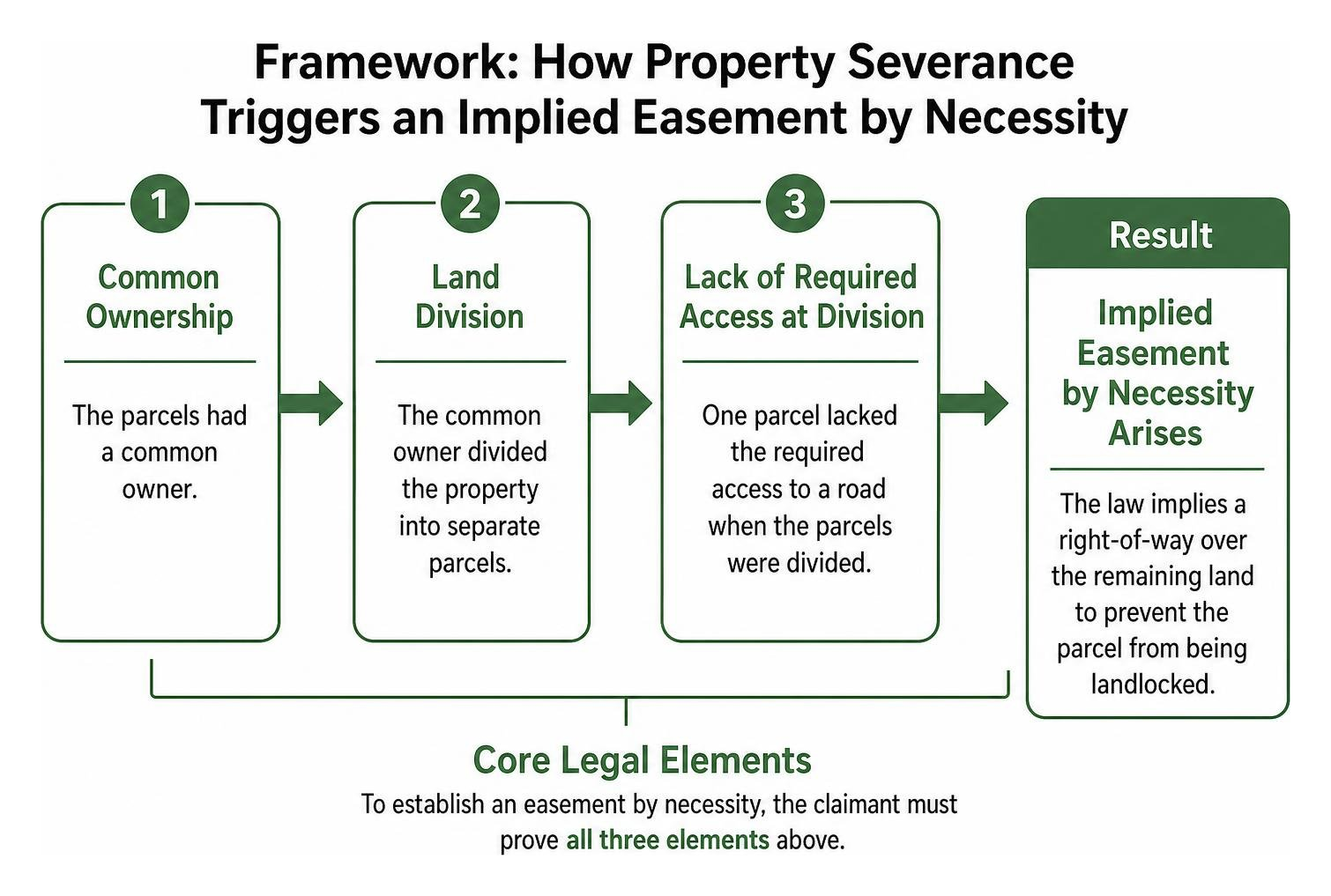
A fundamental principle of property law is the Statute of Frauds, which requires transfers of real property interests to be in writing. Implied easements are an exception to this rule. Courts recognize that public policy strongly disfavors landlocked tracts. When a single parcel is split and one part loses direct highway access, the law presumes the parties intended an implied right-of-way over the retained land, even if their deed is silent.
Core Legal Elements Required to Establish What an Easement by Necessity Is
To secure an easement by necessity, a claimant must satisfy three core elements:
- Unity of Title: The dominant estate (the landlocked parcel needing access) and the servient estate (the parcel over which access is sought) must have been owned by the same person or entity at some point in the chain of title.
- Severance of the Original Tract: The common owner must have conveyed a portion of the land, splitting the unified tract into separate parcels.
- Inaccessibility at the Time of Severance: The necessity for a right-of-way must have been created by the division itself. If the parcel had access when it was severed and only lost it later due to an unrelated event, common law necessity does not apply.
Proving these elements requires examining historical conveyances rather than just reviewing modern boundary stakes. Claimants often rely on locating historical property surveys to show that no alternative legal road existed when the tract was first severed.
Strict Necessity vs. Reasonable Necessity Standards
Courts evaluate access claims using either strict necessity or reasonable necessity:
- Strict Necessity: The traditional common law standard requires absolute landlock. If a parcel has any lawful, physical access to a public road—even over rough or inconvenient terrain—the court will not imply an easement over a neighbor’s property.
- Reasonable Necessity and Manifest Impracticability: Modern courts, including those in Pennsylvania and New Jersey, recognize that demanding absolute physical impossibility can lead to unjust results. If an alternate route is barred by severe topographical obstacles, prohibitive construction costs, or impossible environmental permitting conditions, access across the servient estate may still be granted.
The scope of these easements has also evolved beyond basic driveways. In cases such as Morrell v. Rice, courts have recognized that modern land use requires utility connections, such as electricity and water lines, provided those installations do not unfairly burden the servient estate.
Common Law Easements vs. Statutory Ways and Other Access Rights
When property access breaks down, landowners often evaluate several distinct legal remedies. Understanding the differences between these rights helps determine the right path forward, which may involve resolving land access through real estate litigation.
| Easement Category | Prior Common Title Required? | Primary Legal Basis | Compensation to Servient Owner? | Primary Purpose / Scope |
|---|---|---|---|---|
| Common Law Necessity | Yes (Unity of title at severance) | Implied intent of original grantor | No (Inherent in original grant) | Ingress/egress to landlocked parcel |
| Statutory Way of Necessity | No (Applies across unrelated parcels) | State statute / Private Road Acts | Yes (Fair market value of taken land) | Public policy against landlocking |
| Prescriptive Easement | No (Hostile and adverse relationship) | Long-term continuous use | No | Preserving historic, unpermitted use |
| Implied by Prior Use | Yes (Unity of title before split) | Pre-existing quasi-easement | No | Continuing open, permanent uses |
Common Law Implication vs. Statutory Ways of Necessity
A critical limitation of the common law doctrine is the stranger-to-title rule. An easement by necessity cannot be claimed over a neighboring parcel that was never part of the original unified tract.
To address landlocked parcels that cannot trace title to an adjacent owner, some states enacted Private Road Acts or statutory ways of necessity. Under these statutory procedures:
- A landlocked owner can petition a court to establish a private right-of-way over an adjoining owner’s land, even without prior common ownership.
- Because this process uses state authority to burden private land for another owner’s benefit, the petitioner must pay fair market compensation and construction damages to the affected servient owner.
Easement by Necessity vs. Prescriptive and Prior Use Easements
Landowners often confuse easements by necessity with two other implied rights:
- Easements Implied by Prior Use: These require prior unity of ownership, but they depend on an existing, visible, and continuous use (a “quasi-easement”) that was active before the property was split.
- Prescriptive Easements: These do not require common ownership. Instead, they are established through open, notorious, continuous, and adverse use for a statutory period (typically 21 years in Pennsylvania, and 20 to 30 years in New Jersey).
A key distinction is permission. If a neighbor gives permission to cross their land out of goodwill, that use is not adverse. As the court highlighted in Chester King Burnham v. Joseph A. Kwentus, permissive use defeats a prescriptive easement claim, whereas an easement by necessity relies on title history and structural landlock rather than hostile use. Reviewing prescriptive easement principles can help clarify whether an access dispute involves adverse use or historical necessity.
Location, Scope, and Duration of Implied Access Rights

An easement by necessity does not give the dominant owner unlimited access across the servient property. It is strictly limited to what is reasonably necessary for lawful ingress and egress. Access issues frequently arise during co-owner property divisions, making easement considerations when partitioning real property an important part of the planning process.
Determining Route Location and Permissible Uses
When an easement by necessity is established, the location and scope of the route follow these general guidelines:
- Servient Owner’s Initial Right to Route: The servient property owner usually has the first right to designate a reasonable route across their land, provided it offers safe and practical access to a public road.
- Burden Minimization: If the servient owner fails to designate a route, the court will establish one that minimizes disruption to the servient estate while providing workable access.
- Modern Expansion: The easement is generally limited to ordinary residential, agricultural, or commercial uses consistent with the land’s character at severance. While a path may be paved or improved to handle modern vehicles, the dominant owner cannot substantially increase the burden—such as building a multi-unit development on a parcel intended for a single residence—without facing an overburdening challenge.
How What an Easement by Necessity Is Changes Upon Termination
A key feature of an easement by necessity is that it lasts only as long as the necessity exists:
- Cessation of Necessity: If a municipality extends a public road directly to the landlocked parcel’s boundary, or if the dominant owner buys an adjacent lot that provides direct road access, the easement by necessity immediately ends by operation of law.
- Merger of Title: If the same person acquires both the dominant and servient parcels, the easement is extinguished because an owner cannot hold an easement over their own land.
- Express Release: The dominant owner can formally extinguish the easement by executing a written release deed to the servient owner.
- Dormancy and Laches: Unlike some easements that terminate after nonuse, an easement by necessity can lie dormant across multiple transfers of title without being lost. However, as noted in the University of Maryland Extension analysis of necessity and laches, if a landlocked owner delays asserting their rights for decades while the servient owner makes substantial improvements in reliance on the clear title, the equitable defense of laches may bar the claim.
Frequently Asked Questions About Easements by Necessity
Can an adjoining property owner block an easement by necessity claim?
An adjoining property owner cannot lawfully block a valid easement by necessity once a court enters a declaratory judgment confirming the right-of-way. However, until a court rules or an express agreement is recorded, an adjoining owner can challenge the claim by showing:
- The parcels never shared a common grantor in their title history;
- The parcel was not landlocked when the original property was severed; or
- An alternative, legally enforceable route to a public highway is available.
If a neighbor physically blocks a roadway subject to a valid easement, the dominant owner can file an emergency injunction and a quiet title action to secure access.
Does an easement by necessity expire if the owner leaves it unused for decades?
No. Nonuse alone does not extinguish an easement by necessity. Under the dormant easement doctrine, the implied right-of-way passes with each conveyance of the dominant estate as an appurtenance. The right remains intact until:
- A practical, alternative legal access route becomes available; or
- The servient owner proves the claimant abandoned the right and that the delay caused clear, measurable prejudice under the doctrine of laches.
Who bears the financial responsibility for building and maintaining the access road?
The dominant estate owner (the party using the easement) is responsible for the costs of building, maintaining, and repairing the access road.
- The servient owner is not required to maintain the right-of-way unless a contract or deed says otherwise.
- If multiple dominant parcels share the same access corridor, maintenance costs are generally split in proportion to each party’s use.
- The dominant owner must maintain the path without damaging the servient land or blocking the servient owner’s reasonable use of their own property.
Conclusion
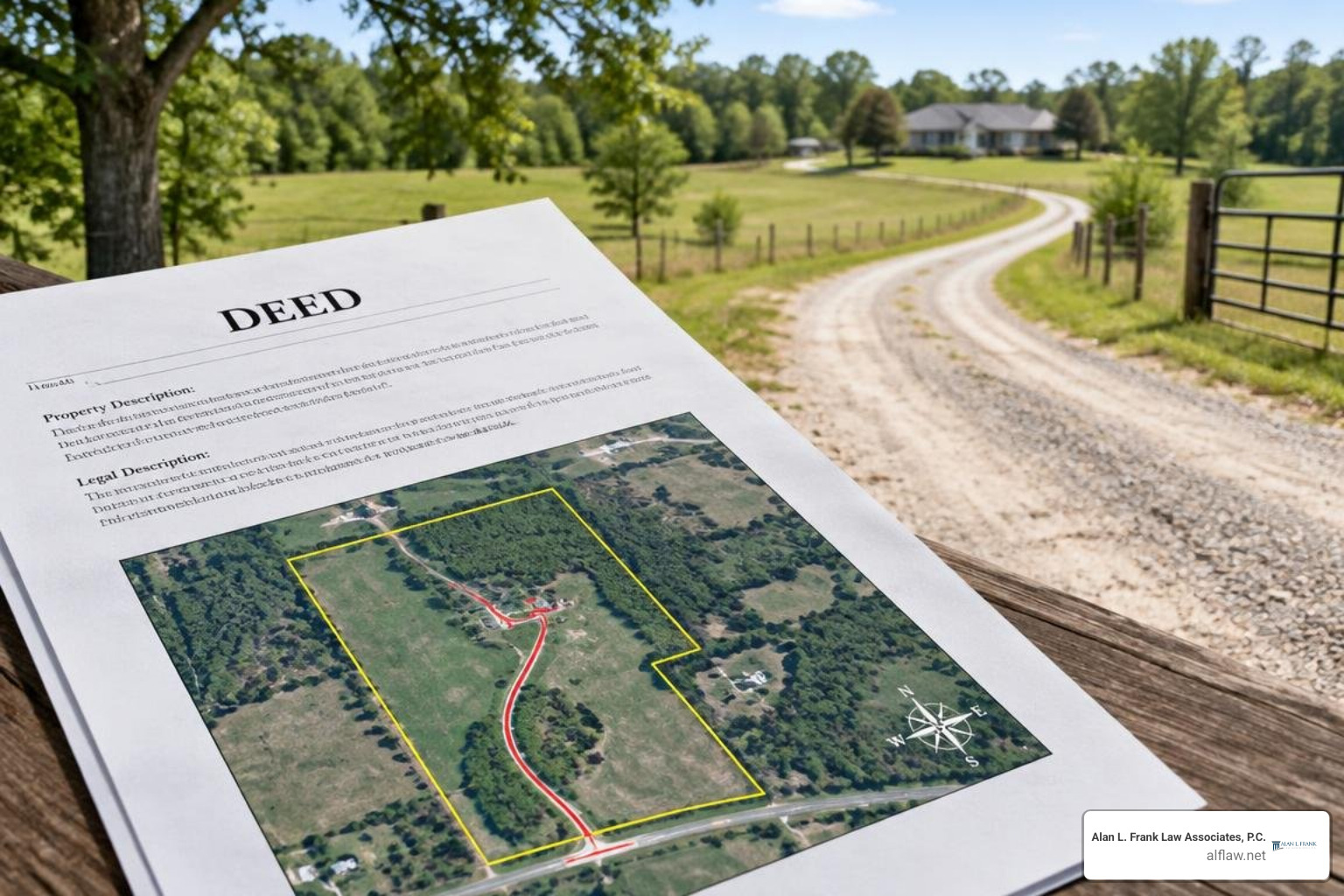
Understanding easements by necessity is essential for protecting your property rights and land value. Whether you own a parcel cut off from a public road or face an unrecorded right-of-way claim across your land, resolving the dispute requires a detailed review of historical deeds, original tract divisions, and the physical reality of the site.
When informal negotiations stall, landowners often turn to quiet title proceedings and declaratory judgment actions to establish their legal access. Our team at Alan L. Frank Law Associates, P.C. represents property owners and commercial clients in complex boundary, title, and access disputes. If you need assistance clarifying property rights or enforcing an access route, consider commercial litigation representation to protect your investment and resolve title issues.