
The Homebuyer’s Guide to Obvious Property Problems


The Homebuyer’s Guide to Obvious Property Problems
How to Spot a Patent Defect in Real Estate
A patent defect in real estate is a problem a reasonable buyer could find during a normal inspection. Examples include a broken window, a visible wall crack, or water stains. Before you buy, photograph what you see, have an inspector assess it, and put any agreed repairs or price changes in writing. Disclosure rules vary by location, but buyers often bear the risk of obvious flaws they could have found before closing.
I’m Alan L. Frank, managing attorney of Alan L. Frank Law Associates, P.C., and I’ve led complex litigation for more than 20 years. In this patent defect real estate guide, I’ll help you recognize visible problems and understand your options before you close.
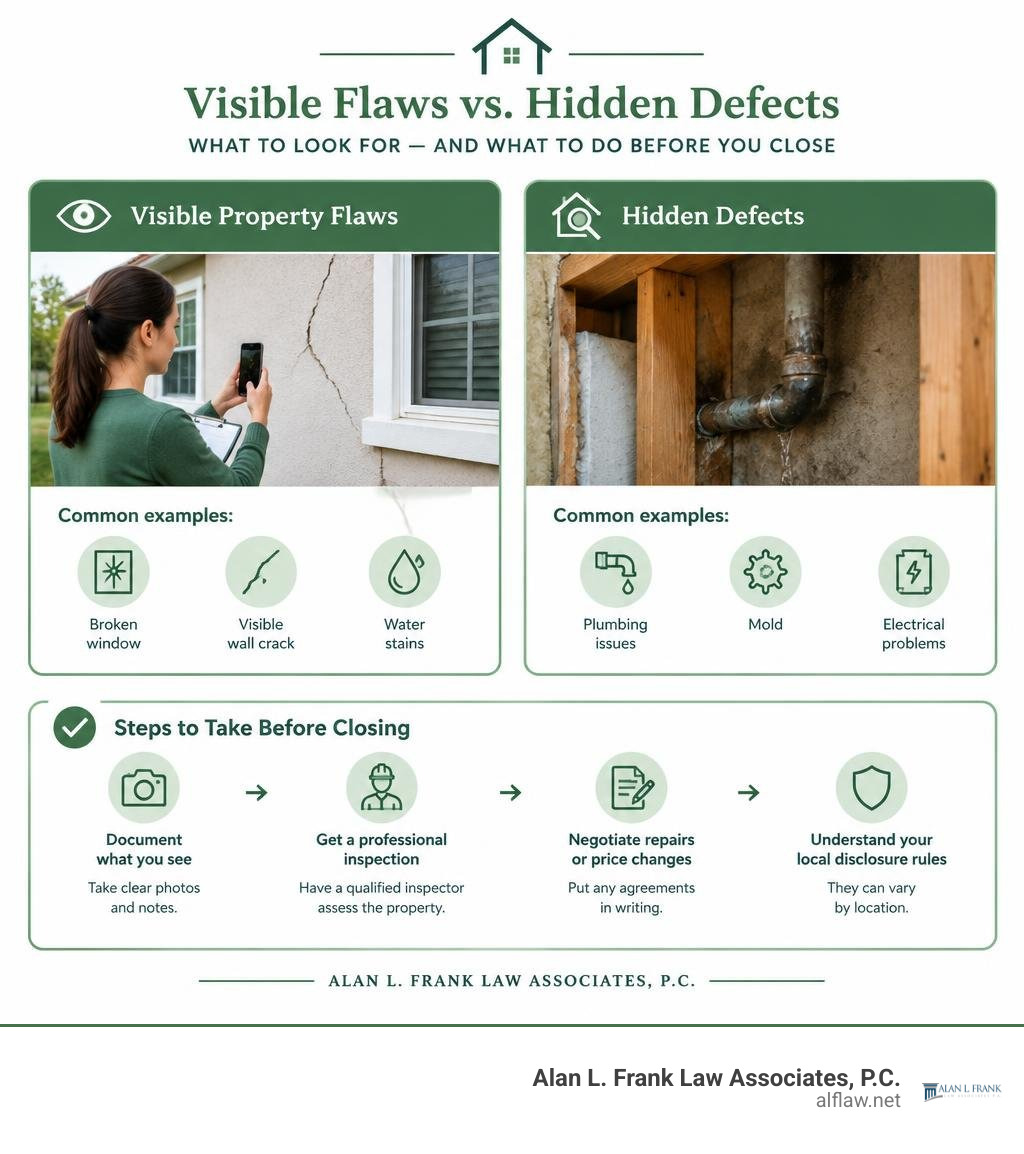
Glossary for patent defect real estate:
Defining Patent Defect Real Estate Issues and the Legal Framework
When purchasing residential or commercial property in Pennsylvania and New Jersey, understanding the legal classification of property damage is crucial. In property law, a flaw falls into one of two primary categories: patent or latent.
A patent defect is an open, observable physical flaw or structural deficiency that an ordinarily prudent person would discover during a reasonable visual inspection. According to the established legal definition of a patent defect, these conditions are readily noticeable without invasive testing, specialized architectural tools, or demolition. Whether it is an uneven patio walkway, a substantial horizontal crack across a basement wall, or rotted trim on an exterior entryway, the law presumes that a buyer who views the premises has the opportunity to see what is openly displayed.
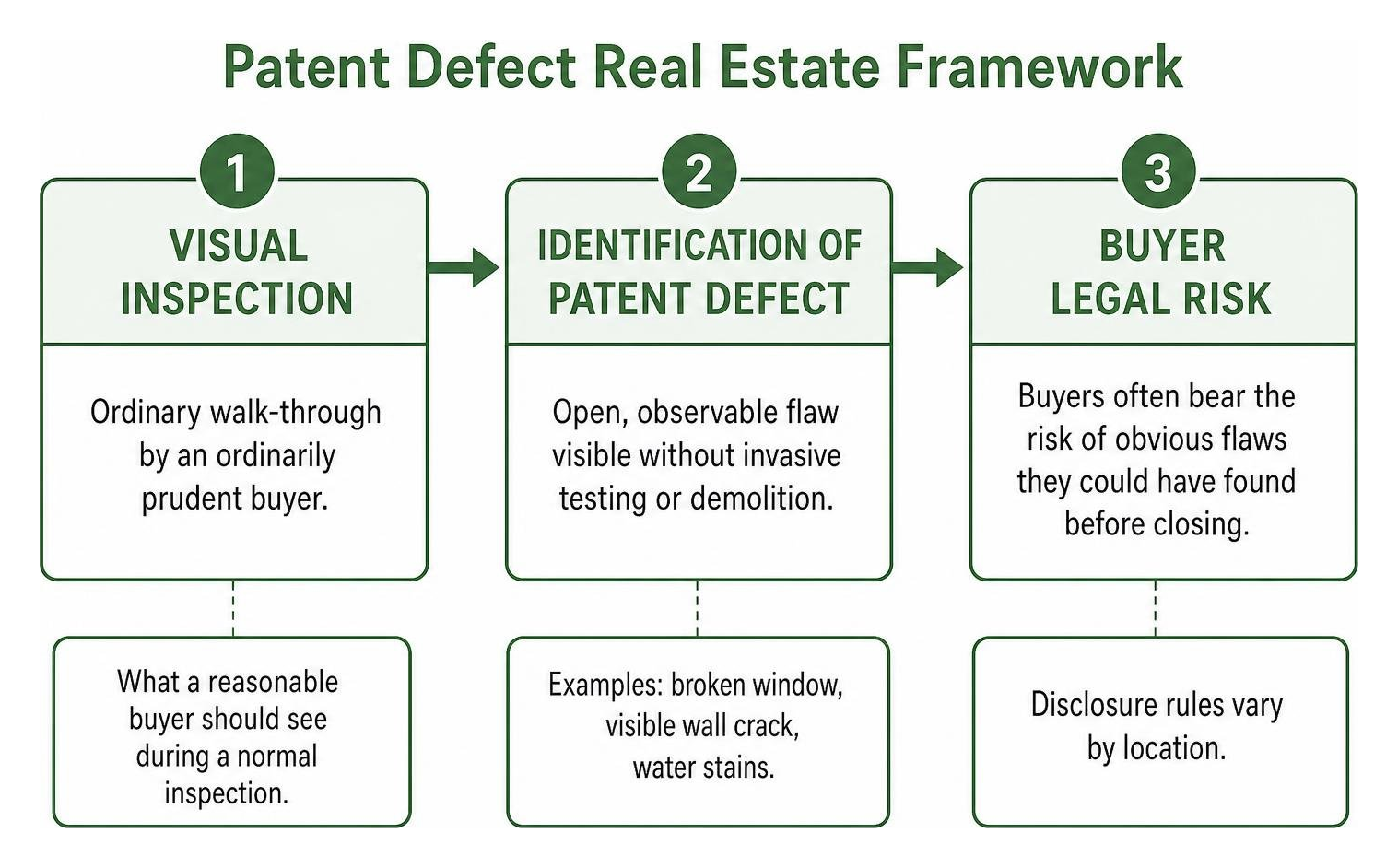
The legal concept of the “ordinarily prudent buyer” sets an objective standard. The law does not ask whether a specific buyer actually noticed the issue during their walk-through; rather, it asks whether an average, reasonable individual exercising standard diligence should have observed it. When evaluating physical property flaws, reviewing our guide to spotting deal-breaking material defects can clarify when an observable issue transitions from a minor cosmetic repair into a substantial financial exposure.
How Patent Defect Real Estate Distinctions Differ from Latent Flaws
The fundamental legal distinction between a patent defect and a latent defect hinges on discoverability and concealment. While a patent defect is visible to the naked eye during an ordinary walk-through, a latent defect is hidden behind finished surfaces, buried underground, or concealed within mechanical systems.
Latent flaws often include issues such as corroded internal plumbing within closed walls, subfloor dry rot, or unpermitted electrical work tucked behind drywall. While sellers generally have a duty to disclose known latent defects that impact property safety, habitability, or value, the burden for patent flaws typically remains with the purchaser. Exploring the nature of latent defects in residential property illustrates how hidden issues trigger entirely different statutory and contractual disclosure duties.
| Feature | Patent Defect | Latent Defect |
|---|---|---|
| Visibility | Readily apparent upon standard visual inspection | Hidden from ordinary view behind walls, earth, or ceilings |
| Discovery Method | Normal walk-through or non-invasive home inspection | Invasive probing, specialized diagnostics, or destructive testing |
| Seller Duty to Disclose | Generally not required unless asked or covered by specific statute | Mandatory if known, especially regarding safety and habitability |
| Buyer Burden | High (must inspect, identify, and negotiate before closing) | Low during walkthrough; protected against known undisclosed hazards |
| Legal Principle | Governed primarily by strict caveat emptor | Governed by disclosure statutes, fraud, and misrepresentation law |
The Role of Caveat Emptor and Buyer Due Diligence
The traditional common-law doctrine of caveat emptor translates to “let the buyer beware.” In real estate transactions across Pennsylvania and New Jersey, this principle places the affirmative obligation on the purchaser to examine the real estate, conduct reasonable inquiries, and discover all visible conditions prior to final settlement.
Under caveat emptor, if you walk through a house, see broken windows, cracked concrete steps, and sagging gutters, you cannot finalize the purchase and subsequently demand that the seller pay for repairs. By executing the Agreement of Sale without demanding specific repairs or price concessions, the buyer legally assumes the property in its visible condition.
The doctrine shields sellers from post-closing liability for patent issues because the buyer had full opportunity to observe the flaw and price their offer accordingly. Therefore, exercising thorough due diligence—incorporating visual walk-throughs, independent structural assessments, and contractual warranty negotiations—is your primary defense against costly physical surprises.
Common Examples of Observable Property Flaws
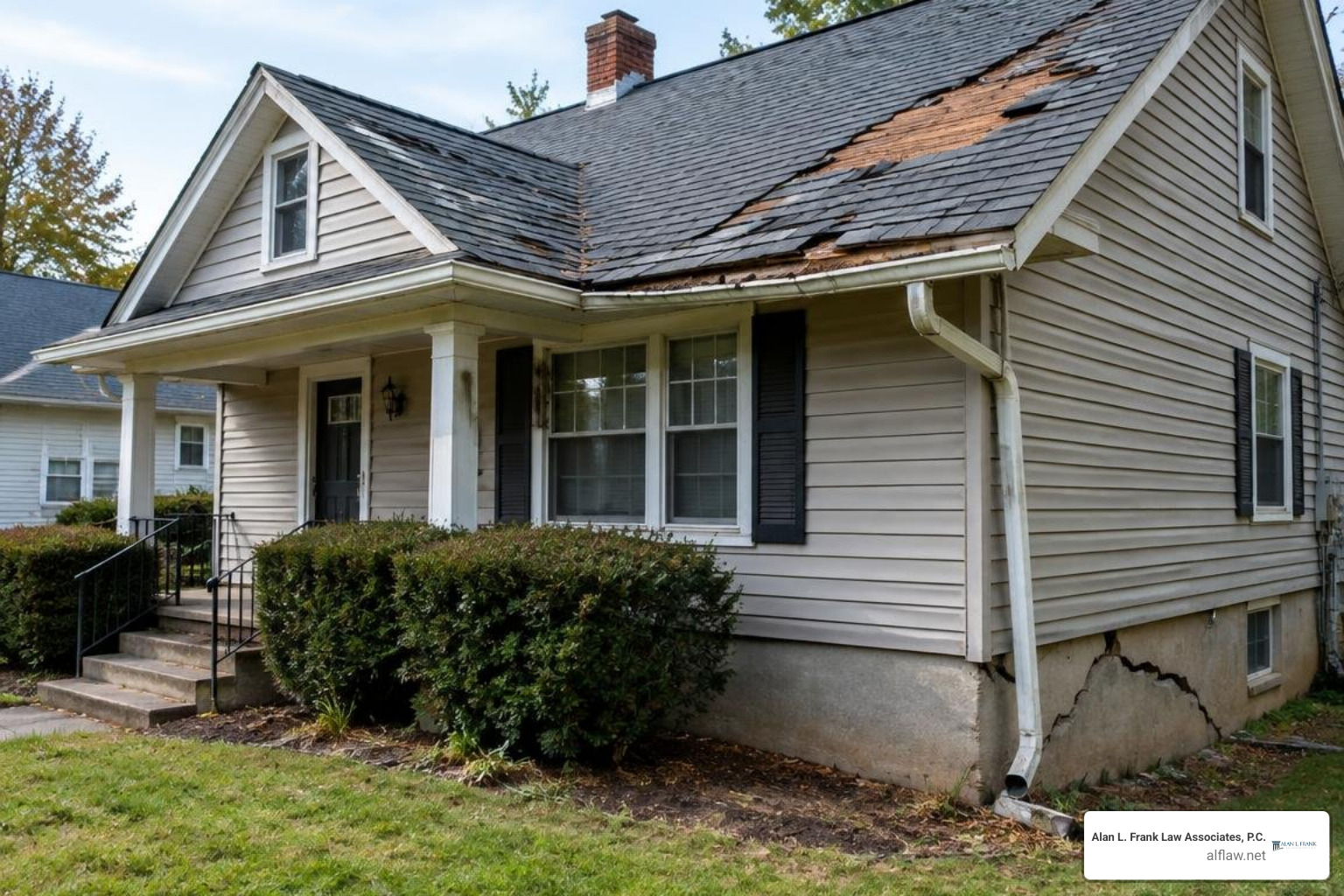
Identifying observable property issues requires a methodical review of both exterior and interior elements. Many patent defects appear minor at first glance but signal underlying structural movement or water infiltration.
Taking decisive action during initial evaluations helps in preventing damage before structural failure occurs, preserving your investment and avoiding contentious disputes.
Structural and Exterior Deficiencies
Exterior issues are among the most common patent defects. They are directly exposed to the elements and can be observed from the perimeter of the building.
- Masonry and Foundation Cracks: Prominent exterior stair-step cracks through brick mortar or wide fissures along exposed poured concrete foundation walls indicate differential settling. Our experience in protecting against foundation structural damage shows that unaddressed foundation settlement rapidly leads to major structural liabilities.
- Adverse Grading and Drainage Slope: Ground that slopes directly toward the foundation walls rather than away from the structure is an observable flaw that regularly causes basement flooding.
- Roofing and Shingle Deterioration: Missing shingles, curling edges, broken clay tiles, and rusted valley flashing are easily detected from ground-level or ladder inspections.
- Exterior Deck and Balcony Decay: Rotted support posts, missing ledger board fasteners, rusted joist hangers, and loose railings present clear structural and safety hazards.
- Trip Hazards and Hardscaping Displacement: Raised patio stones, severely buckled concrete walkways caused by tree roots, and cracked retaining walls represent open, visible liabilities.
Interior and Mechanical Red Flags
Inside the property, patent defects often present as cosmetic blemish patterns that point toward active mechanical or plumbing failures.
- Water Infiltration Marks: Dark water rings across ceiling drywall, discolored baseboards, efflorescence (white powdery mineral deposits) on interior basement brickwork, and visible surface mold.
- Deteriorated Electrical Infrastructure: Exposed junction boxes with uncovered wiring, outdated knob-and-tube wiring visible in open attics or basements, and scorched outlet covers.
- Plumbing Fixture Damage: Corroded supply valves under sinks, rusted water heater tanks, actively dripping p-traps, and cracked porcelain tubs.
- Interior Structural Distortions: Noticeably sloping subfloors, sticking interior doors, out-of-square doorframes, and extensive drywall cracking radiating from the corners of interior room openings.
Seller Disclosure Obligations, Concealment, and Legal Liability
While sellers generally do not have an affirmative legal duty to point out obvious patent defects that any reasonable person can see, their legal protections end where intentional deception begins. Sellers in Pennsylvania and New Jersey are bound by both statutory disclosure mandates and established common law principles governing fair dealing.
The professional standards set by organizations like the Royal Institution of Chartered Surveyors in their standards on defect rectification emphasize that documenting the physical reality of a building is vital for maintaining transactional integrity. When sellers attempt to short-circuit this integrity through bad faith or deceit, the protections of caveat emptor dissolve.
When Obvious Flaws Become Actionable Fraud
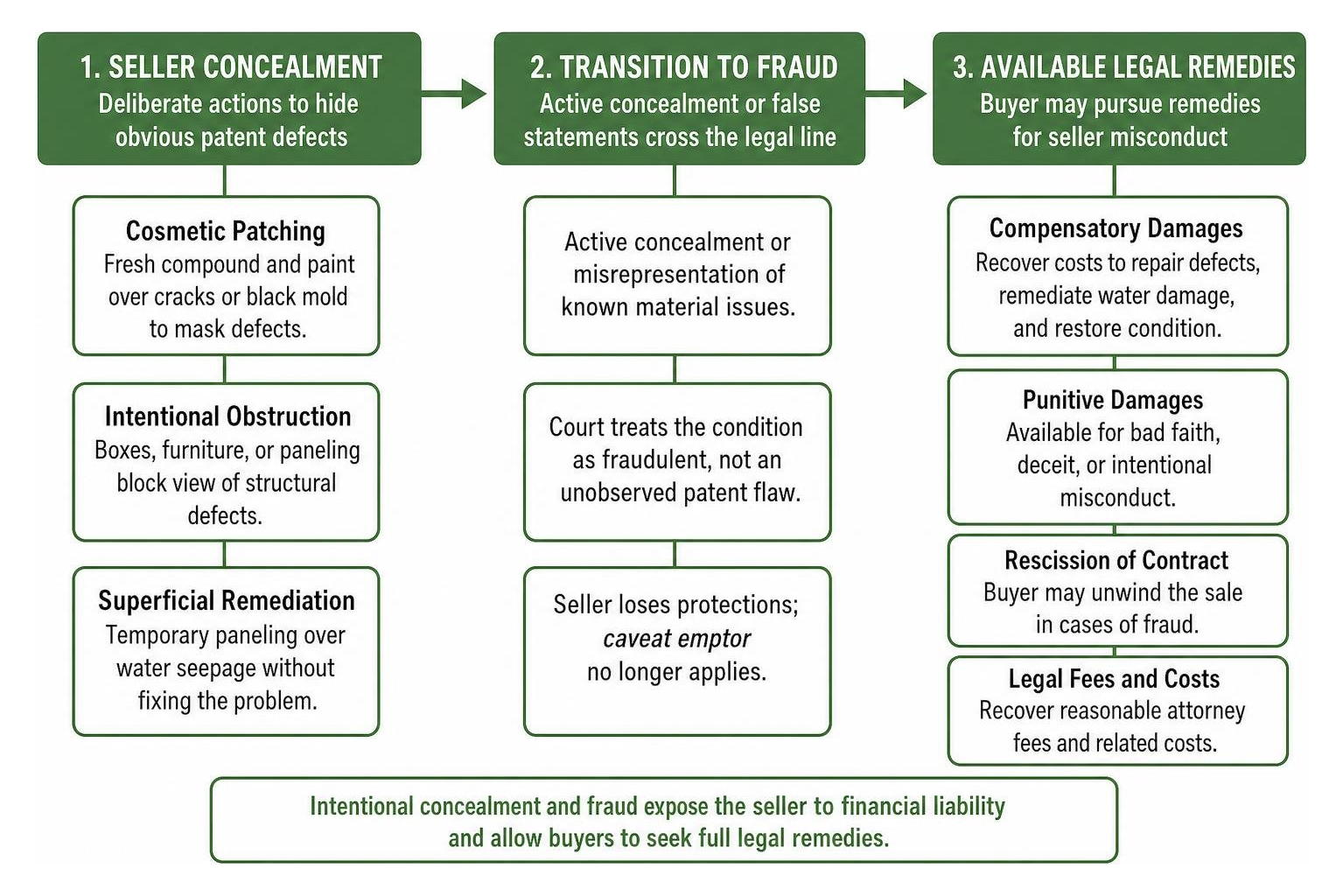
The critical legal line is crossed when a seller transitions from passive non-disclosure of a patent defect to active concealment or fraudulent misrepresentation. Active concealment occurs when a seller takes deliberate physical steps to hide an otherwise obvious defect from the buyer and their inspector.
Examples of unlawful active concealment include:
- Cosmetic Patching: Applying fresh drywall joint compound and paint over severe structural cracks or active black mold purely to mask them during scheduled open houses.
- Intentional Obstruction: Stacking heavy moving boxes, furniture, or temporary wall paneling directly in front of a severely bowed foundation wall to block an inspector’s sightlines.
- Superficial Water Remediation: Installing temporary paneling over chronic basement water seepage without addressing the intrusion, paired with false verbal assertions that the space remains dry.
When a seller intentionally hides an obvious defect, the court will treat the condition as a fraudulent act rather than an unobserved patent flaw. In such cases, exploring remedies for property damage and bad faith becomes an essential step in holding the deceptive party financially accountable.
Resolving a Patent Defect Real Estate Dispute Through Legal Remedies
When a seller engages in active concealment or misrepresents known material issues on state-mandated disclosure forms (such as the Pennsylvania Seller’s Property Disclosure Statement), the injured buyer has several potential legal remedies:
- Compensatory Damages: The buyer can recover the full financial cost required to repair the structural defect, remediate water infiltration, and restore the home to the represented condition.
- Contract Rescission: In severe cases where the fraud fundamentally undermines the transaction, a court may unwind the contract entirely, returning the purchase funds to the buyer in exchange for returning the deed to the seller.
- Closing Credits and Price Adjustments: If the issue is caught prior to closing, the parties can negotiate an immediate escrow credit, an outright price reduction, or an escrow holdback agreement where seller funds are preserved to pay licensed contractors post-closing.
Navigating these disputes requires rigorous evidence collection. Retaining experienced counsel for real estate litigation and representation ensures that your contractual rights, financial investments, and legal deadlines are protected.
Essential Due Diligence and Inspection Strategies for Buyers

The best protection against patent defect disputes is systematic, documented due diligence before closing. Relying on casual visual checks is rarely sufficient to gauge the true scope of visible deterioration.
For newly constructed homes or substantially renovated properties, understanding how your purchase interacts with builder warranties and service contracts provides an added layer of contractual security when visible defects emerge during initial occupancy.
Professional Home Inspections and Inspection Limitations
Hiring an independent, licensed home inspector is the cornerstone of residential due diligence. A professional inspector operates as an objective expert, systematically examining accessible building systems from the roof surface to the foundation slab.
However, buyers must recognize the operational limitations of a standard home inspection:
- Standard inspections are strictly visual and non-invasive. Inspectors do not punch holes in walls, dig up sewer lines, or remove finished paneling.
- If a visible patent defect suggests a deeper issue (such as visible settlement cracks), an inspector will recommend a specialized structural engineer.
- Buyers should attend the inspection in person, ask clarifying questions, take timestamped high-resolution photos, and verify that all attic and crawlspace areas were safely accessible during the assessment.
Contract Clauses, Warranties, and Closing Impacts
Your real estate contract is your legal instrument for managing defect risks. Standard purchase agreements in Pennsylvania and New Jersey include dedicated contingency provisions that empower buyers to react to discovered defects:
- Inspection Contingency Clauses: Ensure your contract includes an explicit inspection period allowing you to terminate the agreement, negotiate repairs, or request monetary credits if inspections reveal significant deficiencies.
- Repair Escrow Agreements: If a seller agrees to repair a visible defect but cannot complete the work before closing, establish a formal repair escrow holdback where a portion of the seller’s proceeds is held by the title company until work is verified and signed off.
- Title and Underwriting Clearance: Substantial patent defects (such as an unpermitted, structurally unsound deck encroaching on a setback) can compromise title clearance and lead mortgage underwriters to deny loan approval until repairs are verified.
Frequently Asked Questions About Visible Property Defects
Can a seller be held liable for an obvious property flaw after closing?
Under the common-law doctrine of caveat emptor, a seller is generally not liable after closing for obvious, visible property flaws that a buyer could have discovered through reasonable inspection.
However, liability may attach if the seller actively concealed the defect (such as putting up temporary paneling over a fractured wall) or made explicit fraudulent misrepresentations on statutory property disclosure statements. If the seller committed fraud, the fact that the defect was originally physical does not shield them from legal action.
How do visible property issues affect mortgage approval and insurance?
Mortgage lenders send licensed appraisers to evaluate the property. If the appraiser identifies severe patent defects—such as a failing roof, extensive wood rot, exposed electrical wiring, or structural cracking—the underwriter may issue a conditional loan approval requiring repairs prior to funding.
Similarly, insurance carriers frequently conduct exterior drive-by or walk-around inspections. If they observe missing handrails, deteriorating roofs, or hazardous walkway conditions, they may demand repairs within 30 days of closing or cancel the homeowner’s insurance policy.
What steps should a buyer take if an obvious flaw is found during a walkthrough?
If you discover a patent defect during an initial showing or final walkthrough:
- Document the Condition: Take clear, well-lit photos and video footage of the defect and the surrounding area.
- Notify Your Agent and Attorney Immediately: Issue a formal written notice invoking your inspection contingency or walkthrough rights before signing closing papers.
- Obtain Professional Repair Estimates: Have a licensed contractor or engineer inspect the defect to calculate exact repair costs.
- Negotiate Adjustments: Request a price reduction, a closing cost credit, or an escrow holdback agreement to cover the repair expenses. Never rely on verbal promises from the seller that they will fix the issue after closing.
Conclusion
Understanding the legal and practical dimensions of patent defects in real estate is essential for protecting your investments. In property transactions across Pennsylvania and New Jersey, the law places a significant duty of due diligence on the buyer. Visible flaws—ranging from settling foundation walls to deteriorating roof shingles—must be identified, documented, and negotiated before you reach the closing table.
While the doctrine of caveat emptor holds buyers responsible for discovering open defects, the law strictly prohibits sellers from engaging in active concealment or fraudulent misrepresentation. When real estate transactions go wrong due to concealed damage or unaddressed construction failures, having strong legal representation makes all the difference.
At Alan L. Frank Law Associates, P.C., our experienced litigation attorneys fight for the rights of property buyers and owners throughout Pennsylvania and New Jersey. If you are facing a contentious property dispute, review our comprehensive guidance on housing and construction defect claims to explore your legal options and protect your financial interests.