
When to Call a Real Estate Defect Attorney


When to Call a Real Estate Defect Attorney
When to Call an Attorney About a Hidden Property Defect
If you discover a serious hidden defect, photograph it, prevent further damage, and save your disclosures, inspection report, and repair records. Contact a lawyer before making major repairs or accepting a settlement. Real estate defect litigation may help you recover losses if a seller, developer, or other responsible party concealed the problem or failed to meet a legal duty.
I’m Alan L. Frank, managing attorney at Alan L. Frank Law Associates, P.C., where I have led complex litigation for more than 20 years. My work in commercial disputes and my firm’s construction defect practice inform how I approach real estate defect litigation.
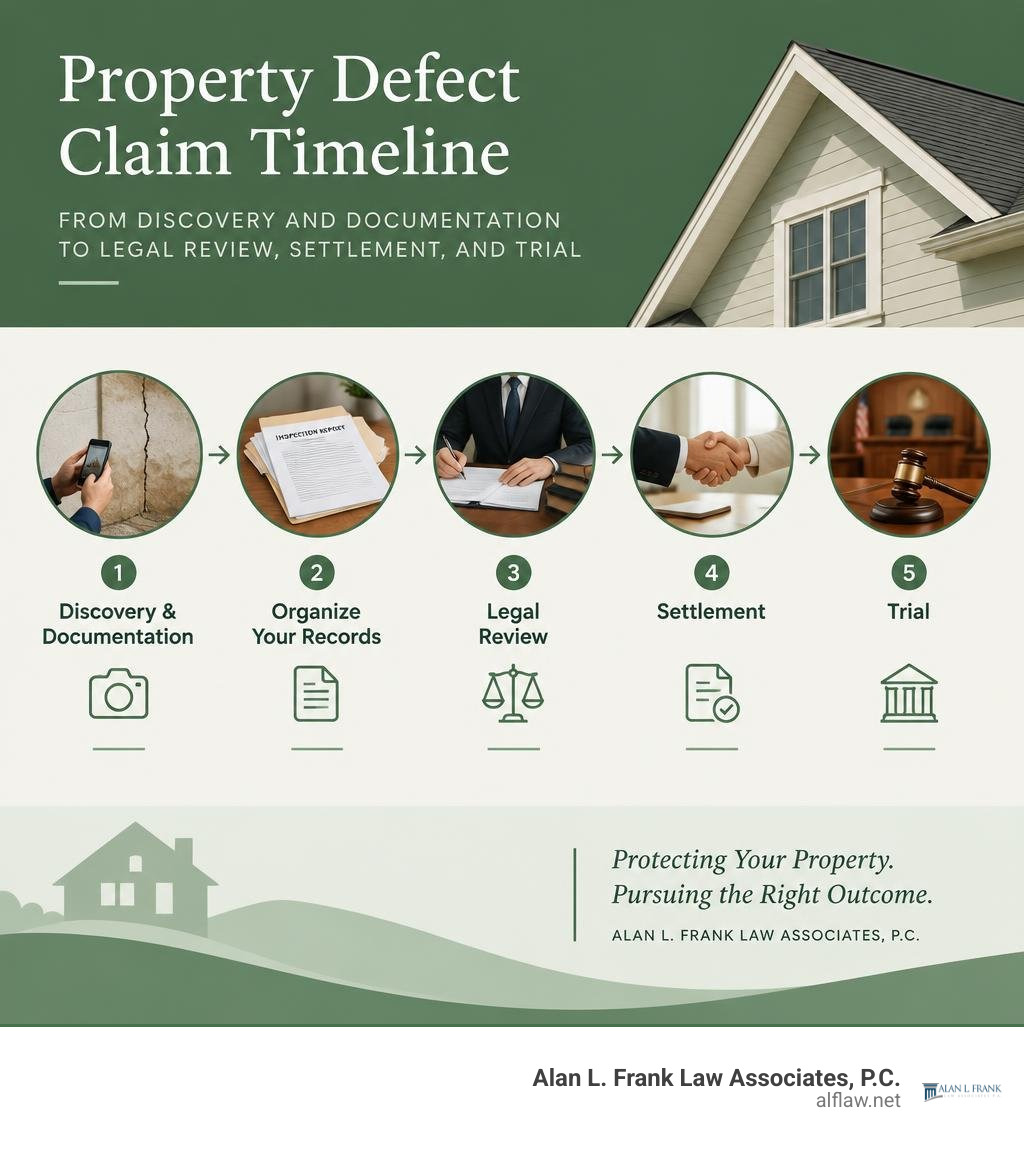
Easy real estate defect litigation glossary:
Identifying Material Defects and Legal Disclosure Duties
Buying real estate is one of the most significant financial investments an individual or commercial entity can make. When a newly purchased building reveals severe, unadvertised flaws, the financial and emotional toll can be immense. In legal disputes, not every cosmetic imperfection justifies a lawsuit. Instead, actionable claims center on material defects and the failure of responsible parties to uphold their legal disclosure duties.
A seller or developer possesses an inherent knowledge advantage regarding a property’s history. When parties conceal known structural or functional failures, they violate legal standards established across state statutes and common law doctrines. Successfully resolving these conflicts requires spotting deal-breaking material defects early and evaluating whether sellers, builders, or brokerages breached their duties of honesty and fair dealing.
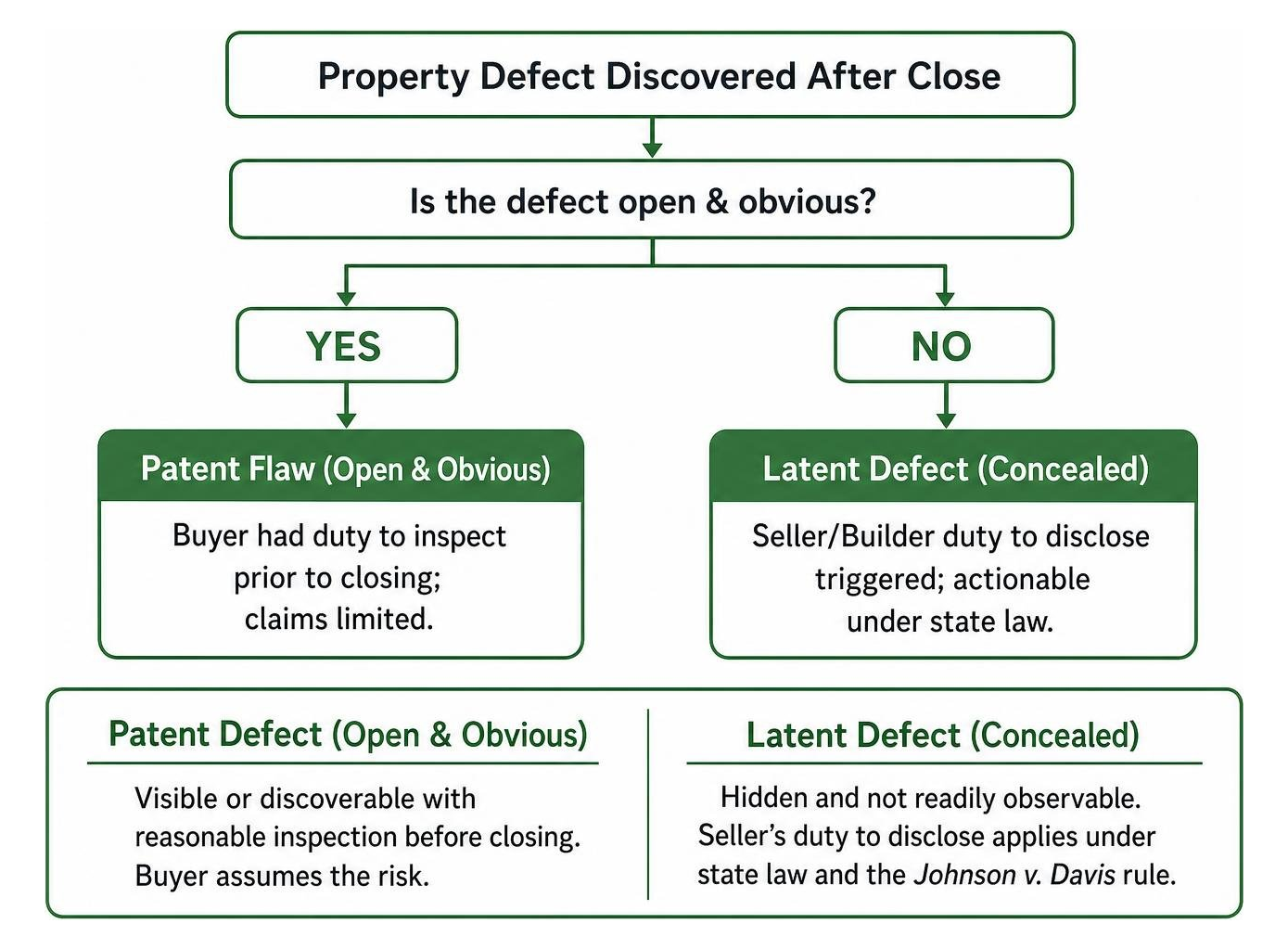
The foundational principle governing residential disclosures traces back to landmark jurisprudence such as the Johnson v. Davis rule. Under this widely recognized doctrine, where a seller knows of facts materially affecting the value or desirability of a property that are not readily observable and are unknown to the buyer, the seller is under an affirmative duty to disclose them. Modern courts continue to analyze the fine balance between a seller’s disclosure mandate and a buyer’s duty of reasonable diligence, emphasizing that latent conditions must be evaluated carefully alongside formal transaction records.
Material vs. Minor Property Defects
To build a viable legal case, we must distinguish between minor maintenance wear-and-tear and actionable material flaws. A material defect is a condition that poses an unreasonable risk to safety or structural integrity, or substantially diminishes the market value and functional utility of the real estate.
- Minor Defects: Cosmetic drywall cracks from normal seasonal settling, worn carpeting, aging but functional appliances, and minor hardware issues.
- Material Defects: Active foundation heaving, compromised load-bearing framing, persistent structural water infiltration, unmitigated toxic mold, faulty electrical panels posing fire risks, and pervasive municipal building code violations.
Understanding the behavior of latent defects in residential construction is critical because these hidden problems often lurk behind fresh paint or finished basement drywall, only manifesting months after closing during heavy seasonal rains or temperature shifts.
Disclosure Obligations of Sellers and Real Estate Brokers
Statutory frameworks in jurisdictions like Pennsylvania and New Jersey strictly govern real estate transactions. Sellers are legally required to complete comprehensive property condition disclosure statements detailing their actual knowledge of roof leaks, structural repairs, basement water entry, plumbing defects, and environmental hazards.
Real estate agents and brokers also owe specific legal duties. While brokers generally do not guarantee a home’s structural integrity, they cannot engage in deceptive practices or repeat representations they know, or should reasonably know, are false. State consumer fraud statutes apply forcefully to real estate sales where parties intentionally mask structural flaws to induce a sale.
Crucially, sellers often believe that inserting an “as is” clause into a purchase agreement shields them from future lawsuits. That is a dangerous legal misconception. An “as is” provision bars claims for patent, readily observable defects, but it never excuses active fraudulent concealment or intentional misrepresentation regarding non-readily observable defects.
Immediate Steps When You Discover Property Damage
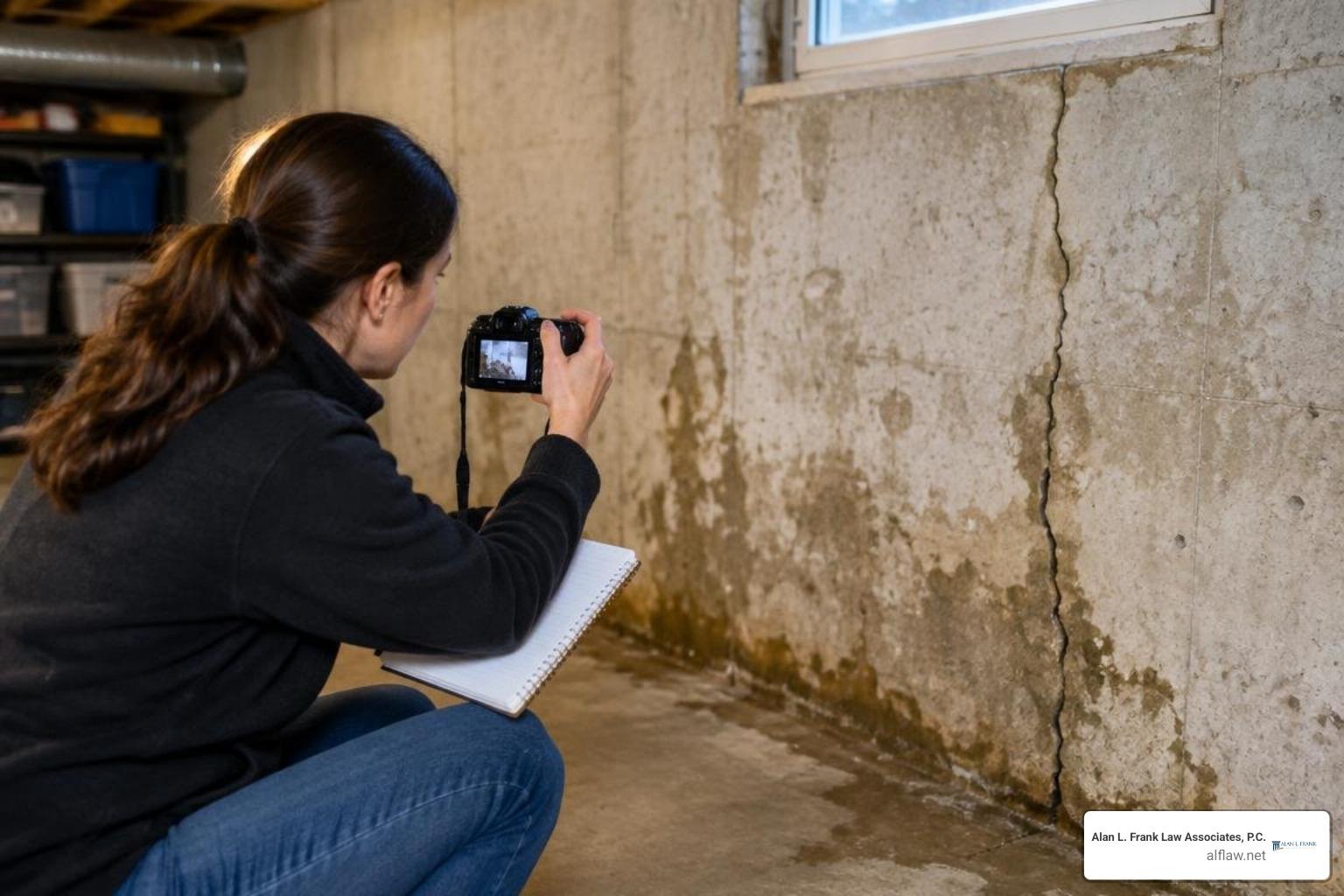
Discovering that your foundation is shifting or that rainwater is pouring into your living space is stressful. However, your initial actions following discovery establish the evidentiary foundation of your legal claim. Handling severe water intrusion claims or hidden damage requires strict discipline to preserve rights and avoid undermining your case.
When an unexpected defect surfaces, follow these critical steps:
- Document the Damage Extensively: Capture high-resolution photographs and videos from multiple angles, capturing both wide-room perspectives and close-ups with date and time stamps.
- Implement Temporary Emergency Mitigation: Take reasonable steps to stop active destruction (such as placing tarps or extracting pooling water), but do not discard damaged materials until they are cataloged.
- Assemble Transaction Records: Gather your sales agreement, seller disclosure forms, home inspection reports, closing documents, and all written communications with real estate agents.
- Halt Non-Emergency Permanent Repairs: Avoid performing permanent structural or cosmetic overhauls before a forensic professional evaluates the site.
- Issue Formal Written Notice: Transmit written notice to the seller, developer, and warranty providers placing them on legal notice of the defect.
- Consult Experienced Litigation Counsel: Partner with a real estate defect litigation attorney before negotiating or signing liability waivers.
Evidence Collection and Documentation
Clear, contemporaneous documentation wins courtroom battles. Maintain a centralized digital and physical binder containing all repair estimates, professional inspection invoices, contractor evaluations, and itemized receipts for temporary mitigation supplies.
When dealing with structural movement, preserving foundation failure evidence requires retaining structural engineers who can perform forensic soil sampling, laser level floor assessments, and crack-gauge monitoring. Every email, text message, and phone call with the prior owner, broker, or builder should be transcribed and logged with precise dates and participant details.
Avoiding Premature Repairs and Formal Notification
A common mistake property owners make is immediately hiring a contractor to replace defective framing or rebuild a leaking wall assembly before legal adversaries have an opportunity to inspect it. In civil litigation, destroying or significantly altering evidence—even with good intentions—can expose you to claims of evidence spoliation, potentially barring vital testimony or dismissing claims.
Perform only the stabilization strictly necessary to prevent catastrophic failure or mold propagation. Before executing permanent remediation, your attorney should send formal demand letters. This satisfies statutory cure periods or pre-suit inspection protocols without waiving your legal rights to pursue full financial recovery.
Navigating Real Estate Defect Litigation Claims and Corporate Liability

When informal negotiations fail, understanding what real estate litigation involves helps buyers make strategic choices. Modern real estate development frequently involves complex webs of general contractors, subcontractors, design professionals, and single-purpose LLCs. Pursuing justice requires asserting the correct causes of action while holding parent entities financially responsible.
Litigation also requires navigating nuanced common law doctrines. For instance, the economic loss rule often limits tort recovery (such as negligence claims) when the underlying dispute stems purely from an alleged breach of contractual duties. Crafting successful pleadings demands distinguishing independent statutory and fraud claims from baseline contract obligations.
Causes of Action in Real Estate Defect Litigation
Depending on the facts of the transaction and the parties involved, your lawsuit may incorporate several legal claims:
- Breach of Contract: Filed when a seller or builder fails to deliver a property meeting the specific terms, specifications, or warranties outlined in the purchase and sale agreement.
- Fraudulent Misrepresentation and Concealment: Asserted when a party intentionally lied about or actively hid a known latent defect to induce the purchase.
- Negligent Misrepresentation: Applied when a seller or broker had a duty to provide accurate information but carelessly made false assertions without a reasonable basis for believing them.
- Negligence and Negligence Per Se: Direct claims against builders and design professionals for failing to adhere to reasonable construction standards or violating building codes.
- Breach of Implied Warranties: Builders of new residential construction are bound by implied warranties of habitability and workmanlike construction; evaluating construction warranties helps determine whether developer disclaimers are legally enforceable.
- Statutory Consumer Protection Violations: In states like Pennsylvania (Unfair Trade Practices and Consumer Protection Law) and New Jersey (Consumer Fraud Act), buyers can seek enhanced statutory damages and attorney fee shifting for deceptive trade practices.
Piercing the Corporate Veil and Single Business Enterprise Theory
Real estate developers often create a unique Limited Liability Company (LLC) for every subdivision or condominium project they construct. Once the units sell out, the developer empties the LLC’s bank accounts, leaving behind an undercapitalized shell company designed to block future defect claims.
To defeat this tactic, experienced litigators utilize veil-piercing and the single business enterprise (amalgamation) doctrine. When multiple corporate entities operate as a single unified enterprise—sharing directors, commingling funds, and blurring corporate boundaries to shield assets—the court can treat them as one entity. Applying sophisticated commercial litigation strategies ensures that parent companies, management firms, and individual principals cannot hide behind corporate shells when their substandard buildings fail.
The Strategic Role of Counsel in Real Estate Defect Litigation
Navigating property defect lawsuits requires specialized legal and technical knowledge. Hiring a construction defect attorney connects you with an advocate who can manage extensive electronic discovery, depose sub-contractors, retain forensic engineers, and counter the aggressive tactics of commercial insurance carriers. Your legal counsel evaluates the true lifetime cost of structural remediation, ensuring your lawsuit seeks complete compensation rather than a superficial patch.
Legal Remedies, Damage Calculations, and Settlement Offsets
A primary objective of defect litigation is securing the financial resources necessary to make your property safe, functional, and fully marketable. Civil courts offer various legal remedies depending on the severity of the concealment and the available proof.
| Legal Remedy | Core Purpose | Typical Application in Defect Cases |
|---|---|---|
| Compensatory Damages | Make the plaintiff financially whole | Covers actual repair costs, engineering fees, temporary housing, and property value loss. |
| Contract Rescission | Unwind the transaction entirely | The buyer returns the deed, and the seller refunds the purchase price, closing costs, and interest. |
| Punitive Damages | Punish egregious bad faith | Awarded in cases of willful, wanton fraud or deliberate concealment of severe hazards. |
| Specific Performance | Compel mandatory action | Rare in completed defect sales; orders a builder to complete specific contracted punch-list items. |
| Statutory Fee Shifting | Award attorney fees & costs | Granted under state consumer protection statutes for deceptive business practices. |
When gross fraud or willful safety violations occur, exploring punitive damages for property destruction can significantly expand your financial recovery beyond basic repair costs.
Expert Repair Estimates and Jury Apportionment
Damage models in real estate defect trials rely heavily on expert witness testimony. In complex multi-unit and commercial defect cases, forensic repair estimates frequently diverge by millions of dollars. For instance, in complex construction defect actions, plaintiff experts may project comprehensive remediation costs at $6,309,197, while defense engineering experts argue that adequate structural repairs can be completed for slightly less than $4,000,000.
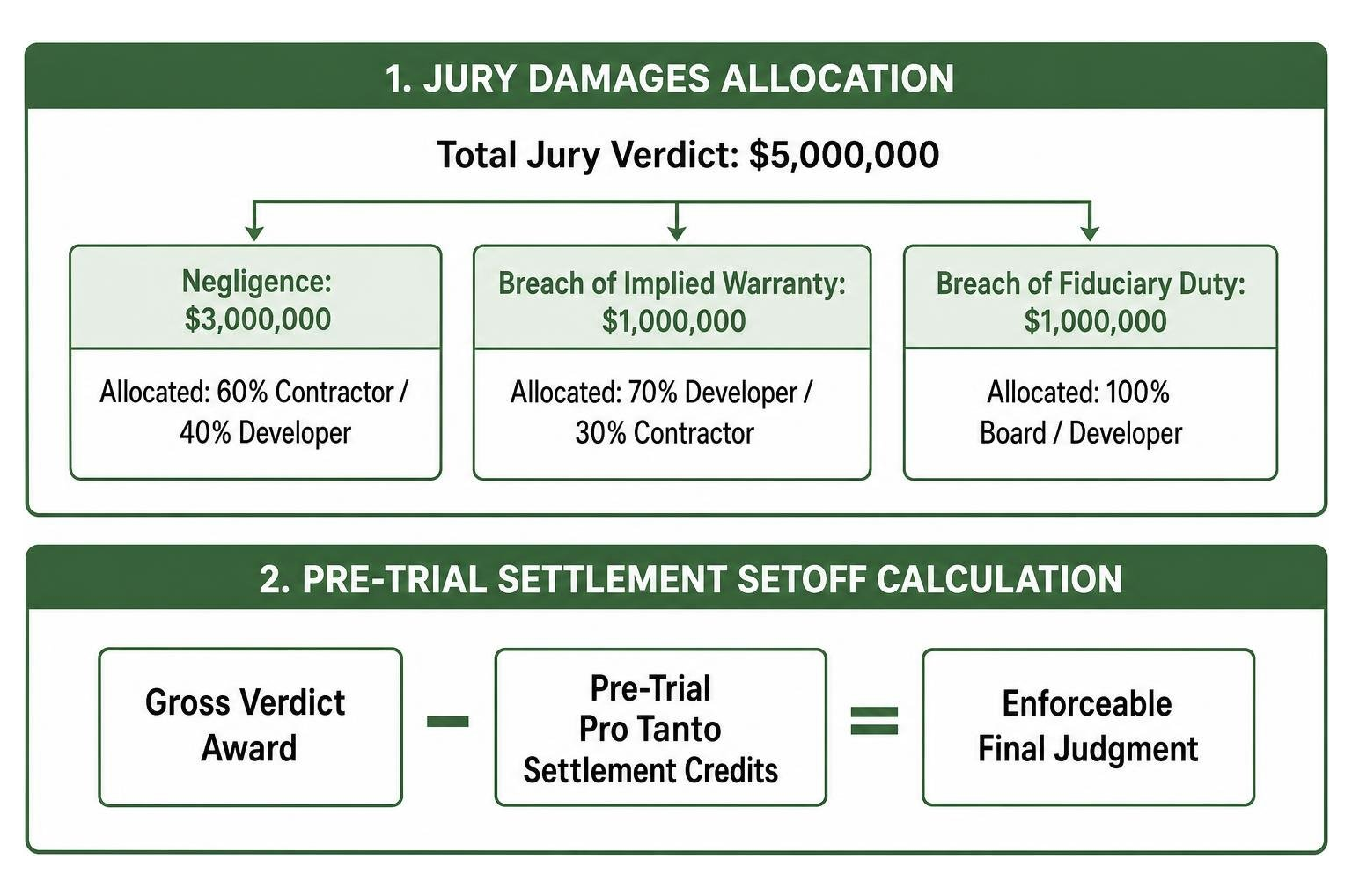
When trials proceed to a verdict, juries must resolve these competing valuations and apportion fault among multiple defendants based on comparative negligence or contractual breach. In multi-defendant verdicts, a jury might award $3,000,000 for negligence, $1,000,000 for breach of implied warranty, and $1,000,000 for breach of fiduciary duty, while allocating liability specifically—such as assigning 60% of negligence to the general contractor and 40% to the developer entity, while splitting warranty liability 70% to the developer and 30% to the builder.
Applying Settlement Setoffs in Multi-Defendant Lawsuits
In multi-party litigation involving developers, architects, window manufacturers, and framing contractors, plaintiffs often reach partial pre-trial settlements with specific trades. If an HOA or property owner receives $2,855,911.77 in settlements from initial defendants before trial, the court must apply settlement setoff (pro tanto credit) rules to any subsequent jury verdict against the non-settling defendants.
The non-settling defendants are entitled to a dollar-for-dollar reduction of the total verdict up to the amount of the pre-trial settlements covering the same damages. This ensures the plaintiff receives full compensation while preventing impermissible double recoveries under state joint-tortfeasor statutes.
Resolving Disputes and Protecting Future Real Estate Purchases
While preparation for trial is essential, many property defect claims resolve favorably through structured alternative dispute resolution (ADR). Retaining local construction litigation counsel ensures that whether you negotiate across a mediation table or present arguments before a jury, your legal and financial interests remain protected.
Mediation vs. Courtroom Litigation
Mediation allows the parties to present their engineering findings, repair estimates, and legal arguments before a neutral mediator—often a retired judge or seasoned construction litigator. The proceedings are confidential, which allows builders and developers to settle significant claims without incurring public public-record judgments.
Conversely, if the defense refuses to offer a fair settlement, formal courtroom litigation provides the subpoena power, depositions, and binding jury determinations necessary to enforce liability. Having a trial-ready team gives property owners the leverage required to command serious settlement offers during pre-trial ADR.
Due Diligence Strategies for Prospective Buyers
To protect yourself from encountering latent defects in future property acquisitions:
- Commission Specialized Inspections: Move beyond standard general home inspections; order independent sewer scope camera reviews, structural engineering overviews, roof certifications, and infrared thermal moisture imaging.
- Audit Municipal Permit Histories: Visit local township and building code offices to ensure that all prior structural remodels, basement finishes, and electrical upgrades received proper permits and final inspections.
- Review Association Maintenance Logs: When purchasing a condominium or planned community home, demand five years of HOA board meeting minutes to identify chronic water intrusion or pending special assessments.
- Include Express Inspection Contingencies: Draft customized purchase contingencies that permit broad discovery and cancellation rights if hidden defects exceed specific repair thresholds.
Frequently Asked Questions About Real Estate Defect Litigation
What qualifies as an actionable material defect in property litigation?
An actionable material defect is an undisclosed condition that poses an unreasonable safety hazard, compromises the building’s structural integrity, or causes a substantial drop in property value. It must be a latent condition—meaning it was not readily apparent to an ordinary buyer conducting a reasonable inspection at the time of purchase—and one that the seller or developer had a legal duty to disclose.
Can a buyer sue if the property was purchased “as is”?
Yes. An “as is” clause transfers the risk of patent, visible flaws to the buyer, but it does not protect a seller against claims of intentional fraud, active concealment, or deceptive misrepresentation. If a seller took steps to hide a cracked foundation behind temporary paneling or lied on a statutory disclosure form, the “as is” provision will not bar a lawsuit for fraud.
How do pre-trial settlements affect a jury verdict award against remaining defendants?
Under the pro tanto settlement offset rule, pre-trial settlement funds collected from settling defendants are credited against the total damages determined by a jury at trial. This setoff reduces the final judgment entered against the non-settling defendants, ensuring that the plaintiff recovers their proven damages without receiving a duplicate recovery for the exact same injury.
Conclusion
Discovering concealed property defects can quickly transform a proud real estate purchase into an overwhelming financial burden. You do not have to absorb the cost of repairing structural failures, water damage, or code violations caused by someone else’s neglect or dishonesty. At Alan L. Frank Law Associates, P.C., we have recovered multi-million dollar awards for our clients through nationwide litigation, holding developers, sellers, and corporate entities accountable.
If you are dealing with an undisclosed property defect across Pennsylvania, New Jersey, or nationwide, review our housing and construction defect guidance and contact our experienced litigation team today to protect your property and assert your legal rights.